



News
Chandigarh Tricity cab drivers' union persists with its protest, calling for fair and balanced regulatory rules.
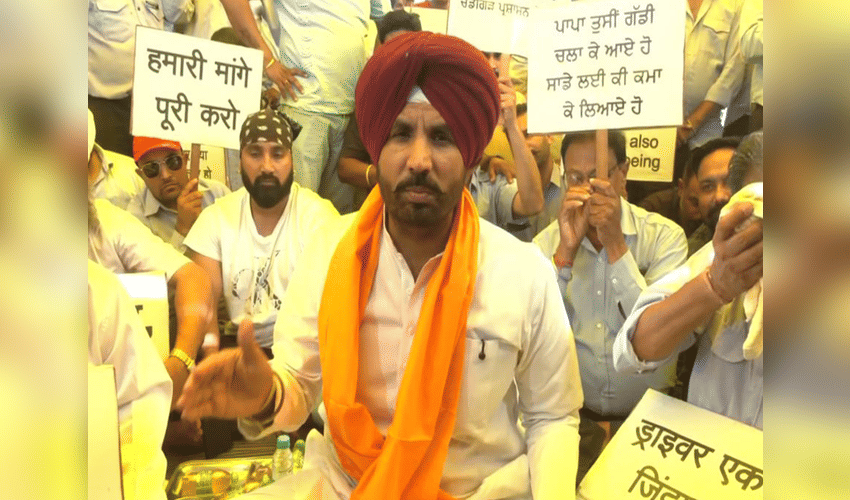

The Chandigarh Tricity Driver Union continued its protest on Monday, demanding fair regulations, transparent policies, and safeguards against what they describe as exploitation by corporate cab aggregators. Punjab Congress president Amarinder Singh Raja Warring also joined the protesting drivers, who have been on strike for several days.
Warring expressed concern over the functioning of app-based taxi services and alleged possible coordination between companies and authorities. He said he had recently learned about the issues faced by drivers who rely on platforms like Ola, Uber, and Rapido for their livelihood. “These drivers transport thousands of passengers every day and have now been on strike for the past 21 days,” he said, adding that many families depend entirely on earnings from these services.
He further claimed that a larger network could be operating behind such platforms, including lesser-known apps, and raised questions about their regulation and transparency. He also mentioned concerns about safety incidents involving drivers and alleged that authorities were not taking sufficient action. Warring questioned the revenue-sharing model used by cab aggregators, arguing that high commission rates were unfair. According to him, earlier commissions were as high as 50 percent, leaving drivers with very limited income despite long working hours and high expenses.
He pointed out that drivers bear all operational costs, including fuel, vehicle maintenance, EMIs, insurance, and commercial taxes, while companies mainly provide the app-based service. Referring to regulatory gaps, he said that although an aggregator policy had been introduced in Chandigarh after long protests, it has not been properly implemented. He added that even under the proposed framework, commission structures remain burdensome for drivers.
He suggested that commissions should be minimal and standardized, even proposing a fixed low fee per ride so that both drivers and passengers are not overburdened. Warring also criticized the lack of support systems from companies, stating that drivers receive no medical benefits, insurance cover, or assistance in case of accidents. He claimed that all risks and liabilities fall entirely on drivers. He concluded that around 35,000 cab drivers in the Tricity region are facing financial distress and urged both the government and transport authorities to urgently intervene and resolve the issue.



