



World
Artemis II crew breaks Apollo 13 distance record, becomes farthest humans from Earth
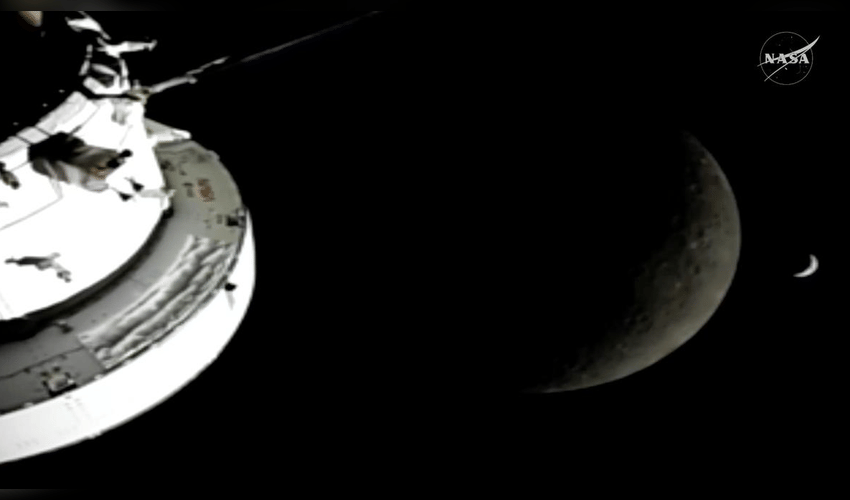

NASA’s Artemis II mission has made history by flying farther from Earth than any humans ever have, surpassing a record set during the Apollo 13 mission in 1970. The four‑person crew aboard the Orion spacecraft reached a peak distance of about 252,756 miles (approximately 406,770 kilometers) from Earth as they completed a lunar flyby on the far side of the Moon.
The milestone comes decades after Apollo 13’s crew flew to a maximum of 248,655 miles from Earth, a figure that stood for more than 50 years as the benchmark for human spaceflight range. Artemis II’s path was carefully designed to swing the spacecraft deep beyond the Moon, using the lunar gravity field to help it return to Earth, while also testing the systems destined for future lunar landings.
The crew, led by NASA astronauts Reid Wiseman, Victor Glover, and Christina Koch, along with Canadian Space Agency astronaut Jeremy Hansen, briefly lost contact with mission control during a roughly 40‑minute blackout behind the Moon. During that span, they were the most isolated people alive—floating farther from home than any human had ever been—and relying entirely on pre‑programmed flight profiles and onboard systems.
Officials at NASA say the record is less about symbolism and more about validating the technologies and operations needed for the next phase of the Artemis program. Artemis II is the first crewed mission to leave low Earth orbit and travel around the Moon since the Apollo‑era ended in 1972, and it serves as a critical dress rehearsal for Artemis III, which aims to land astronauts, including the first woman and first person of color, on the lunar surface.
The mission also provides valuable data on how humans and spacecraft perform in deep space, far beyond the protective bubble of low Earth orbit. Engineers are closely monitoring radiation exposure, long‑duration communication delays, and crew behavior, all of which will inform future missions to the Moon and, eventually, to Mars.
Artemis II represents a rare moment when human‑manned exploration takes center stage again, after years of dominance by robotic landers and orbital missions. The Artemis program signals a broader shift in how space agencies view the Moon—not just as a destination of the past but as a staging ground for sustained presence, scientific work, and potential infrastructure. With Artemis II now heading back toward Earth, NASA is preparing for splashdown and a post‑mission analysis that will shape the final steps toward putting boots back on the lunar surface within the next few years. For now, the crew’s record‑breaking journey stands as a quiet but powerful reminder that humans are still pushing the boundaries of where they can travel in space.



