



Asia In News
Anti-Pakistan protests grow in PoK as Joint Awami Action Committee announces territory-wide strike.
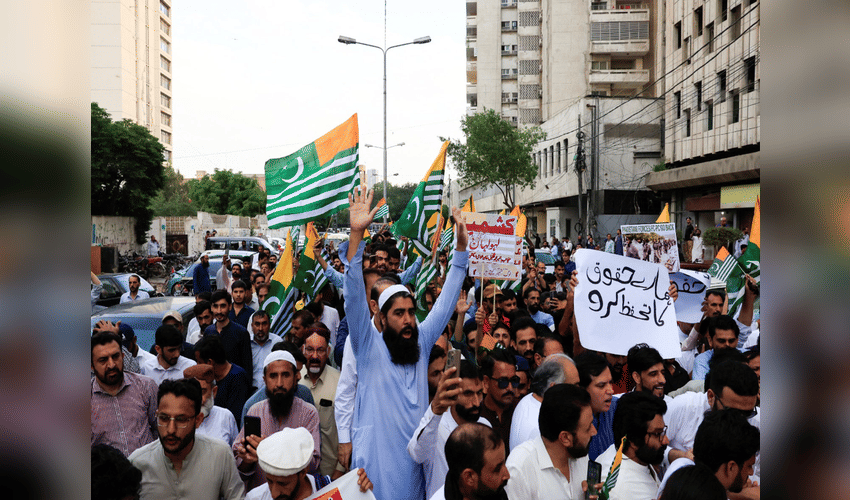

Tensions are rising in Pakistan-occupied Jammu and Kashmir after the Joint Awami Action Committee (JAAC) announced a region-wide strike scheduled for June 9, accusing Pakistan’s government of repeatedly failing the people of the territory. The group has warned that if its demands are ignored beyond May 31, the region could witness large-scale protests, transport blockades, and complete shutdowns.
JAAC leaders claim that Islamabad has not delivered on promises regarding constitutional and electoral reforms and has instead used delay tactics to weaken the movement. Reports suggest that Pakistani authorities are now attempting to convince the committee to withdraw the strike call amid fears that the agitation could develop into a wider anti-government movement across PoJK.
Human rights activist Amjad Ayub Mirza also criticized the ongoing negotiations between JAAC representatives and Pakistani officials in Muzaffarabad, saying the talks have repeatedly ended without any meaningful outcome. According to Mirza, authorities have spent the past two years calling committee leaders for discussions without taking concrete action, leading to growing frustration among activists and residents. He stated that the JAAC leadership has now decided to intensify its movement, with preparations underway for a major strike and long march on June 9. Mirza added that anger among supporters of the committee across the region has reached a high level.
The latest protest announcement comes amid increasing dissatisfaction over inflation, long hours of electricity cuts, and what many residents describe as a lack of proper political representation. Mirza alleged that people in the region are struggling with rising living costs and poor access to basic services. He pointed to severe power shortages and extensive load shedding, while also highlighting sharp increases in school fees and cooking gas prices. According to him, the cost of a gas cylinder has surged from around Rs 2,500 to nearly Rs 6,000. He also raised concerns about the unresolved issue of 12 migrant seats, arguing that many of the representatives linked to those seats do not actually live in PoJK.
Mirza further alleged that previous protest movements in the region were met with force rather than solutions. Referring to earlier strikes, he claimed that protesters faced violence while governments in both Pakistan and PoJK continued to avoid addressing the population’s core concerns. With public frustration continuing to grow and accusations of suppression becoming more frequent, the situation in Pakistan-occupied Jammu and Kashmir appears increasingly tense, raising fears of another major confrontation between demonstrators and authorities in the days ahead.



