



News
After 30 Years of Delay, Government Land at Stake: Commissioner Nagpal Urges Faster Action; HC Sends Call Controversy for Contempt Consideration
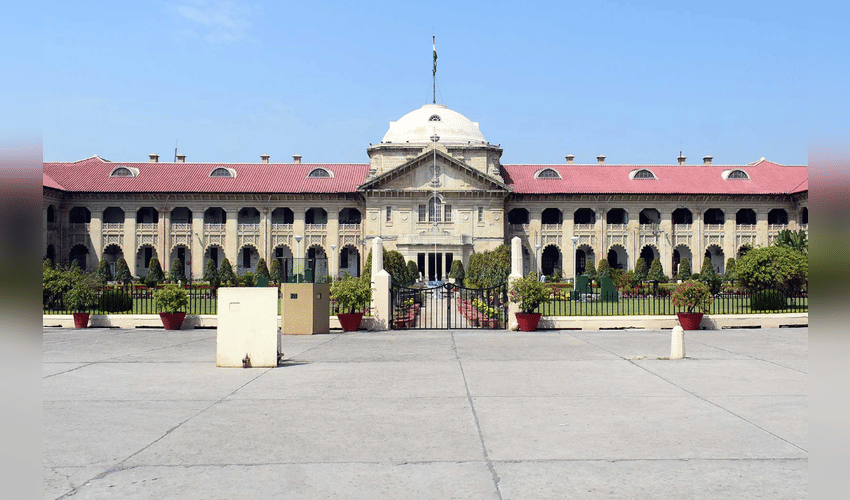

The Allahabad High Court has taken note of Devi Patan Mandal Commissioner Durga Shakti Nagpal’s efforts to speed up a civil case involving government Nazul land that has remained pending for nearly 30 years. At the same time, the court has directed that the controversy surrounding her telephone conversation with the presiding judicial officer be placed before the appropriate court for consideration of criminal contempt. Justice Syed Qamar Hasan Rizvi was hearing a transfer application related to Suit No. 721 of 1997, Jyoti Vidya Mandir v. Nagar Palika Parishad, Gonda. The case was pending before the Civil Judge (Senior Division), Gonda, had reached the evidence stage, and an interim status quo order was still in force.
The court was informed that Commissioner Nagpal took charge on April 21 and came to know about the dispute during a public hearing. She was also informed that the litigation involving government Nazul land had remained unresolved for nearly three decades. Following this, she said she instructed the concerned Sub-Divisional Magistrate, Nagar Palika officials, revenue authorities and government counsel to closely monitor the proceedings and ensure proper representation of the government.
Nagpal later learnt that the presiding Civil Judge was on extended leave. On July 15, she contacted the judge to ask when she was expected to return and whether her leave would be extended. According to the Commissioner’s report, the conversation was limited to the judge’s leave status and there was no discussion about the pending case.
After failing to obtain a satisfactory response, Nagpal said she approached the District Judge the same day and requested that the long-pending case be taken up for early disposal. She again contacted the District Judge on August 3, when the case was listed for the following day, and was assured that steps would be taken to facilitate its early disposal.
The State also confirmed before the High Court that the telephone conversation had taken place. Its counsel submitted that the Commissioner’s purpose was only to find out how long the Civil Judge would remain on leave and whether the leave was likely to be extended. The State further informed the court that Nagpal had later reported the matter to the Administrative Judge. The Civil Judge, however, reported the conversation to the District Judge and requested that the case be transferred. The District Judge subsequently withdrew the matter from her court and transferred it to the Court of Civil Judge (Senior Division)/FTC Naveen/ACJM, Gonda.
Since the case had already been transferred, the High Court held that the transfer application before it had effectively become infructuous. It nevertheless allowed the applicant to approach the District Judge with an appropriate application and raise any grounds available under law. The High Court then examined the contents of the Civil Judge’s letter concerning her interaction with Commissioner Nagpal. It observed that the tone and language attributed to the conversation could give the impression that the judicial officer felt she was being approached in a manner that could potentially influence her.
The court emphasised that judicial officers must have complete independence in deciding cases and should be able to perform their duties without fear, pressure or outside influence. At the same time, it also considered the Commissioner’s explanation that her intervention was motivated by the unusually long pendency of a case involving government land and that her call was intended only to obtain information about the judge’s leave.
Referring to the Supreme Court’s decision in In Re: Ajay Kumar Pandey (1996), the High Court reiterated the importance of protecting judicial independence and ensuring that judges are able to discharge their responsibilities without interference. The court said that although the transfer application had lost its relevance after the case was moved to another court, it could not disregard the contents of the Civil Judge’s communication. It found that the issue prima facie warranted examination by the court exercising criminal contempt jurisdiction. The High Court directed that the matter be placed before the appropriate contempt court after obtaining necessary directions from the Chief Justice or the Senior Judge. The order was passed on August 21, 2026.
Disclaimer: This image is taken from ANI.



