



Military
A US Congress report says Pakistan is still a base for major terrorist groups, with military efforts failing to stop them.

A U.S. Congressional research report dated March 25 has identified Pakistan as a hub for multiple terrorist organizations, some of which have been active since the 1980s. The report categorizes these groups as globally focused, Afghanistan-focused, India-focused, domestic, or sectarian. Twelve of them are officially designated as Foreign Terrorist Organizations (FTOs) under U.S. law, and most adhere to Islamist extremist ideologies.
Despite major military campaigns, including airstrikes and hundreds of thousands of intelligence-based operations, these U.S.- and UN-designated terrorist groups continue to operate within Pakistan. The report highlights India- and Kashmir-focused Lashkar-e-Taiba (LET), formed in Pakistan in the late 1980s and designated as an FTO in 2001. Led by Hafiz Saeed and based in Punjab and Pakistan-administered Kashmir (PoJK), LET later rebranded as Jamaat-ud-Dawa to evade sanctions. With several thousand fighters, LET was responsible for the large-scale 2008 Mumbai attacks and other high-profile assaults.
Jaish-e-Mohammed (JEM), founded by Masood Azhar in 2000 and designated an FTO in 2001, operates with around 500 armed members across India, Afghanistan, and Pakistan. Other groups, including Harakat-ul-Jihad Islami (HUJI), Harakat-ul-Mujahidin (HUM), and Hizbul Mujahideen (HM), also operate from Pakistan.
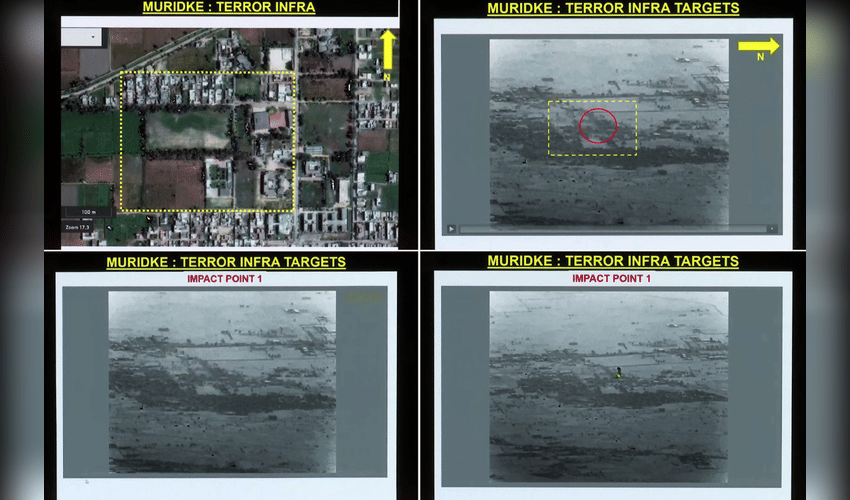
The report supports India’s long-standing claim that Pakistan continues to back terrorist organizations. One such offshoot, The Resistance Front (TRF), linked to LET, carried out the Pahalgam attacks that killed 26 people and is designated as a global terrorist group. To these attacks, India launched Operation Sindoor on May 6, 2025, striking nine terrorist camps in Pakistan and PoJK. The operation targeted over 100 terrorists, including trainers and handlers, belonging to groups like JEM, LET, and HM, while minimizing civilian casualties.
Pakistan retaliated with missile, drone, and long-range strikes on Indian airbases, army depots, airports, and military cantonments. The Indian Air Defence, counter-drone systems, and electronic warfare capabilities successfully thwarted the attacks, preventing any damage. India then conducted counterstrikes on Pakistani airbases, command centres, and military infrastructure, including Chaklala, Sargodha, Rafiqui, Rahimyar Khan, Jacobabad, Sukkur, and Bholari, achieving their objectives. Following these operations, Pakistan’s DGMO contacted India’s DGMO on May 10 to request a halt, and formal talks on May 12 resulted in a mutual cessation of military actions. The new U.S. Congress report underscores that Pakistan’s support for terrorist groups remains ongoing.



