



Entertainment
YouTuber Sourav Joshi Retracts E20 Fuel Claim After Mercedes-Benz Clarification, Says Engine Issue Caused Mileage Drop
Published On Tue, 14 Jul 2026
Fatima Hasan
79 Views
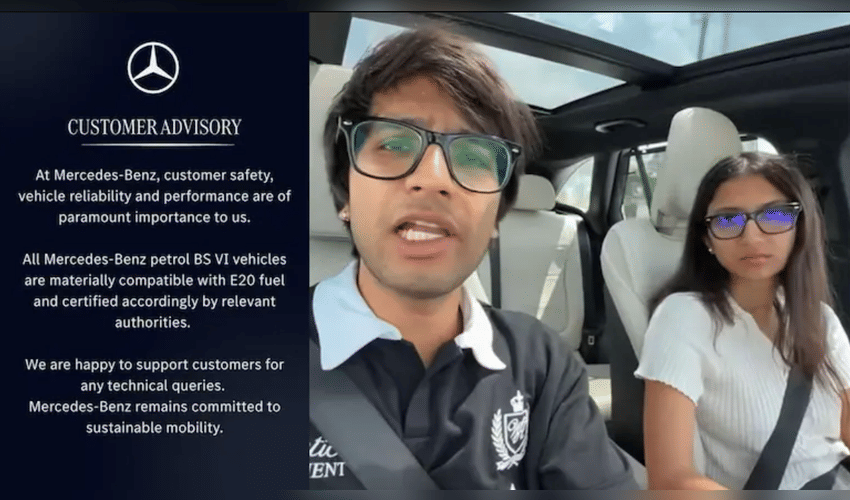

Popular YouTuber Sourav Joshi has clarified that an engine-related fault—not E20 petrol—was responsible for the sudden drop in fuel efficiency of his Mercedes-Benz SUV, days after his remarks blaming ethanol-blended fuel sparked widespread debate on social media. The controversy began when Joshi shared a vlog claiming that the mileage of his Mercedes-Benz GLC had fallen sharply from around 17 kmpl to nearly 5 kmpl within two days of refuelling with E20 petrol. The video quickly went viral, prompting concerns among vehicle owners about the impact of ethanol-blended fuel on engine performance.
Responding to the growing discussion, Mercedes-Benz India issued an official statement asserting that all its BS VI petrol vehicles sold in the country are fully compatible with E20 fuel and have been certified by the relevant authorities. The luxury carmaker said customer safety, vehicle reliability and performance remain its top priorities, adding that its petrol models are engineered to operate with the governments mandated E20 fuel blend. Soon after the companys clarification, Joshi released a fresh statement acknowledging that the issue was traced to his SUVs engine during an inspection at an authorised Mercedes-Benz service centre. He said the mechanical fault was responsible for the unusually low mileage and apologised for the confusion caused by his earlier comments.
My intention was never to spread incorrect information or hurt anyones sentiments, Joshi said, adding that he had removed the relevant portion from his video after learning the actual cause of the problem. The incident has reignited discussions around E20 petrol, a fuel blend containing 20% ethanol that is being rolled out across India as part of the governments strategy to reduce crude oil imports and promote cleaner transportation. While ethanol contains slightly less energy than conventional petrol—which may lead to a marginal reduction in fuel economy—automakers and the government maintain that E20 is safe for vehicles designed and certified to use it.
Industry experts note that a sudden and drastic drop in fuel efficiency is more commonly linked to mechanical or electronic issues such as faulty sensors, engine problems, tyre pressure, or maintenance-related concerns rather than the fuel itself. They advise motorists experiencing abnormal mileage loss to have their vehicles inspected before attributing the issue to fuel quality.
The episode also highlights how viral social media content can quickly influence public perception, particularly on technical matters. While personal experiences often spark important conversations, manufacturers and automotive experts stress the importance of verifying the underlying cause through proper diagnostics before drawing broader conclusions.
With Joshis clarification and Mercedes-Benzs response, the immediate concerns surrounding E20 compatibility in the companys BS VI petrol vehicles appear to have been addressed. However, the debate has once again brought attention to Indias transition toward ethanol-blended fuels and the need for greater public awareness about their use and performance characteristics.
Disclaimer: This image is taken from NDTV.



