



Asia In News
Why Pakistan's Alleged Ballistic Missile Raises Concerns in the US: The Underlying Theories
Published On Fri, 20 Mar 2026
Fatima Hasan
10 Views
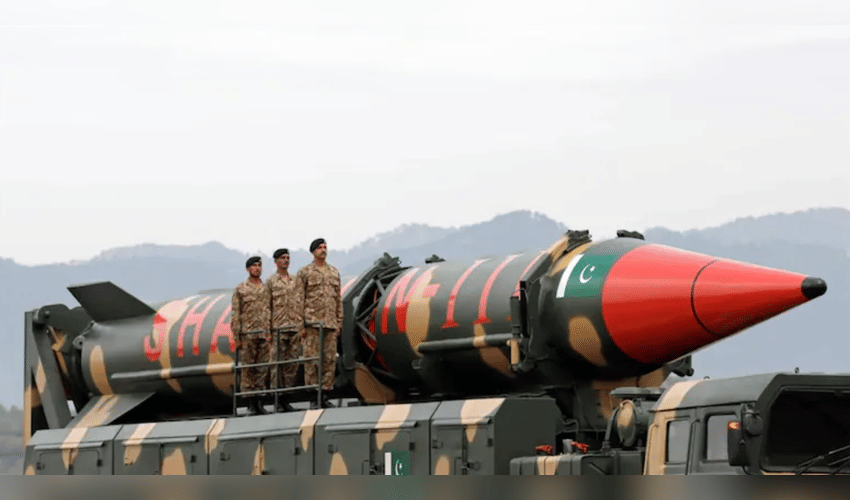

U.S. intelligence agencies have begun framing Pakistan as a potential future nuclear threat to the American homeland, citing reports that Islamabad may be developing a long‑range ballistic missile with the range to reach the continental United States. The shift signals a notable change in how Washington views Pakistan’s nuclear ambitions, moving the focus beyond South Asia to a broader global‑deterrence calculus.
The Director of National Intelligence listed Pakistan alongside Russia, China, North Korea and Iran as countries whose missile programmes could eventually allow them to target the U.S. mainland. Officials stress that this is a long‑term concern, not an indication that Pakistan already possesses a working intercontinental ballistic missile (ICBM). Still, the very idea that Pakistan might one day be able to threaten the U.S. homeland alters basic assumptions about deterrence and crisis stability. For American planners, it means redesigning early‑warning systems, hardening infrastructure, and rethinking how to respond in a high‑tension stand‑off involving Pakistan.
Pakistan’s stated nuclear doctrine has long been India‑centric, built around a “credible minimum deterrent” against a much larger neighbour. Existing systems such as the Shaheen‑3, with a range of about 2,750 km, can already reach deep into Indian territory, making an ICBM technically redundant for regional deterrence. Analysts say any push toward longer ranges likely serves a different purpose: extending the deterrent to the United States itself. The logic is that if Pakistan ever felt Washington might consider direct military action affecting its nuclear arsenal, a long‑range missile could act as a back‑stop, warning Washington that such a move would carry global risks.
Not all nuclear‑security experts agree with the U.S. narrative. Several argue that Pakistan’s missile programme remains focused on India, and that framing it as an emerging ICBM‑class threat leans heavily on worst‑case planning rather than concrete evidence. Critics also suggest that exaggerating the Pakistani threat may be politically convenient in Washington. It can help justify tougher sanctions, boost budgets for missile defence, and strengthen the case for closer alignment with India as part of a broader Indo‑Pacific strategy. Some also note that India’s own missile and nuclear developments include longer‑range capabilities, yet those are not being presented in the same alarmist terms.
A key concern for U.S. officials is the role of China. American sanctions and intelligence reports have flagged Chinese firms and experts cooperating with Pakistan on rocket motors and missile technologies that could, in principle, be adapted for longer‑range systems. Washington worries less about a single “Pakistan‑built ICBM” and more about the broader ecosystem of technology transfer and dual‑use components that could speed up the range race. Pakistan has repeatedly denied that it aims to threaten the United States, insisting that its nuclear and missile programmes exist solely to deter India and maintain strategic balance in South Asia. Yet, as long‑range testing and technology partnerships continue, the perception in Washington is clearly shifting.
If U.S. assessments solidify into policy, Pakistan could be effectively treated as a de‑facto global nuclear power, even if its current capabilities remain regional. That would complicate arms‑control debates, reshape how Washington distributes missile‑defence resources, and influence how other nuclear powers—especially India and China—size up their own strategies. The risk is a further escalation of the missile‑and‑defence race, with more investment in both offensive systems and interception technology across South Asia. At the same time, the debate serves as a reminder of how intelligence warnings, even when speculative, can move the boundary of what the world considers a “nuclear threat” and, in turn, reshape alliances and security budgets.
Disclaimer: This image is taken from NDTV.



