



World
Who was Ali Larijani, the Iranian security chief reportedly killed in an Israeli airstrike?
Published On Wed, 18 Mar 2026
Fatima Hasan
8 Views
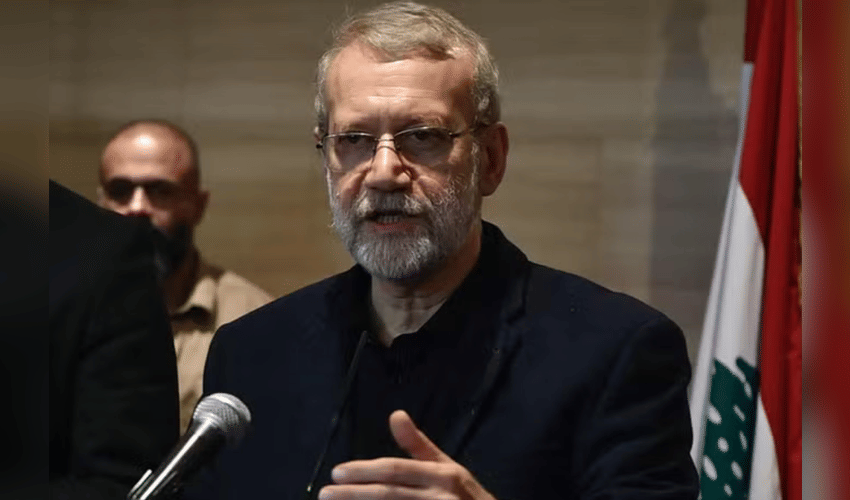

Iran confirmed on Tuesday that Ali Larijani, the country’s national security chief, was killed in an Israeli airstrike. His son Mortaza Larijani, along with SNSC deputy Alireza Bayat and several bodyguards, also lost their lives in the attack. At 67, Larijani had become a prominent face of Iran’s resistance since the conflict began on February 28. He frequently criticized the United States and Israel, asserting that Iran would continue to respond to what he described as “atrocities.” His last public appearance was at Tehran’s al-Quds Day parade on Friday.
The Secretariat of Iran’s Supreme National Security Council said he remained dedicated to safeguarding national interests until his final moments, adding that his “martyrdom” would strengthen the country’s resolve. His death is the highest-level Iranian loss since the conflict began, during which Supreme Leader Ali Khamenei was also assassinated on the first day. Born on June 3, 1958, in Najaf, Iraq, Larijani came from a powerful Iranian family with roots in Amol. His father, Mirza Hashem Amoli, was a respected religious scholar, and his family held significant influence in Iran’s political and religious institutions. He married Farideh Motahari, daughter of Morteza Motahhari, a close associate of Ruhollah Khomeini. Their influential background once led to comparisons with the “Kennedys of Iran.”
Larijani was known for blending religious upbringing with modern education. He earned a degree in Mathematics and Computer Science from Sharif University of Technology in 1979, and later completed advanced studies in Western philosophy at the University of Tehran, focusing on the work of Immanuel Kant. He joined the Islamic Revolutionary Guard Corps in the early 1980s before moving into government roles. He served as Minister of Culture under Akbar Hashemi Rafsanjani and later headed the state broadcaster IRIB from 1994 to 2004, where his strict media policies drew criticism from reformists.
In 2008, he was elected to parliament from Qom and served as Speaker for three terms until 2020. He played a significant role in gaining parliamentary approval for the 2015 nuclear deal. Earlier, in 2005, he had been appointed secretary of the Supreme National Security Council and chief nuclear negotiator but resigned in 2007 due to disagreements with President Mahmoud Ahmadinejad. He returned to the role in August 2025 under President Masoud Pezeshkian.
Although long regarded as a pragmatic conservative, Larijani adopted a tougher stance in his final months. He cut ties with the International Atomic Energy Agency, calling its reports ineffective, and issued strong warnings to the US and Israel following military strikes. He also played a key role in handling national crises, including overseeing responses to widespread protests in late 2025 and early 2026, and served as an adviser to Khamenei. His death leaves a major gap in Iran’s national security leadership at a time of ongoing conflict with the United States and Israel.
Disclaimer: This image is taken from Bloomberg.



