



World
US Authorities Express Doubts Over Pakistan's Role in West Asia Mediation: Report
Published On Tue, 12 May 2026
Fatima Hasan
5 Views

Pakistan is increasingly facing scrutiny over its attempts to present itself as a mediator in the ongoing West Asia tensions, while allegedly maintaining ties with multiple sides involved in the conflict. Reports suggest that this balancing act has created mistrust within the US administration, particularly after US President Donald Trump dismissed Iran’s latest response to his peace initiative. The Iranian message, reportedly delivered to Washington through Pakistani channels, came after Pakistan hosted discussions involving representatives from Iran and the US. However, according to a CNN report, several individuals close to Trump have expressed doubts about Islamabad’s role in the diplomatic process.
The report stated that some officials in Washington are uncertain whether Pakistan has accurately communicated Trump’s frustration regarding the stalled peace negotiations. Concerns have also emerged that Pakistani intermediaries may have portrayed Iran’s position in a more favourable light than what US officials believe to be the actual situation.
Adding to the suspicions, CBS News reported that Pakistan may have quietly permitted Iranian military aircraft to use its airbases during a period of heightened tensions, despite publicly projecting itself as a neutral mediator. Citing anonymous US officials, the report claimed that Iran moved several aircraft to Pakistan’s Nur Khan Air Base shortly after Trump announced a ceasefire with Tehran earlier this year.
Among the aircraft reportedly spotted was an Iranian Air Force RC-130 reconnaissance plane, a surveillance and intelligence-gathering version of the Lockheed C-130 Hercules. US officials also noted that Iran had transferred civilian aircraft to Afghanistan, though it remains unclear whether military planes were included in those movements. These developments appear to have deepened doubts within sections of the US administration, where some officials believe Pakistan has not been forcefully presenting Washington’s concerns to Tehran. The distrust is also linked to differences between the public statements made by Iranian leaders and the US interpretation of ongoing negotiations.
Iranian President Masoud Pezeshkian recently stated that Tehran still had multiple paths available, including diplomacy, maintaining the current uncertain situation, or continuing military confrontation. He emphasized that Iran preferred negotiations conducted from what he described as a position of “strength, dignity, and national interest.” Pezeshkian argued that Iran’s military gains should be translated into diplomatic success, suggesting that Tehran seeks negotiations without compromising its strategic standing.
President Donald Trump, however, reacted sharply to Iran’s proposal. Dismissing the communication as unacceptable, Trump claimed he did not even finish reading the response and described Iran as being in a significantly weakened position. Trump further warned that any military rebuilding by Iran during the ceasefire period could quickly be reversed by US action if necessary. He also described the current ceasefire arrangement as being on “life support,” indicating rising frustration within Washington over the direction of talks. With Trump now expected to travel to Beijing for discussions with Chinese President Xi Jinping, analysts believe China could emerge as an increasingly important player in future efforts aimed at stabilizing the situation in West Asia.
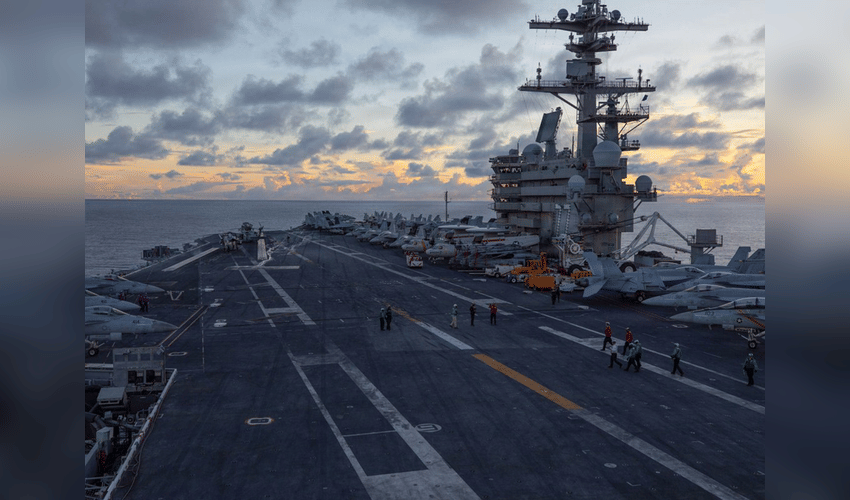
Disclaimer: This image is taken from CENTCOM.



