



World
Trump Claims Iran Gave Him a "Gift" Hints at Seizing Kharg Island Oil Hub
Published On Mon, 30 Mar 2026
Fatima Hasan
5 Views
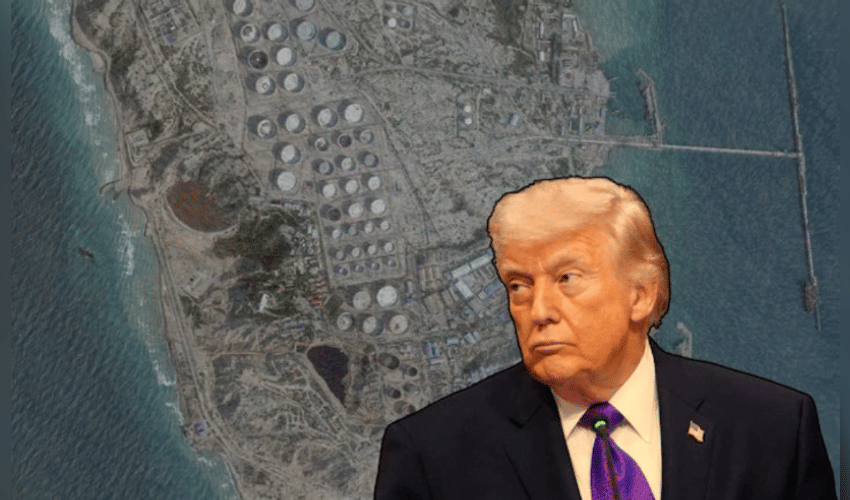

US President Donald Trump has publicly claimed that Iran’s parliamentary speaker, Mohammad Bagher Ghalibaf, personally authorised a “gift” of additional oil tankers allowed through the Strait of Hormuz, while also hinting that Washington could seize Iran’s key oil export terminal, Kharg Island. The remarks come amid a fragile standoff in West Asia and ongoing backchannel talks involving Pakistan‑flagged tankers carrying Iranian crude. Trump said that Iran initially permitted 10 Pakistan‑registered tankers to pass through the Strait of Hormuz and has since doubled that number to 20, describing the move as a favour from Tehran. He specifically credited Ghalibaf, saying, “He’s the one who authorised the ships to me,” in what appears to be an effort to highlight shifting dynamics within Iran’s leadership ranks.
At the same time, Trump let loose a pointed threat about energy seizure. He suggested the United States could “take the oil in Iran” and even take control of Kharg Island, the offshore platform that handles roughly 90 per cent of the country’s crude exports. Trump said his “favourite thing” would be to seize Iranian oil, framing it as both a bargaining chip and a potential response to what he calls Iran’s provocations in the region.
Kharg Island’s strategic importance cannot be overstated. Located just off Iran’s southern coast, it serves as the keystone of the country’s oil‑export infrastructure. Any attempt by an external power to occupy or control the island would represent a dramatic escalation, giving Washington the ability to either choke off major portions of Iranian exports or redirect revenues. Analysts warn that such a move could trigger intense military clashes, damage regional energy security, and push global oil prices sharply higher.
Trump’s comments also point to wider political shifts in Tehran. Ghalibaf, a former Revolutionary Guard commander and current speaker of Iran’s parliament, is widely seen as a potential future supreme leader. By naming him as the one responsible for the “gift” of tankers, Trump appears to be signalling that a different faction inside Iran may now be open to limited cooperation with the US, especially after the deaths of long‑time Supreme Leader Ali Khamenei and other senior figures during earlier strikes.
The president also suggested that indirect negotiations between Washington and Tehran are progressing, with Pakistani intermediaries helping to open channels. He claimed that a deal to ease the blockade on the Strait of Hormuz and normalise tanker traffic could be close, though he stopped short of offering a timeline. The extra 20 tankers, framed as a goodwill gesture, are widely interpreted as a test of trust—and as leverage for further concessions.
Markets in the region have reacted nervously to Trump’s remarks. The mere suggestion of a US‑led seizure of Iranian oil infrastructure is enough to fuel speculation about supply disruptions, especially in a part of the world where even minor incidents can send crude prices surging. Gulf states and major importers are watching closely, aware that any military action around Kharg Island would ripple through global shipping routes and insurance costs.
What emerges from Trump’s latest comments is a dual‑track strategy: using both veiled threats against Iran’s oil lifeline and the promise of a negotiated opening to pressure Tehran into a deal. For the moment, the situation remains unstable, with the Strait of Hormuz again at the centre of a high‑stakes game between the White House and a reconfigured Iranian leadership. How Iran’s new decision‑makers respond over the coming days will likely determine whether this escalatory language leads to a breakthrough—or a deeper crisis.
Disclaimer: This image is taken from NDTV.



