



Technology
SpaceX Launches Starship on 13th Test Flight, Advances Push Toward Reusable Space Missions
Published On Sat, 25 Jul 2026
Fatima Hasan
94 Views
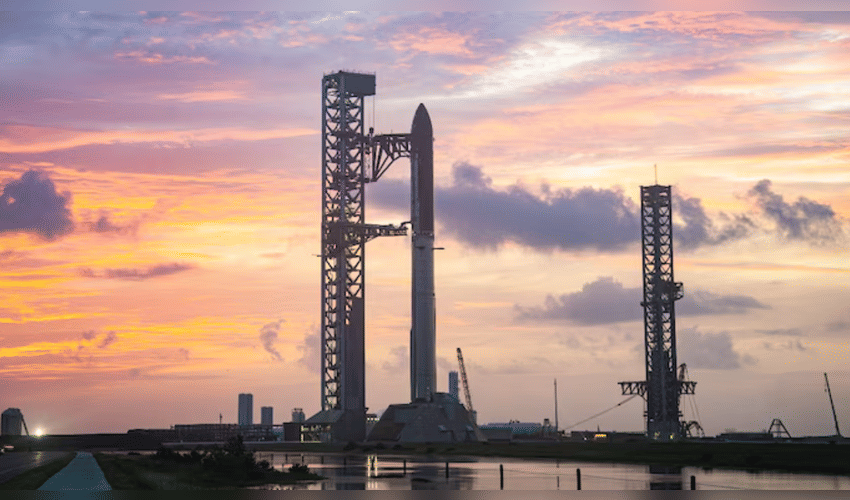

SpaceX successfully launched its massive Starship rocket on its 13th integrated test flight from the companys Starbase facility in Boca Chica, Texas, achieving several key milestones that move the worlds largest launch vehicle closer to operational service. The mission lifted off on schedule, with the Super Heavy booster powering Starship into space as engineers monitored a series of ambitious objectives designed to test the rockets performance and future capabilities. While not every phase of the mission went exactly as planned, the flight provided valuable data that SpaceX will use to refine the next generation of its fully reusable launch system.
One of the biggest achievements of the mission was the successful deployment of 20 next-generation Starlink satellites, marking the first time Starship released operational versions of the upgraded satellites during a test flight. The milestone highlights the rockets potential to become a key vehicle for launching large satellite payloads in the coming years.
The mission also featured the debut of the Super Heavy V3 booster, an upgraded version incorporating design improvements aimed at increasing reliability and enabling faster turnaround between launches. After separating from Starship, the booster attempted its return sequence but did not complete a perfect landing after several engines failed to restart during descent. Despite the outcome, SpaceX said the booster returned a wealth of engineering data that will help improve future recovery attempts.
The Starship upper stage continued its planned mission profile and successfully performed an in-space restart of one of its Raptor engines. The capability is considered essential for future deep-space missions, satellite deployments, and orbital manoeuvres. Another important objective focused on Starships heat shield. During atmospheric re-entry, the spacecraft remained intact through splashdown in the Indian Ocean, demonstrating improvements over earlier flights. Several of the deployed Starlink satellites were equipped with cameras and sensors to capture detailed observations of the vehicles thermal protection system as it passed through the Earths atmosphere.
The latest test comes as SpaceX continues to follow its rapid development strategy of frequent launches, using each mission to identify technical issues and introduce upgrades rather than waiting for a flawless design before flying again. Starship remains central to the companys long-term ambitions. The spacecraft is expected to support NASAs Artemis programme, serving as the lunar lander for future Moon missions. SpaceX also plans to use the vehicle for launching larger satellite constellations, conducting commercial space missions, and eventually transporting astronauts and cargo to Mars.
Although Flight 13 fell short of achieving every objective, the mission marked another significant step in the development of a fully reusable heavy-lift rocket. With each successful test, SpaceX moves closer to making routine, lower-cost access to space a reality while laying the groundwork for future exploration beyond Earth.
Disclaimer: This image is taken from India Today.



