



World
Sonia Gandhi criticises Centre's stance on Khamenei's death, brings up Kashmir.
Published On Tue, 03 Mar 2026
Fatima Hasan
148 Views
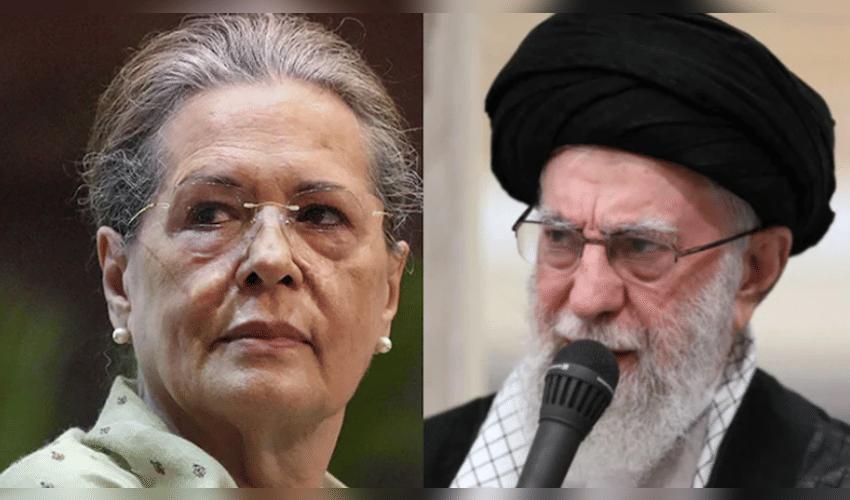

Veteran Congress leader Sonia Gandhi has criticised the Centre for remaining silent on the reported assassination of Iran’s Supreme Leader, Ayatollah Ali Khamenei, calling such silence not “neutral” but an “abdication.” Writing in The Indian Express, she described India’s relationship with Iran as both civilisational and strategic, and said New Delhi’s lack of a clear response stood out.
While the government has urged restraint and de-escalation in the Middle East, it has not directly commented on Khamenei’s killing. Official sources have defended this calibrated stance as aligned with major global powers and guided by national interest. Gandhi argued that the killing of a sitting head of state during ongoing negotiations represents a serious breach of international norms. She criticised Prime Minister Narendra Modi for initially condemning Iran’s retaliatory strike without addressing the preceding US-Israeli actions, and later limiting his remarks to general appeals for dialogue and diplomacy.
She warned that failing to defend sovereignty and international law in such situations could damage India’s foreign policy credibility. Highlighting the timing, she noted that the Prime Minister had recently visited Israel and reaffirmed support for its leadership amid the Gaza conflict. Recalling past ties, Gandhi pointed out that in 1994 Iran played a key role in blocking an Organisation of Islamic Cooperation move against India over Kashmir at the UN Human Rights Commission. She also referenced Iran’s support for India’s strategic interests, including its presence in Zahedan as a counterbalance to Gwadar port and the China-Pakistan Economic Corridor. She cited former Prime Minister Atal Bihari Vajpayee’s 2001 visit to Tehran as an example of India’s historically warm ties with Iran.
While acknowledging India’s expanding relations with Israel, she stressed that maintaining credibility with both Tehran and Tel Aviv is essential for India to act as a principled and independent diplomatic voice. She added that with nearly 10 million Indians living in the Gulf region, India’s ability to protect its citizens during crises depends on being seen as an autonomous actor rather than aligned with any one side.
Disclaimer: This image is taken from NDTV.



