



News
Parliament Winter Session 2025: Opposition Targets SIR Electoral Rolls Controversy
Published On Mon, 01 Dec 2025
Fatima Hasan
0 Views
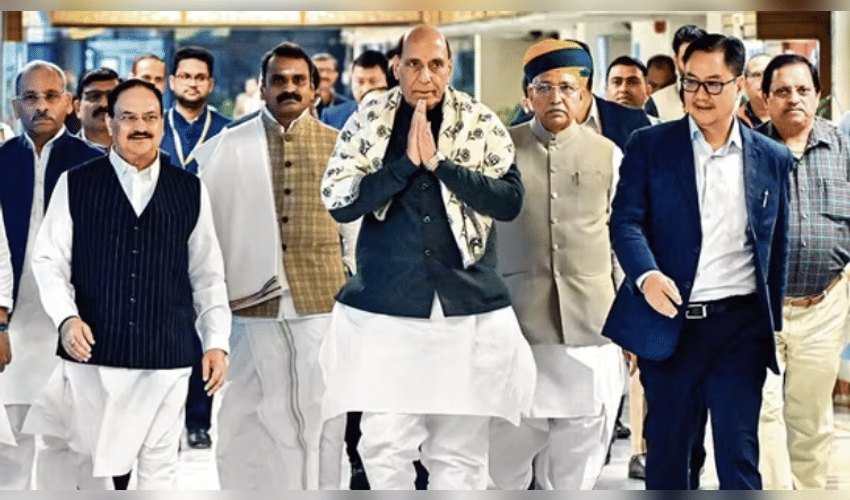

India’s Parliament Winter Session began today, December 1, 2025, and the mood in Delhi is already charged. Although the government has lined up a busy legislative agenda for the short session that runs until December 19, the atmosphere is dominated by one issue: the Special Intensive Revision of electoral rolls. Opposition parties arrived prepared to confront the government head-on, signalling that the SIR controversy could derail proceedings from the very first hour.
At the heart of the storm is the Election Commission’s ongoing door-to-door verification exercise in twelve states and union territories—an effort meant to remove duplicate and ineligible voters while adding new, legitimate ones. While the Commission insists the revision is essential to safeguard elections from bogus voting, the opposition paints a very different picture. They argue that the process is being rushed, mismanaged, and selectively applied. The recent Bihar elections have become the rallying point: reports of mass deletions, overworked field officers, and a result that favoured the NDA have given fuel to accusations of “vote theft.” During the pre-session all-party meeting chaired by Defence Minister Rajnath Singh, Samajwadi Party leader Ramgopal Yadav bluntly warned that Parliament would not function unless the issue is discussed. Congress, meanwhile, is pressing to widen the discussion to deeper electoral reforms.
The government counters this outrage by framing SIR as a housekeeping exercise vital to democratic integrity. Bogus votes have affected outcomes before, and the Supreme Court, while urging transparency through measures like publishing deletion lists, has upheld the Election Commission’s authority to conduct such revisions. Yet the problem lies in execution. The deadlines, pressure on ground staff, and the difficulties faced by migrants and the poor in producing documents leave the opposition convinced that the clean-up is less about accuracy and more about electoral advantage in states preparing for polls.
Meanwhile, the legislative calendar is dense. Parliamentary Affairs Minister Kiren Rijiju has urged all parties to maintain productivity, emphasising that the government is willing to discuss differences without stalling the House. Among the major bills expected is the Atomic Energy Bill, which proposes to allow private investment in India’s nuclear sector—a significant shift for energy security. Other items include the Securities Market Code, amendments involving insurance and national highways, and changes in excise rules that could channel revenue from tobacco and other sin goods into health and security programmes. The government also wants to mark 150 years of “Vande Mataram,” adding a symbolic layer to an already charged session.
But the opposition’s agenda stretches far beyond SIR. With recent blasts in Delhi raising new questions about security preparedness, demands for statehood for Jammu and Kashmir resurfacing, and Delhi’s pollution crisis worsening, parties like Congress and AAP are preparing to raise adjournment motions right from the opening day. Rahul Gandhi’s strategy group has already framed the SIR issue as part of a larger narrative of institutional failure, linking it to unresolved security lapses such as the attacks in Pahalgam.
All of this sets the stage for a winter session that could either become another casualty of political gridlock or a moment of clarity on electoral transparency. The stakes are high: a well-run session could push forward critical reforms that influence India’s economy, education system, and infrastructure; a disrupted one risks repeating the frustrations of previous years, leaving the public wondering whether the democratic process is serving them at all. As both Houses assembled at 11 AM this morning, the question hung in the air—would this be a season of cooperation or confrontation?
Disclaimer: This image is taken from



