



News
Indian Railways is driving infrastructure growth in the east and northeast, says NFR CPRO Kapinjal Kishore Sharma.
Published On Fri, 16 Jan 2026
Fatima Hasan
35 Views
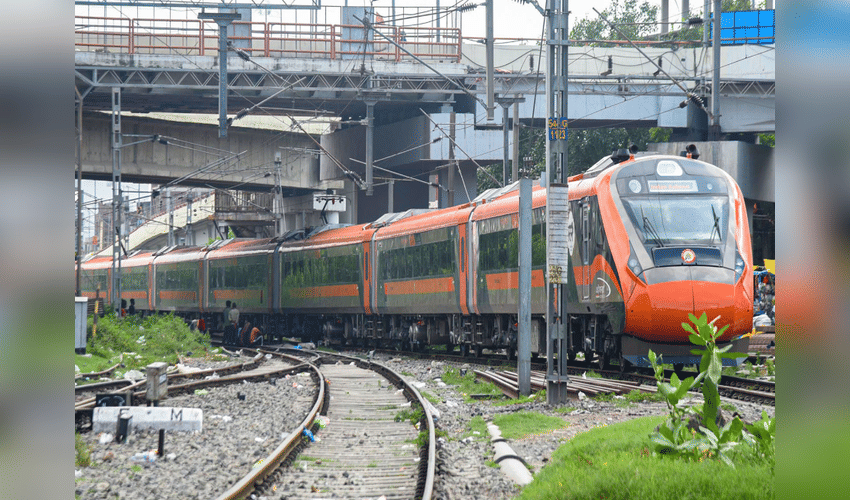

Over the past ten years, the railway network in eastern and north-eastern India has seen a significant and clearly visible transformation. Kapinjal Kishore Sharma, Chief Public Relations Officer of the Northeast Frontier Railway, said that under the leadership of Prime Minister Narendra Modi, Indian Railways has become a powerful engine of infrastructure-driven development in these regions.
He noted that areas once limited by difficult terrain, outdated infrastructure and unequal connectivity are now experiencing a historic transition towards integrated, modern and future-ready railway systems. Central to this change is the Amrit Bharat Station Scheme, described as the world’s largest railway station redevelopment initiative, marking a new phase of large-scale public infrastructure expansion.
Sharma explained that the Amrit Bharat Station Scheme is not merely about upgrading stations but represents a forward-looking vision of how railway infrastructure can better serve the country. With more than 1,300 stations identified nationwide for redevelopment, the programme reflects a results-oriented approach that goes beyond superficial improvements. The upgrades include modern passenger amenities, facilities for Divyangjan, better passenger circulation, contemporary waiting areas, digital information systems and designs inspired by local culture, ensuring stations function as modern, accessible and regionally connected hubs of growth.
Conceived as a comprehensive and future-focused initiative, the scheme aims to place people at the centre of infrastructure development. By turning stations into lively public spaces and economic catalysts, it supports regional trade while enhancing the overall travel experience. West Bengal, in particular, is emerging as a model for passenger-oriented rail modernisation, with major improvements in safety, accessibility and mobility reshaping rail travel across the state.
Under the Amrit Bharat Station Scheme, West Bengal has 101 stations selected for redevelopment, with investments of around Rs 3,600 crore. These projects cover major cities, border areas and pilgrimage destinations, promoting balanced and inclusive regional growth. Key stations such as Howrah, Sealdah, New Jalpaiguri, Kharagpur, Asansol, Bandel, Malda Town, Siliguri, Alipurduar, Shalimar and Santragachi are being upgraded under a unified modernisation framework.
Sharma added that large-scale redevelopment projects are further strengthening this momentum. New Jalpaiguri, with an approved cost of about Rs 335 crore, is being developed as a modern gateway to the North-East with new terminals, an air concourse and improved passenger facilities. Santragachi, with an investment of around Rs 380 crore, is being developed into a major multi-modal hub to reduce congestion along the Howrah–Kolkata corridor. Stations such as Asansol and Shalimar are also undergoing extensive upgrades to improve long-distance connectivity and drive regional economic growth. He further highlighted that passenger amenities have expanded considerably, with 250 lifts installed, more than 400 escalators made operational and Wi-Fi services now available at 510 stations, reflecting a strong focus on accessibility, convenience and operational efficiency.
Disclaimer: This image is taken from ANI.



