



News
India to recall diplomats families from Bangladesh over security concerns.
Published On Wed, 21 Jan 2026
Fatima Hasan
16 Views
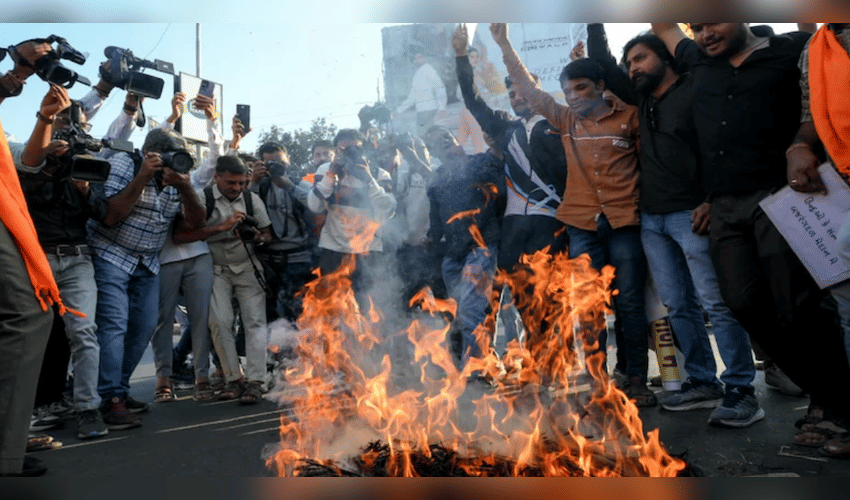

In a move signaling deepening concerns over regional stability, India has instructed family members of its diplomats in Bangladesh to return home immediately due to worsening security conditions ahead of the countrys upcoming elections. Separately, a devastating suicide bombing at a Chinese-operated restaurant in Afghanistans capital has killed seven people, with the Islamic State claiming responsibility and targeting foreign interests.
Indias Ministry of External Affairs has redesignated its diplomatic postings in Bangladesh, including the High Commission in Dhaka and consulates in Chittagong, Sylhet, Rajshahi, and Khulna, as non-family stations. Spouses and children of Indian officials have been asked to depart voluntarily, though the missions themselves remain fully staffed for essential operations like visa services and trade facilitation.
This precautionary step comes amid anti-India demonstrations, political unrest, and isolated violent incidents in Bangladesh, where parliamentary polls are slated for February 12. Its a familiar playbook for New Delhi—similar to long-standing restrictions on family postings in high-risk areas like Afghanistan—designed to protect non-essential personnel without disrupting core diplomatic functions.
In Kabul, tragedy struck on January 19 when a suicide bomber detonated at a bustling Chinese-run noodle restaurant in the relatively secure Shahr-e-Naw neighborhood. The attack killed seven— including one Chinese national and six Afghans— and wounded more than a dozen others, some critically. The Islamic State-Khorasan Province (IS-K) swiftly claimed the assault through its Aamaq news agency, framing it as retaliation against China over its policies toward Uyghur Muslims in Xinjiang. The venue, jointly owned by a Chinese Muslim couple and local partners, highlights the vulnerabilities even in Taliban-patrolled zones, amid Chinas growing Belt and Road investments in Afghanistan.
These back-to-back developments underscore a volatile South Asian landscape. For India, the Bangladesh decision safeguards its personnel along a porous 4,000+ km border, where any election-related chaos could impact trade in essentials like machinery and textiles. In Afghanistan, the blast challenges Taliban authority and Beijings economic foothold, potentially slowing multibillion-dollar projects. Both events serve as stark reminders for nations navigating fragile neighborhoods: prioritize safety while sustaining engagement. Indian officials have emphasized the measures are temporary and under constant review, as investigations into the Kabul attack intensify.
Disclaimer: This image is taken from NDTV.



