



News
India's Bahubali Rocket Sets New Record: Heaviest Satellite Ever Launched into Orbit
Published On Wed, 24 Dec 2025
Fatima Hasan
0 Views
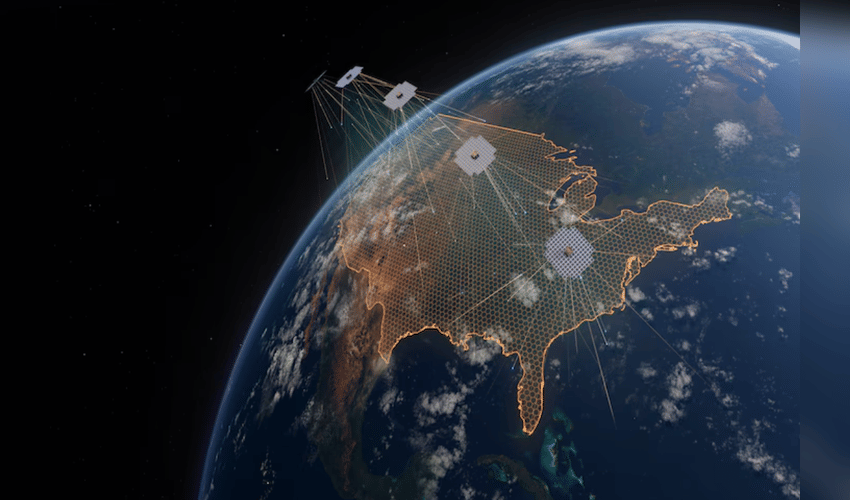

In a powerful demonstration of India’s growing technological strength, the Indian Space Research Organisation successfully launched its most advanced rocket, the LVM3—widely known as “Bahubali”—carrying the heaviest satellite ever sent into orbit from Indian territory. The mission lifted off from the Satish Dhawan Space Centre and represents a major milestone in India’s expanding role in the international commercial launch industry.
The rocket placed the US-manufactured BlueBird Block-2 communications satellite, also called BlueBird 6, into a carefully targeted low Earth orbit at an altitude of roughly 500 to 600 kilometers, reaching its destination just 15 minutes after launch. Weighing about 6,100 kilograms, the satellite set a new record for payload mass carried by an Indian launcher, proving that the LVM3 can now handle the next generation of heavy spacecraft that previously depended on foreign rockets.
Although the launch was postponed briefly by about 90 seconds to avoid potential space debris, the mission unfolded smoothly, with each stage separating exactly as planned. Towering 43.5 meters and weighing 640 tonnes, the three-stage LVM3 uses twin solid rocket boosters, a liquid core stage, and a cryogenic upper stage, giving it the capacity to deliver more than four tonnes into geosynchronous orbit.
Prime Minister Narendra Modi described the mission as a major step toward national self-reliance, applauding ISRO for strengthening India’s space capabilities. The flight, arranged through NewSpace India Limited in partnership with AST SpaceMobile, reflects India’s growing focus on international commercial cooperation in the space sector.
The BlueBird Block-2 satellite is part of a revolutionary network intended to provide direct-to-smartphone broadband service, supporting 4G and 5G connectivity without requiring additional hardware. Its mission is to bring reliable communication to remote regions, disaster-stricken areas, and underserved populations worldwide, potentially transforming access to digital services for billions of people. This success follows earlier achievements such as the LVM3-M5 mission that launched the 4,400-kilogram CMS-03 satellite for the Indian Navy, reinforcing confidence in the rocket’s heavy-lift reliability.
The launch positions the LVM3 as a competitive and cost-effective choice in a market increasingly dominated by large low-Earth-orbit constellations. For India, it reduces dependence on foreign launch systems while strengthening national security and expanding commercial export opportunities. For the world, it promises faster and more accessible global connectivity as satellite networks continue to grow.
Disclaimer: This image is taken from NDTV.



