



World
India Fast-Tracks Oil and LPG Import Deals Amid Middle East Supply Crunch
Published On Thu, 26 Mar 2026
Fatima Hasan
8 Views
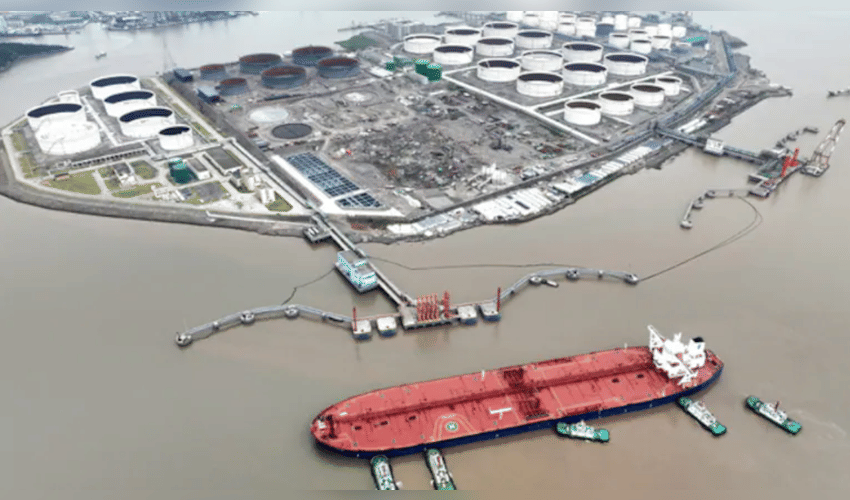

New Delhi is fast‑tracking new oil and LPG import agreements as conflict‑linked disruptions in the Middle East tighten global supply lines and raise concerns over fuel security. Government sources and energy officials told media outlets that India is renegotiating contracts, finalising fresh cargoes, and deliberately broadening its supplier base to avoid a serious domestic fuel shock in the coming weeks.
The immediate trigger is the worsening instability around the Strait of Hormuz, a narrow sea lane through which a large share of India’s LPG imports and a significant portion of its crude oil shipments pass every month. Military activity, shipping advisories, and interruptions at key Gulf export terminals have already started to disrupt trade flows, forcing Indian refiners and trading houses to look for alternative routes and backup supplies. For India, this is especially sensitive because the Gulf region accounts for roughly 60–90 percent of the country’s imported LPG and more than half of its crude oil demand. Any prolonged blockage or rerouting via longer maritime paths can push up freight costs, insurance premiums, and benchmark prices, which would eventually filter down to domestic pump prices and cooking‑fuel bills.
To cushion that impact, New Delhi has begun moving quickly to secure fresh import contracts and extend existing ones. Officials said the emphasis is on locking in “rates that suit India’s economic interests,” including flexible pricing, longer‑term supply commitments, and volume assurances that can act as a buffer if spot‑market prices spike. India is also renewing diplomatic and commercial outreach to countries beyond the traditional Gulf suppliers. The government has intensified talks with the United States and Russia, while also engaging global energy trading firms to secure additional crude and LPG cargoes from North America, Algeria, Canada, Australia, and Abu Dhabi’s Adnoc. The goal is to reduce vulnerability to any single route or political flashpoint in the Middle East.
Among the two fuels, LPG—used widely for cooking in Indian households, schools, and hospitals—has emerged as a particular policy priority. With about 60 percent of India’s LPG imports passing through the Strait of Hormuz corridor, even a short‑term disruption can strain domestic stocks, especially since national storage capacity is limited to around 1 million tonnes, equivalent to only a few weeks of demand. To offset this, India is ramping up LPG offtake from US suppliers while also asking state‑owned refiners such as Indian Oil Corporation Limited (IOCL), Bharat Petroleum Corporation Limited (BPCL), and Hindustan Petroleum Corporation Limited (HPCL) to maximise domestic production and refine heavier side‑stream yields. The aim is to keep household cylinders and institutional supplies flowing smoothly, even if seaborne shipments are delayed or rerouted.
On the political front, the government has been at pains to balance stark warnings with a message of calm. In recent briefings and an all‑party meeting in Parliament, officials have said that while global supply chains are under strain, there is “no immediate crisis” in India’s petroleum supplies. They point to diversified crude sourcing, ongoing negotiations, and advance‑booked cargoes as evidence that the energy‑security framework remains intact. At the same time, senior leaders are using the episode to underline the need for long‑term changes in India’s energy strategy. This includes expanding strategic fuel reserves, accelerating refinery modernisation, boosting LNG‑linked diversification, and tightening coordination with the US and other partners on supply‑chain stability. In effect, the current Middle East‑driven supply shock is being treated as a stress test, not just a short‑term disruption.
For the average Indian consumer, the immediate impact is likely to be felt more through price pressure than outright shortages, at least in the short term. Any sustained rise in international crude and LPG prices, freight costs, or insurance can push up the cost of cooking fuel and petrol‑diesel, although the government retains tax and subsidy levers to absorb part of the shock. For energy markets and traders, the broader lesson is that India’s once‑heavy dependence on the Gulf is becoming more politically and economically sensitive. The surge in negotiations with US and non‑Gulf suppliers signals a gradual shift toward a multi‑hub import model, where the Middle East remains important but is no longer the sole anchor of India’s energy security.
Disclaimer: This image is taken from NDTV.



