



World
India backs UN resolution condemning Iran's attacks on Gulf neighbours
Published On Thu, 12 Mar 2026
Fatima Hasan
5 Views
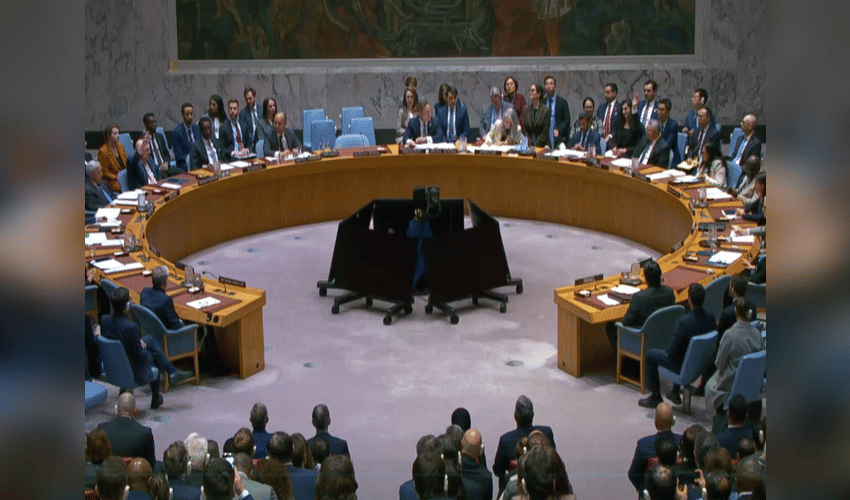

India has joined a broad international coalition at the United Nations Security Council, backing a resolution that strongly condemns what global diplomats are calling Iran’s “egregious attacks” on several of its regional neighbours in the Gulf and the Middle East. The move marks a significant diplomatic alignment by New Delhi at a time of heightened tensions in West Asia, even as it continues to navigate complex relationships with both regional powers and global blocs.
The UN Security Council on Tuesday adopted a resolution, tabled by Bahrain on behalf of six Gulf Cooperation Council (GCC) states and Jordan, demanding that Iran “immediately cease all attacks” on Bahrain, Kuwait, Oman, Qatar, Saudi Arabia, the United Arab Emirates, and Jordan. The resolution describes these strikes as egregious breaches of international law and a serious threat to regional and global peace and security.
The text also warns Iran against any threats to block the Strait of Hormuz, a critical maritime chokepoint for global energy trade, and reaffirms support for the sovereignty, territorial integrity, and political independence of the targeted countries. The resolution passed with 13 votes in favour, while permanent members China and Russia abstained, allowing it to be adopted without a veto.
India figures among about 135 UN member states that co‑sponsored the resolution, lending its political weight to the GCC‑led effort to isolate Iran diplomatically. As a major energy importer with deep trade and diaspora links across the Gulf, India has traditionally sought a balanced approach in West Asia. However, its decision to co‑sponsor this resolution signals a clear stance against what it sees as destabilising cross‑border military action. New Delhi’s support is widely interpreted as an effort to uphold a rules‑based international order in multilateral forums, even as it avoids explicitly naming or condemning the United States and Israel in the same text. Analysts say this reflects a calibrated strategy: backing GCC security concerns while preserving space for future dialogue with Tehran and other stakeholders.
The resolution comes amid a sharp spike in regional tensions, triggered by retaliatory strikes following the killing of top Iranian leadership and repeated military hits on Iranian sites by the US and Israel. Iran has extended its counter‑strikes to Gulf capitals and Jordan—countries that host US military bases but have not directly participated in the campaign—raising fears of a wider regional war. Any sustained disruption to Gulf‑bound shipping or energy flows could have serious implications for global markets, including India. As one of the world’s largest crude oil importers, India is vulnerable to price shocks and insurance‑cost surges if the Strait of Hormuz or other key routes are affected by conflict or threats to maritime security.
For India, the stakes go beyond trade and energy. Millions of Indian workers live and work in the Gulf, and their safety and economic stability are closely tied to regional peace. At the same time, New Delhi has long maintained ties with Iran, which it has used as a channel for cheaper energy and regional connectivity projects, including port and corridor plans. By co‑sponsoring the UNSC resolution, India is signalling that it will not turn a blind eye to attacks on its partners, even as it privately pushes for de‑escalation and a diplomatic off‑ramp. Observers say this posture allows India to project itself as a responsible middle‑power that can work with both Western and non‑Western blocs, without becoming a partisan actor in the current West Asia crisis.
The Security Council resolution is not legally binding in the sense of automatic sanctions, but it carries strong political weight by articulating near‑global consensus that Iran’s recent attacks are unacceptable. The GCC‑led camp hopes that the wide coalition of co‑sponsors will pressure Tehran to halt its strikes and return to some form of dialogue. How Iran responds—and how long China and Russia continue to abstain rather than veto such measures—will shape whether this resolution becomes a turning point in regional diplomacy or one more milestone in a prolonged cycle of escalation. For India, the vote underlines a broader foreign policy challenge: managing security commitments to its Gulf partners while preserving flexibility for a more stable, long‑term equilibrium in West Asia.
Disclaimer: This image is taken from X@UN_News_Centre.



