



Economy
How the New US Trade Agreement Puts India Ahead of China, Pakistan, and Bangladesh
Published On Tue, 03 Feb 2026
Fatima Hasan
12 Views
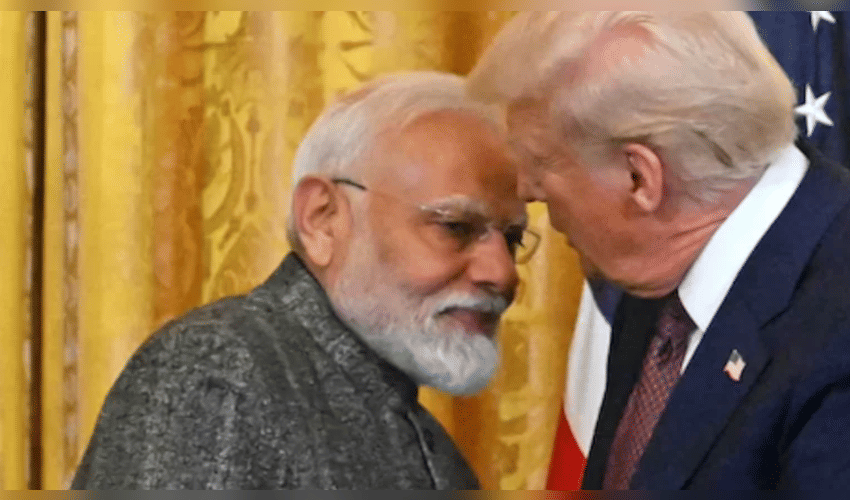

India and the United States have reached a new trade agreement under which the US will reduce tariffs on Indian exports from 50 percent to 18 percent. In return, India has agreed to stop importing Russian oil and ease trade restrictions on American goods, according to US President Donald Trump. The announcement followed a phone conversation between Trump and Indian Prime Minister Narendra Modi, during which Trump said India would begin sourcing oil from the US and possibly Venezuela.
Prime Minister Modi welcomed the decision, stating that tariffs on “Made in India” products would now be reduced to 18 percent. He thanked President Trump for the move, calling it beneficial for India’s 1.4 billion people. Modi added that cooperation between the world’s largest democracies creates significant opportunities and delivers mutual benefits. With this agreement, India now faces one of the lower tariff rates imposed by the Trump administration among major Asian economies such as China, Pakistan, Indonesia, Bangladesh, and Vietnam. However, India’s tariff rate remains slightly higher than those applied to European nations, Japan, and South Korea.
Countries currently subject to the highest US tariffs include Brazil at 50 percent, Myanmar and Laos at 40 percent each, China at 37 percent, and South Africa at 30 percent. In Southeast Asia, Vietnam and Bangladesh face tariffs of 20 percent, while Pakistan, Malaysia, Cambodia, and Thailand are subject to 19 percent duties. The lowest tariff rates apply to the United Kingdom at 10 percent, while the European Union, Switzerland, Japan, and South Korea face tariffs of 15 percent.
According to Reuters, the US has agreed to withdraw an additional 25 percent penalty imposed on Indian imports due to India’s purchases of Russian oil, which had been added to an existing 25 percent reciprocal tariff. Trump also said India committed to significantly increasing purchases of US goods, including more than 500 billion dollars worth of energy products such as coal, along with technology, agricultural items, and other commodities. He further claimed that India would work toward eliminating both tariff and non-tariff barriers on US products.
Before Trump’s return to office and the subsequent increase in US tariff rates, India was among the countries with relatively high import duties, with an average applied tariff of 15.6 percent and an effective rate of 8.2 percent, according to World Trade Organisation data. Several aspects of the deal remain uncertain. Trump did not specify when the reduced tariffs would take effect, the timeline for India to halt Russian oil imports, or the exact scope of trade barrier reductions. As of Monday afternoon, the White House had not released an official proclamation or regulatory notice to formalise the agreement.
Neither government has yet shared detailed terms or implementation dates, and Russia has not commented on India’s reported decision regarding oil imports. Unlike previous US trade agreements with countries such as Japan and South Korea, which included large investment commitments, the India-US announcement did not mention any specific investment pledges.
Disclaimer: This image is taken from NDTV.



