



World
How a Fake Iran Nuclear Claim From an Indian Account Reached Netanyahu and Trump's Team
Published On Mon, 17 Aug 2026
Fatima Hasan
16 Views
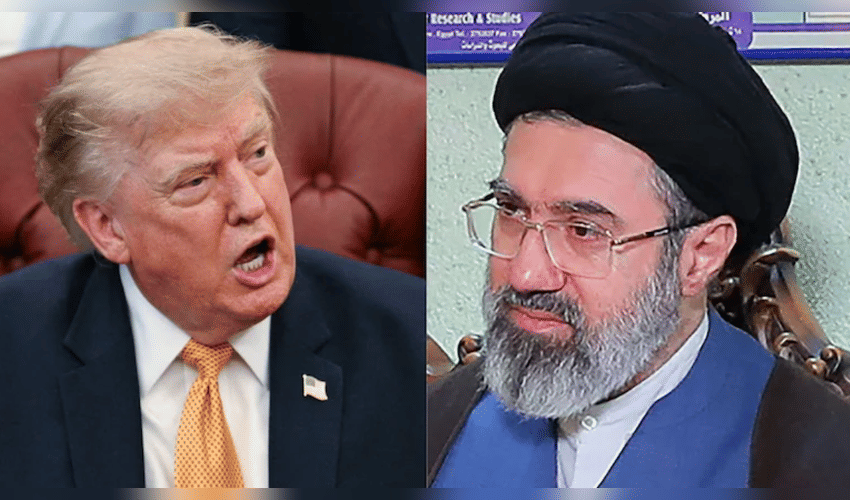

A false claim about Iran’s nuclear programme that originated from an India-based social media account has travelled an extraordinary path, eventually reaching Israeli Prime Minister Benjamin Netanyahu and senior figures associated with US President Donald Trump’s administration. The episode has highlighted how quickly unverified information can move across borders and enter mainstream political discussions, particularly when it involves a highly sensitive issue such as Iran’s nuclear ambitions.
The controversy began on August 5, when an India-based verified account on X published a statement supposedly attributed to Ahmad Vahidi, a senior commander of Iran’s Islamic Revolutionary Guard Corps. The post claimed that Iran would continue its efforts to develop nuclear weapons as long as the United States and Israel maintained their own nuclear arsenals. The statement was presented as an authentic comment from the Iranian commander, but there was no credible evidence that Vahidi had actually made those remarks.
The post was written in Hindi and was accompanied by material intended to give the claim greater credibility. It was subsequently shared by other social media accounts, allowing the allegation to move well beyond its original audience. One of the accounts that amplified the claim was an account operating under the name “Mossad Commentary”. Despite using the name of Israel’s intelligence agency, the account is not an official Mossad channel. The claim was later picked up by Israeli media, including Channel 14. As the allegation moved from social media to television coverage, it began to acquire the appearance of an independently confirmed development. However, the underlying source remained the original social media post, rather than an authenticated statement from Vahidi or an official Iranian source.
The story took an even more significant turn when Netanyahu referred to the purported statement during a speech in Jerusalem on August 5. The Israeli prime minister cited the alleged remarks as evidence of Iran’s intentions regarding nuclear weapons. His reference gave the claim a much wider international audience and demonstrated how a social media allegation can quickly become part of high-level political messaging.
The claim subsequently reached Washington. Mike Waltz, who served as the Trump administration’s ambassador to the United Nations, shared material referring to the alleged statement. Republican Senator Rick Scott also amplified the claim, while Fox News discussed the purported remarks on television. The story began to unravel as journalists and researchers examined the supposed quotation more closely. No reliable source could establish that Vahidi had made the statement attributed to him. Waltz’s post was later removed, while Fox News acknowledged that the quotation was unverified and inaccurate.
The incident is particularly significant because of the wider tensions surrounding Iran’s nuclear programme. For years, Iran’s nuclear activities have been a major source of conflict between Tehran and Western governments and Israel. Iran has maintained that its nuclear programme is peaceful, while Israel and the United States have repeatedly expressed concerns about the possibility of Iran developing nuclear weapons.
Against that background, an apparent declaration by a senior Iranian military commander that Tehran intended to continue developing nuclear weapons would naturally attract enormous attention. Such a statement could potentially influence diplomatic discussions, public opinion and political decision-making. That is what made the false claim particularly dangerous.
The episode also illustrates how misinformation can gain credibility through repetition. A claim can begin with a relatively obscure social media account, be copied by other users, appear on television and then be repeated by political figures. By the time it reaches a large audience, many people may assume it has been independently verified simply because several prominent sources are discussing it.
In reality, repeated publication does not create independent confirmation. If each report traces back to the same original post, the information remains dependent on that single source. The case also underlines the importance of checking primary evidence in breaking international news. When a senior government or military official is alleged to have made a major policy statement, journalists and readers should look for the original speech, interview, transcript or official statement. In the absence of such evidence, extraordinary claims should be treated with caution.
The false Vahidi quotation did not establish that Iran had publicly announced a decision to build nuclear weapons. Instead, it demonstrated something else: how rapidly an unsupported claim can move from an individual social media account in India to political leaders and media organisations in Israel and the United States. The episode is therefore a warning about the modern information environment. During periods of geopolitical tension, emotionally charged claims can travel faster than verification. Once such claims reach influential political figures, correcting them can become much harder.
For audiences following the Iran nuclear dispute, the key lesson is simple. A claim should not be considered credible merely because it has been repeated by politicians, television networks or widely followed social media accounts. The most important question remains where the information originated and whether the underlying evidence has been independently verified. The answer to that question exposed a striking example of how a false nuclear claim can travel across countries and political circles before the facts catch up.
Disclaimer: This image is taken from NDTV.



