



News
From Leaves to Livelihood: Assam Women Turn Traditional Tea-Making into a Path to Empowerment in Karbi Anglong
Published On Thu, 20 Aug 2026
Fatima Hasan
5 Views
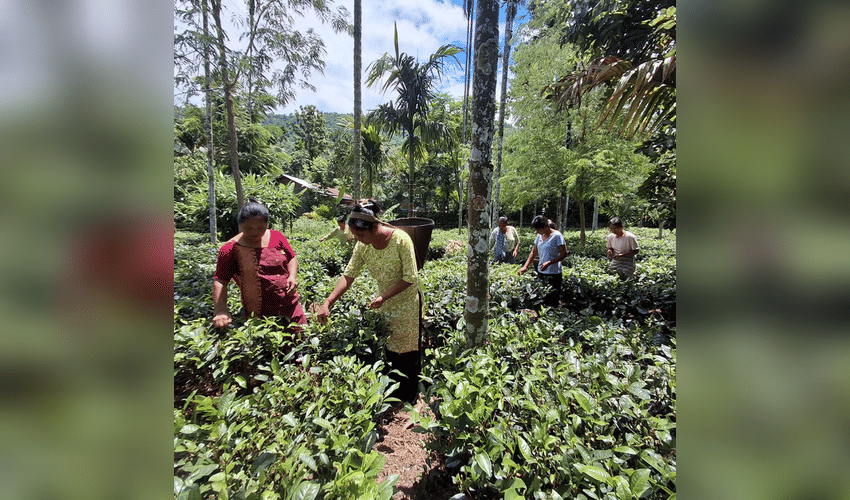

A simple tea leaf is becoming a source of fresh livelihood opportunities for rural women in Assam’s Karbi Anglong district. Aaranyak recently organised a one-day practical training programme to help nine Karbi women learn how to process locally grown tea into higher-value handmade Green Tea and Traditional Tea. Women from Chandrasing Rongpi, Barking Engti, Sem Engti and Hemai Lekthe villages took part in the programme. Many of the participants are involved in tea cultivation and homestead farming, and the training aimed to show them how existing local resources could be turned into additional household income.
Rather than selling freshly harvested tea leaves as raw produce, the women were taught techniques that can increase the value of the final product. Since the process requires relatively little investment and can be carried out at home, it could provide a practical livelihood option for women involved in subsistence farming and seasonal agricultural work.
Experienced tea practitioner Manai Terangpi from Chandrasing Rongpi village served as the resource person. The training began at a nearby tea garden, where participants learned how to identify and properly pluck suitable leaves. They then received hands-on demonstrations on producing hand-rolled green tea, including boiling, rolling and sun-drying techniques, followed by instruction in preparing traditional tea.
The programme offered more than a new skill—it provided a way to increase the value of knowledge and resources they already possess. Rebeka Rongpipi of Chandra Sing Rongpi village said the training would help her improve her tea-processing skills and produce better-quality green and traditional tea that could command a stronger market price than raw leaves.
Kusum Teronpi of Sem Engti village said she learned how seemingly small details, including selecting the right leaves, proper plucking, rolling and drying, can significantly improve the quality and appearance of tea. The programme also placed strong emphasis on maintaining quality standards. Moromi Nath of Aaranyak explained the demand for handmade Green Tea and Traditional Tea and outlined the procurement standards followed under PIRBI. She said the tea produced by the women would be purchased based on quality, with factors such as leaf size, rolling technique and drying influencing its value.
The women were encouraged to start with small quantities and practise consistently so they could gradually improve the quality of their products. Larbeen Teronpi of Aaranyak also introduced participants to PIRBI, a community-based business and food-processing unit in the village. She highlighted other opportunities for adding value to locally available products, including turmeric, ginger powder, tapioca flour and moringa powder. Such activities could help rural families earn additional income without relying on resources from outside their communities.
The initiative also has an important cultural dimension. Traditional tea-making practices have been passed down through generations, but changing livelihood patterns could put such knowledge at risk of disappearing. By helping women practise, improve and potentially commercialise these traditional skills, the programme aims to preserve tea-making as part of the region’s living cultural heritage. The training demonstrates how local resources, indigenous knowledge and women’s skills can be combined to create sustainable livelihood opportunities. With continued training and stronger market connections, handmade tea from Karbi Anglong could develop into a distinctive village-based speciality product while supporting local entrepreneurship and economic growth.
The programme was organised with the support of Team Aaranyak and involved women from Chandrasing Rongpi, Barking Engti, Sem Engti and Hemai Lekthe villages. Aaranyak continues to work towards conserving the biodiversity and natural heritage of Northeast India by supporting indigenous and local communities through sustainable livelihoods and nature-based solutions. Its Natural Resource Management Programme receives support from IUCN-KfW, the U.S. Fish and Wildlife Service and the Disney Conservation Fund.
Disclaimer: This image is taken from ANI.



