



Asia In News
Facing criticism at home, Muhammad Yunus references China and India's 'Seven Sisters' in farewell address.
Published On Tue, 17 Feb 2026
Fatima Hasan
5 Views
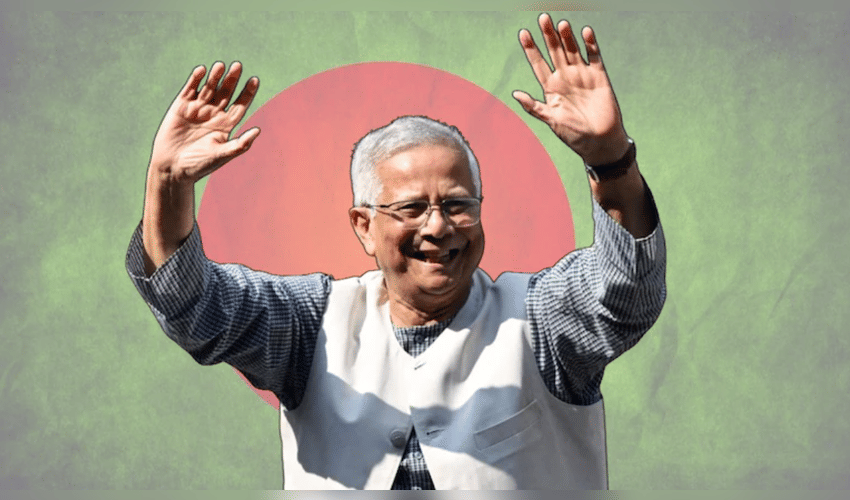

As Bangladeshs interim chief adviser Muhammad Yunus prepares to step down after 18 turbulent months, his farewell speech has ignited debate by weaving in regional geopolitics, spotlighting Indias Seven Sisters and Chinas rising role—while dodging the mounting criticism over delays in elections and minority safety at home.
Yunus took the helm in August 2024 following student-led protests that toppled Sheikh Hasinas long-ruling government. What started as a promise of swift reforms and polls stretched into over a year-and-a-half, drawing fire for slow democratic progress, breakdowns in law and order, and a spike in attacks on Hindus and other minorities. In a nationally televised address on February 16—just ahead of the power handover to the newly elected administration—Yunus defended his legacy, framing it as a hard-won era of national revival rather than a quiet exit.
Today, Bangladesh stands tall with its sovereignty, dignity, and independence restored, Yunus declared, insisting the country would no longer play the submissive role in global affairs. He positioned Dhaka as a self-assured regional hub, prioritizing its own strategic interests over external pressures—a message that resonated with nationalists but raised eyebrows given the timing.
Without directly naming India, Yunus proposed an economic corridor linking Bangladeshs ports to Indias landlocked northeastern states—Assam, Arunachal Pradesh, Manipur, and the other Seven Sisters—alongside Nepal and Bhutan. He envisioned seamless trade routes that could transform these areas growth, using Bangladeshs strategic Bay of Bengal access as the linchpin. This isnt new rhetoric; during a 2025 visit to China, Yunus similarly flagged the Northeasts isolation and pitched collaborative opportunities, which had already strained ties with New Delhi.
Yunus emphasized a strategic balance in partnerships, lavishing praise on deepening China ties—like joint Teesta River projects near Indias vulnerable Siliguri Corridor—while nodding to deals with Japan, the US, and Europe. Chinas infrastructure push in Bangladesh, from ports to power plants, has indeed accelerated, offering Dhaka leverage in the Bay of Bengal and challenging Indias traditional sway.
As Bangladesh transitions to its new leadership, Yunuss parting words pivot from internal woes to ambitious cross-border dreams. Indias Northeast, home to 45 million people and rich in hydropower and organics, hungers for exactly this connectivity—better highways, rails, and markets via Bangladesh. Yet, the provocative tone could complicate fresh diplomatic resets. History in South Asia proves that economic handshakes beat border spats; the real test will be turning vision into viable deals.
Disclaimer: This image is taken from NDTV.



