



World
Davos Rift in Diplomacy: Pakistan Funds Trump Peace Panel as India Reaffirms UN Alignment
Published On Sat, 24 Jan 2026
Fatima Hasan
27 Views
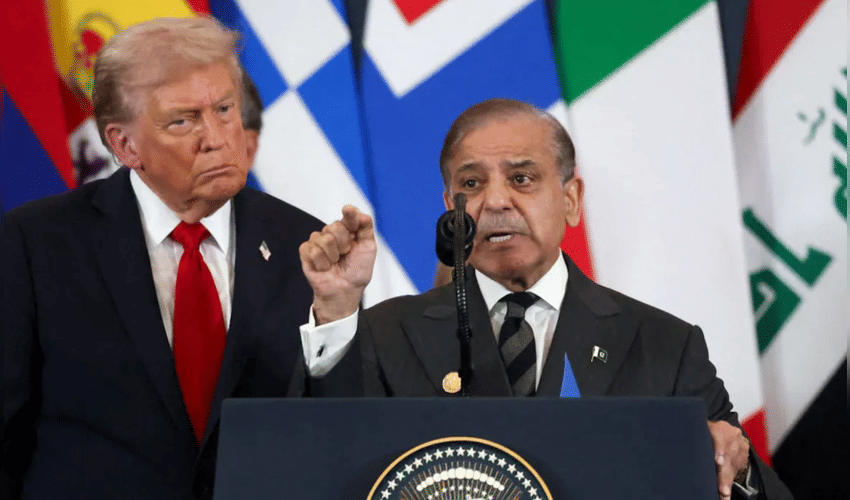

At the 2026 Davos Summit, President Donald Trump unveiled the Board of Peace, framing it as a pay-to-join alternative to the United Nations, with permanent membership priced at $1 billion. Pakistan’s Prime Minister Shehbaz Sharif featured prominently at the launch, while India—despite an invitation to Prime Minister Narendra Modi—chose to stay away from the signing ceremony, declining to commit. The contrasting choices have sparked debate across South Asia over strategy, symbolism, and India’s diplomatic principles. Although the Board originated as a mechanism to oversee post-ceasefire arrangements in Gaza, its 11-page charter avoids explicit reference to reconstruction there, instead claiming a broad mandate to mediate global conflicts.
Trump chairs the body, supported by a founding executive council that includes US Secretary of State Marco Rubio, Jared Kushner, and other close allies. An initial group of roughly 25 to 35 countries signed on, among them Saudi Arabia, the UAE, Turkey, Indonesia, and Bahrain. Critics argue the initiative is designed to rival the UN, reinforced by Trump’s assertion that the Board could ultimately “do whatever we choose.” India’s decision to step back reflects several strategic concerns. Chief among them is Pakistan’s elevated presence alongside Trump—an uncomfortable optic for New Delhi, given Islamabad’s role in cross-border terrorism and the unresolved Kashmir issue. India sees little incentive in legitimising a forum where Pakistan could gain privileged access and attempt to internationalise Kashmir outside established UN processes.
The absence of major powers such as China, France, the UK, and Germany further signalled limited global enthusiasm, reinforcing India’s scepticism toward what appears to be a US-centric platform. The steep $1 billion entry fee has also drawn criticism, fuelling perceptions of a transactional “billion-dollar trap” rather than a credible multilateral institution. For India, already prioritising defence self-reliance under Make in India and managing US ties through frameworks like the QUAD, investing heavily in an untested body led by a deal-driven Trump administration carries both fiscal and diplomatic risks. The Board’s lavish branding and its apparent focus on Gaza and Western Hemisphere concerns further highlight a mismatch with India’s Indo-Pacific and South Asia priorities.
Scepticism deepened after Trump claimed he personally prevented a nuclear war in May 2025, allegedly saving 20 million lives—a statement lacking independent verification and consistent with his penchant for dramatic assertions. Observers see the claim as an attempt to bolster the Board’s peace credentials amid uncertainty over the Gaza ceasefire.
While Pakistan may use its access to push its Kashmir narrative directly to Trump and apply psychological pressure on India, New Delhi’s refusal to engage reflects confidence in its broader multilateral strategy anchored in the UN and G20. India’s absence underscores a preference for principles over prestige, avoiding entanglement in an exclusive initiative that could weaken established global institutions and empower rivals.
This posture aligns with India’s long-standing scepticism of elite clubs, favouring inclusive platforms where its growing economic and strategic weight speaks for itself. Pakistan’s participation, by contrast, suggests a tactical effort to gain influence in a Trump-led order and secure leverage amid domestic challenges. With limited participation and notable absences, the Board’s impact may ultimately fade, validating India’s restraint as a calculated long-term diplomatic choice. As the Davos spotlight dims, the initiative’s credibility will depend on results—not spectacle.
Disclaimer: This image is taken from Indian Defence News.



