



World
Before the 2026 U.S.- Iran naval clashes, a "Praying Mantis" had already struck in the Persian Gulf.
Published On Tue, 24 Mar 2026
Fatima Hasan
4 Views
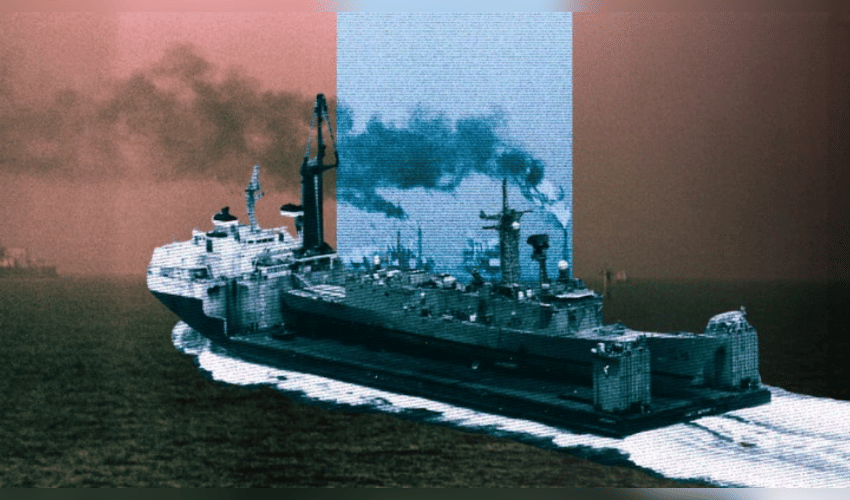

As fresh tensions flare between the United States and Iran in the Persian Gulf in 2026, many analysts are looking back to an earlier chapter of open naval conflict: Operation “Praying Mantis” in April 1988. That one‑day campaign marked the largest US naval battle since World War II and still shapes how Washington thinks about responses to Iranian threats in one of the world’s most strategic waterways.
Operation Praying Mantis was a large‑scale US naval and air assault on Iranian targets in the Persian Gulf, launched on April 18, 1988. The operation came four days after the guided‑missile frigate USS Samuel B. Roberts struck an Iranian mine, suffering heavy damage and nearly sinking. The United States quickly identified the mine and other hostile acts as part of a broader Iranian campaign to disrupt Gulf shipping during the lengthy Iran–Iraq War.
The US Navy assembled a task force around the aircraft carrier USS Enterprise and moved into the northern Gulf. Early on April 18, American warships and aircraft struck two Iranian oil platforms—Sassan and Sirri—that were being used as military lookout and command posts. US destroyers opened fire with 5‑inch guns while Marine AH‑1 Cobra helicopters hit the platforms with TOW missiles, turning them into burning ruins clearly visible across the water.
Iran attempted a counter‑response, sending frigates and fast‑attack boats to confront the American force. However, US ships and aircraft sank or heavily damaged several Iranian vessels, including two frigates and at least one fast‑attack craft. The operation also marked the first wartime use of anti‑ship missiles in a clash between US surface warships and an opponent, underlining how modern, networked naval warfare was beginning to define confrontations in confined waters like the Gulf. Across the entire action, only two US personnel died—both in a Marine helicopter crash during the operation, not in direct combat. The contrast with Iranian losses was stark: within a single day, Iran’s naval capabilities in the Gulf were severely degraded, and its ability to project power in the region took a major hit.
The 1988 operation is now frequently cited whenever the United States and Iran edge toward open naval conflict in the Persian Gulf or around the Strait of Hormuz. Analysts see Praying Mantis as both a warning and a precedent: a single incident—an Iranian mine, a damaged American warship, or a direct attack on a US vessel—can rapidly escalate into a large‑scale strike meant to cripple Iran’s naval assets and signal Washington’s resolve.
The 1988 strikes also came at a strategic turning point. The country was already bogged down in a grinding war with Iraq, and the loss of key platforms and ships in the Gulf contributed to Tehran’s decision to accept a UN‑brokered ceasefire later that year. The episode demonstrated that, even in a popular war, Iran could not easily challenge a conventionally superior US Navy in direct fleet combat without paying a steep price. In the current environment of 2026‑style US–Iran standoffs, the shadow of Operation Praying Mantis still hangs over the Gulf. Iran continues to emphasize asymmetric tactics—mining, small‑boat swarms, and drone and missile attacks—while the United States keeps carrier strike groups, destroyers, and surveillance assets deployed to ensure freedom of navigation and protect allies.
Security experts warn that any repeat of a 1988‑style incident—a mine strike on a US warship, a near‑miss on a carrier, or a major attack on a commercial vessel—could trigger another rapid, large‑scale naval response. The lesson of the “Praying Mantis” hunt is that the Gulf can shift from tense patrols to open combat in a matter of hours, reshaping regional military balances and global energy markets almost overnight. As the 2026 US–Iran naval drama unfolds, the events of April 1988 remain a key reference point: a reminder that the United States has both the capability and the historical precedent to strike back hard if it believes its navy or its allies are being directly challenged in the Persian Gulf.
Disclaimer: This image is taken from NDTV.



