



World
Yunus regime in Bangladesh heavily influenced by extremist radical groups: Report
Published On Mon, 29 Dec 2025
Asian Horizan Network
0 Views
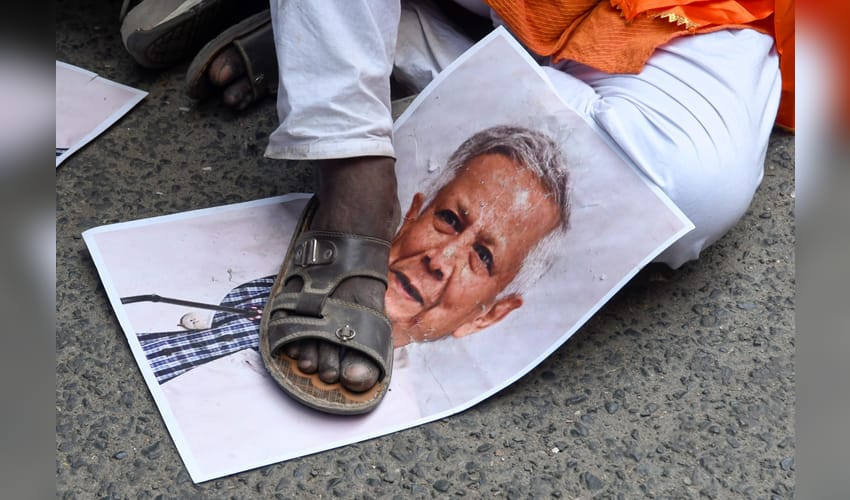

Dhaka, Dec 29 (AHN) Muhammad Yunus, the Chief Advisor of the interim government in Bangladesh, appears to be steering, or at least enabling, hardline Islamic agendas with ministers and bureaucrats, in the administration heavily influenced by extremist radical groups like Jamaat-e-Islami and Hizb-ut-Tahrir, a report stated on Monday.
It also added that the killing of Sharif Osman Hadi, spokesperson of the radical platform, Inqilab Moncha --- raises fundamental questions about the role of the Yunus-led interim government -- which stands to benefit from it -- and how many more lives Bangladesh could lose in the coming months.
"With an Islamic religious education background, Hadi had been in the news for over a year for hardline television appearances, incitement against journalists and political commentators, and attacks on symbols of the Liberation War. He was also known to espouse the idea of a 'Greater Bangladesh' encompassing parts of India," a report in Northeast News detailed.
"On December 11, the Muhammad Yunus administration announced the election schedule for February 12, 2026. Hadi promptly declared that he would contest as an Independent Candidate from Dhaka-8, a constituency represented by BNP heavyweight, Mirza Abbas. The next day, in broad daylight, a motorcycle-borne assailant shot him point-blank in the head," it mentioned.
Citing video footage, the report revealed that Hadi's shooter belonged to a group he had been previously associated with. However, subsequent police inquiries identified the assailant to be a former low-level Awami League student leader, accused of armed robbery following former Prime Minister Sheikh Hasina's ouster in August 2024 and later released on bail, sparking several troubling questions.
According to the report, prisons remain overcrowded with elderly inmates, while courts function under executive direction, granting bail only on instruction. Against this backdrop, the question arises over how an accused robber can secure bail.
Given that the Yunus administration has granted bail to or dropped charges against hundreds of convicted terrorists, the report questioned whether the assailant was part of a group trusted by the interim government.
"At a time when Awami League activists were hunted down, how could a party-linked individual dare to commit armed robbery? Was the case fabricated, or was he an Islamist operating under the Awami umbrella — as many student leaders during the July 2024 protests were? Several NCP leaders previously belonged to the Awami student front. Jamaat activists, who later won university elections, had also operated within Awami structures. Jamaat itself has admitted that it orchestrated the July protests while operating undercover," the report noted.



