



Economy
Wheat production remains stable and resilient despite weather variations: Centre
Published On Sun, 26 Apr 2026
Asian Horizan Network
2 Views
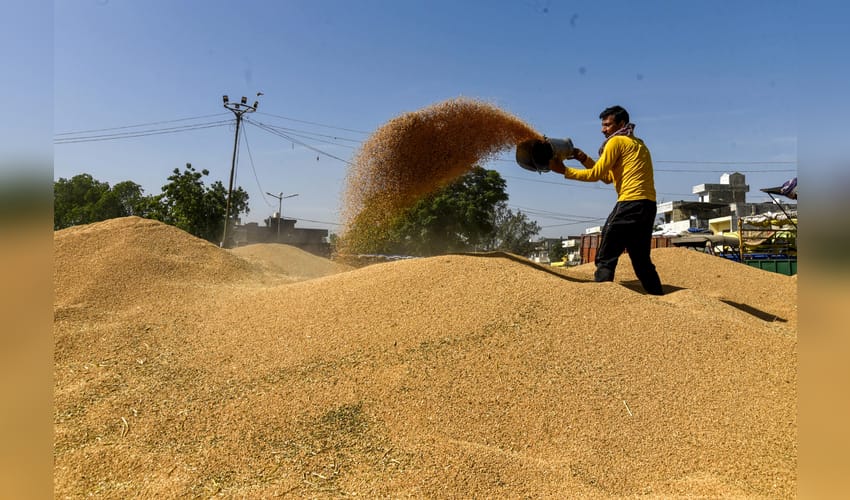

New Delhi, April 26 (AHN) The government on Sunday refuted certain media reports regarding the wheat production scenario for 2025–26, stressing that while localised weather-related impacts have been observed, the overall wheat production scenario for 2025–26 remains stable and resilient, supported by increased acreage, improved agronomic practices and enhanced varietal adoption.
Agriculture Ministry said the current wheat season may be characterised as mixed but resilient, shaped by both climatic adversities as well as strong adaptive measures undertaken by farmers.
“The wheat crop which was sown on an estimated area of 33.4 million hectares, had witnessed no incidence of insect pests and diseases during the season. Early and timely sowing of wheat in the country, had led to an increase in area over the last year,” the official statement said.
For example, wheat arrival in Haryana mandis has surpassed the 75 LMT government procurement target, with 56.13 LMT already purchased. Procurement has increased by roughly 9 LMT compared to the same period last year.
In Madhya Pradesh, the initial procurement goal was 78 LMT, but it has been officially raised to 100 LMT following requests from the state government due to high production estimates.
Maharashtra's wheat production for 2025-26 is estimated to be around 22.90 lakh tonnes, a steady increase over recent years. As of late April 2026, the state is seeing steady inflows, particularly from the Marathwada and Vidarbha regions.
The ministry said that late during the season, unusually high temperatures in the month of February exposed the crop to heat stress, reducing grain filling duration and yield.
Further, untimely rainfall and hailstorms at maturity in a few areas have likely caused localised damage to grain quality and yield.
However, the overall production outlook remains cautiously optimistic owing to several compensatory factors.
“There has been no report of yield losses due to any disease or insect-pest in wheat crop. Also, the infestation of weeds was low during the crop growth stages. There has been a significant increase in early/timely sowing, which enables the crop to escape terminal heat during grain filling,” said the government.
Notably, the additional 0.6 million hectares area planted during 2025-26, is expected to partially offset localised losses.
Additionally, the enhanced varietal replacement rate (VRR) has accelerated the adoption of high-yielding, climate-resilient, and disease-resistant varieties, which are better equipped to withstand heat and biotic stresses.
The government said it is anticipated that the adverse effects of weather anomalies will be largely compensated by increased area, early sowing, and improved varietal adoption, thereby supporting stable national wheat production as compared to the crop season of 2024-25.
—AHN
na/



