



Asia In News
US to drop 25 pc tariff linked to India’s Russian oil purchases: White House
Published On Mon, 02 Feb 2026
Asian Horizan Network
1 Views
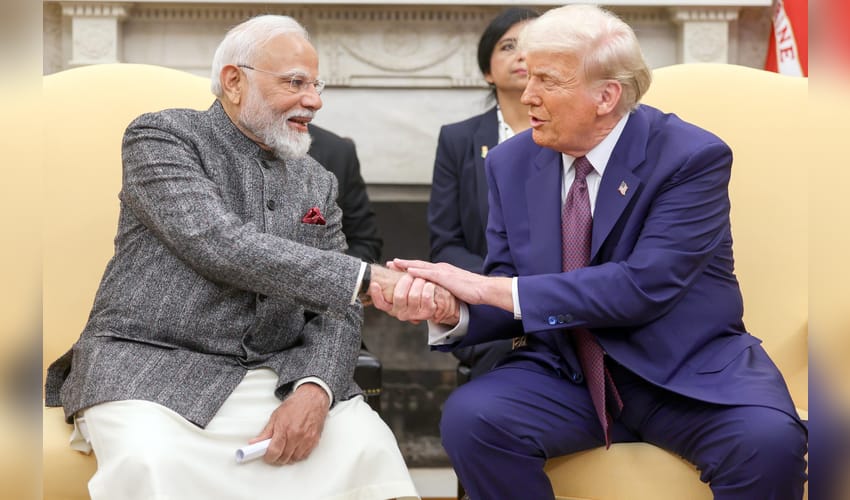

Washington, Feb 2 (AHN) The United States will drop 25 per cent tariff linked to Russian oil purchases as part of India’s agreement to stop buying crude from Russia, the White House said on Monday.
“As part of India’s agreement to cease Russian oil purchases, the 25 per cent Russian oil-related tariff will be dropped,” a White House official told AHN after President Donald Trump, following a phone call with Prime Minister Narendra Modi, said that the two countries have reached a trade deal.
In a detailed post on Truth Social, Trump said the agreement would immediately reduce the US reciprocal tariff on Indian goods from 25 per cent to 18 per cent, calling it a major shift in bilateral trade ties linked to energy cooperation and broader geopolitical goals.
Trump said the two leaders discussed “many things, including Trade, and ending the War with Russia and Ukraine.” He claimed that PM Modi agreed to stop buying Russian oil and to increase purchases from the United States and, potentially, from Venezuela.
Prime Minister Modi in his post on X said that “Delighted that 'Made in India' products will now have a reduced tariff of 18 per cent.”
“When two large economies and the world’s largest democracies work together, it benefits our people and unlocks immense opportunities for mutually beneficial cooperation,” PM Modi said.
A senior administration official, speaking on background, told AHN the 25 per cent additional tariff was directly tied to India’s purchases of Russian oil and would now be removed following New Delhi’s commitment to cease such imports.
The move links trade policy directly to energy and geopolitical objectives, reflecting Washington’s effort to use economic tools to curb Russia’s revenue from oil exports amid the ongoing war in Ukraine.
Since the start of the conflict, the United States has pressed allies and partners to reduce or eliminate purchases of Russian energy, arguing that oil revenues help finance Moscow’s military campaign.
India has emerged as a major buyer of discounted Russian crude since the war began, sharply increasing imports to meet domestic energy needs. Indian officials have consistently said that energy decisions are driven by national interest and market considerations.
At the same time, India has called for an end to the conflict through dialogue and diplomacy and has maintained engagement with both Russia and Western partners.
The White House clarification also comes as India and the United States work toward expanding broader trade and investment ties. Officials on both sides have said negotiations were nearing a final stage, though no formal announcement has been made by New Delhi.
Energy cooperation has become a central pillar of the bilateral relationship. The United States has significantly increased oil and gas exports to India in recent years and has positioned itself as a reliable long-term supplier.
The tariff decision is expected to be closely watched by Indian policymakers and industry, particularly refiners and exporters, as well as by global energy markets tracking shifts away from Russian crude.
Earlier on Monday, Ministry of External Affairs announced that External Affairs Minister S. Jaishankar will visit Washington this week to participate in the Critical Minerals Ministerial convened by U.S. Secretary of State Marco Rubio.
“The Ministerial will focus on supply chain resilience, clean energy transitions, and strategic cooperation in critical minerals,” the ministry said.
Jaishankar is also scheduled to meet senior members of the U.S. administration during the visit, amid a broader push to deepen cooperation on trade, energy security and strategic supply chains.
India-U.S. relations have expanded steadily across defense, technology and economic sectors over the past decade. Both sides have described the partnership as one of the most consequential for the coming years, with trade and energy expected to remain central to the agenda.