



World
US science shift raises concerns for researchers
Published On Sat, 25 Jul 2026
Asian Horizan Network
7 Views
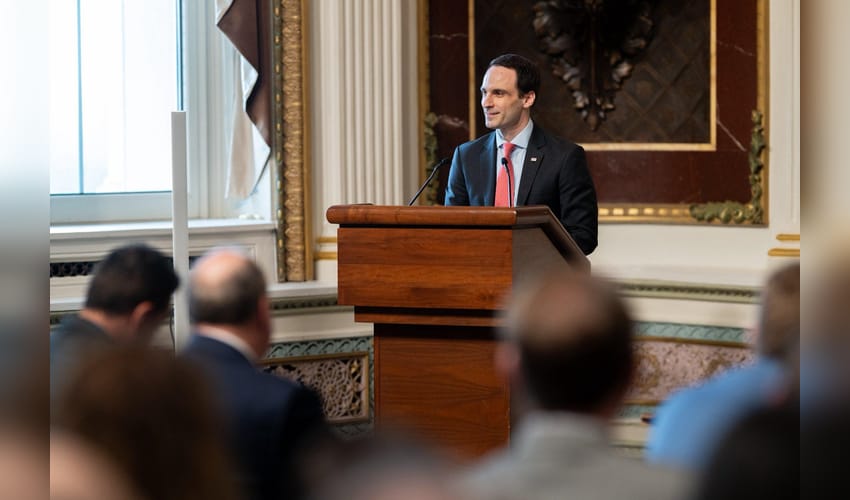

Washington, July 25 (AHN) The Trump administration's plans to overhaul the US scientific research system sparked fresh debate in Congress this week over the future of international researchers and the country's ability to attract global talent, an issue closely watched by thousands of Indian students and scientists pursuing advanced studies and research in the United States.
At a hearing before the House Committee on Science, Space and Technology, White House Office of Science and Technology Policy (OSTP) Director Michael Kratsios defended a new strategy aimed at ushering in what the administration calls a "Golden Age of Science", while Democratic lawmakers argued that funding cuts, uncertainty and policy changes risk weakening America's research leadership.
"Our economic leadership and technological dominance cannot be taken for granted in a rapidly changing world," Kratsios said. "The United States no longer stands alone as an industrial and scientific superpower. Unleashing a golden age of American science requires new focus and reforms."
Kratsios said a report released by his office proposes reforms that prioritise individual scientists, introduce more flexible research grants, strengthen links between scientific discovery and manufacturing, and expand the use of artificial intelligence to accelerate research.
However, Democratic members questioned whether the administration's policies could instead discourage both American and international researchers.
Ranking Member Zoe Lofgren cited figures showing that major US research universities accepted 15 per cent fewer PhD applicants for the autumn 2026 intake compared with the previous year. She said admissions of international students had fallen by 17 per cent while admissions of American students declined by 13 per cent.
"International students have long been a lynchpin of US leadership in science and technology," she said, arguing that the declines were harming America's future scientific workforce.
Lofgren also warned that China was increasing scientific investment while recruiting researchers from the United States, saying the administration's actions were "strengthen(ing) the hand of China while decimating the US research enterprise."
Several Democratic lawmakers echoed those concerns, arguing that uncertainty over research grants, changes to funding priorities and reductions in support for federal science agencies could encourage scientists to seek opportunities elsewhere.
Representative Deborah Ross said researchers were being lost "to China, to Europe, to anybody who can fund their research", while Representative George Whitesides argued that slower grant approvals and fewer research awards were disproportionately affecting early-career scientists.
Kratsios rejected suggestions that the administration was undermining scientific research. He said the objective was to modernise an ecosystem that had become overly bureaucratic and to support scientists more directly.
"Everything that we should -- we do as a science ecosystem driven by the government, should focus on scientists themselves," he said, adding that the government wanted to "back young American scientists".
He also defended new funding approaches that would include fast-track grants, long-term research support and mechanisms designed to encourage more unconventional scientific proposals.
Beyond funding, lawmakers repeatedly linked scientific competitiveness to the broader technological rivalry with China. Republicans argued that research security, artificial intelligence, quantum computing and advanced manufacturing should receive greater emphasis to preserve America's technological advantage. Democrats countered that sustained investment in universities and research institutions remained the country's greatest strength.
The debate comes as Indian students continue to form one of the largest international student communities in the United States, with a significant proportion enrolled in graduate programmes in science, technology, engineering and mathematics. Any shift in federal research funding, university admissions or scientific priorities is likely to be closely followed by Indian academic institutions and prospective researchers.
The United States has long relied on international talent to power its research universities, national laboratories and technology companies. At the same time, Washington has increasingly tightened research security measures and placed greater emphasis on protecting advanced technologies from strategic competitors, particularly China.



