



Economy
US pushes Pax Silica in AI era pivot
Published On Tue, 24 Feb 2026
Asian Horizan Network
3 Views
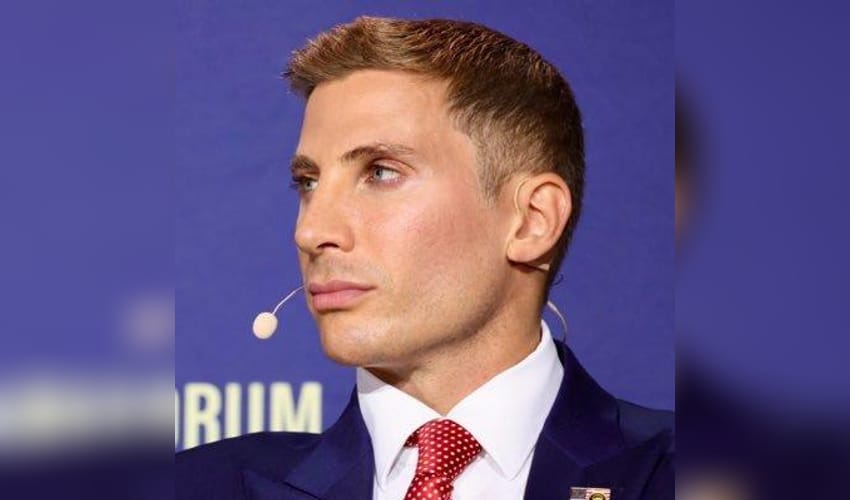

Washington, Feb 24 (AHN) The United States is building a new economic security architecture to secure artificial intelligence supply chains, Under Secretary of State for Economic Affairs Jacob Helberg told lawmakers Tuesday, casting Pax Silica as Washington’s answer to strategic dependency in the AI age.
“I did not come here today to speak to you about tariffs. I did not come here to discuss the minutiae of trade deficits or the technical specifications of logic chips. I came here to speak to you about survival,” Helberg said in testimony before a Congressional committee.
Framing the moment as historic, he said: “History is not a straight line. It is a series of crossroads. And today, the United States and its closest partners stand before the most consequential crossroads we have faced in a century.”
The defining question, Helberg argued, is not whether artificial intelligence will transform the global economy, but “who will control the industrial foundations that make AI possible, and who will be forced to depend on those who do.”
That imperative underpins Pax Silica, which he described as “a coalition for the AI age, focused on rebuilding supply chain security across the infrastructure, industrial capacity, and critical technologies that now determine national power.”
“In the AI era, supply chains are leveraged,” he warned, arguing that “dependency is vulnerability.” Pax Silica, he said, is “an economic security architecture built to reduce strategic dependency, build reliable redundancy, and outcompete coercive systems without becoming them.”
Citing growth figures, Helberg said, “G7 growth averages 1.5 per cent; Pax Silica countries average 4.7 per cent. And thanks to President Trump’s pro-growth policies, balanced trade, energy dominance, deregulation, and tax incentives, the US is again leading at 4.3 per cent.”
He outlined two pillars for the next phase: execution and alignment.
On execution, the United States and its partners will issue joint Requests for Proposals to integrate logistics infrastructure — including ports, railways, and highways — with secure data flows and end-to-end visibility. On industrial capacity, he stressed that “Industrial capacity is not nostalgia. In this century, it is sovereignty.”
Helberg also highlighted the American AI Exports Program, calling it “the United States’ signature AI diplomacy initiative” and “a whole-of-government effort to share the benefits of American AI technologies with partners around the world.”
On policy alignment, he said Pax Silica would promote a “Pro-Innovation, Pro-Adoption approach to AI policy.” “We believe in AI opportunity, not AI trepidation,” he said, adding that the United States would “resist the extraterritorial reach of censorship and burdensome regulations.”
The coalition is expanding. India formally joined the initiative last week, signing the Pax Silica Declaration in New Delhi alongside US officials. “India joins Pax Silica, the coalition that will define the 21st century economic and technological order,” US Ambassador Sergio Gor said before the signing in New Delhi.
The alliance includes countries such as Japan, South Korea, the UK, and Israel and aims to strengthen critical minerals supply chains and deepen cooperation on artificial intelligence.



