



Economy
Tripura attracts Rs 35,140 crore investment through EoD business reforms
Published On Thu, 14 May 2026
Asian Horizan Network
4 Views
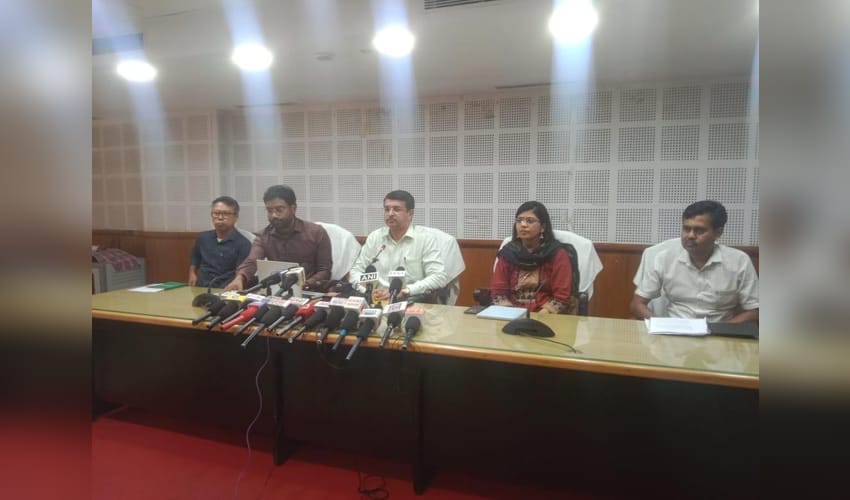

Agartala, May 14 (AHN) Sustained Ease of Doing (EoD) Business reforms, particularly the simplification of approvals, self-certification mechanisms, and the digitisation of services, have led to the signing of 394 Memorandums of Understanding, attracting Rs 35,140 crore in proposed investments over the past few years in Tripura, officials said on Thursday.
Tripura Industry and Commerce Department Secretary Kiran Gitte said that streamlined regulatory processes and faster clearances have enabled effective project execution, leading to 94 projects (23.8 per cent) transitioning into grounded investments worth Rs 5,352 crore.
Major investments have been reported across healthcare, tourism, logistics, and infrastructure sectors, he told the media.
The senior Indian Administrative Service officer said that the Tripura government has achieved a historic milestone by becoming the first state in the country to complete all priority areas under Deregulation Phase-II of the national Compliance Reduction and Deregulation initiative led by the Union Cabinet Secretariat.
With this achievement, Gitte said that Tripura has also emerged as the first state in India to complete all 51 Priority Areas under both Deregulation Phase-I (23 Priority Areas) and Phase-II (28 Priority Areas), reinforcing its position as a national frontrunner in regulatory reforms, Ease of Doing Business, and technology-driven governance.
Initiated in January 2026, Deregulation Phase-II covered 28 Priority Areas across Revenue, Urban Development, Industries, Labour, Environment, Tourism, Health, Education, and Digital Governance, the official noted.
According to Gitte, the reforms focused on reducing compliance burdens, eliminating redundant procedures, digitising approvals, and creating a more transparent, predictable, and investor-friendly regulatory ecosystem.
The official said sustained Ease of Doing Business reforms, particularly simplification of approvals, self-certification mechanisms, and digitisation of services, have significantly improved investor confidence and reduced entry barriers in the state.
As part of the reform process, the state rationalised fire safety norms in line with global best practices and strengthened the Single Window System through the SWAGAAT Portal to enhance transparency and ease of access for businesses and citizens, he said.
The state government also collaborated with the National Law University, Tripura campus, for a principle-based review of state Acts, rules, and government orders aimed at regulatory simplification.
Gitte said that the initiative additionally includes the creation of a centralised digital repository of state laws and regulations through the e-Gazette system.
To assess the impact of reforms implemented under Deregulation Phase-I, the state government empanelled the Indian Institute of Management, Calcutta, to conduct a ground-level impact assessment study.
Citizen-centric reforms were also introduced across multiple social sectors, the official said, adding that in education, minimum land and endowment requirements for establishing institutions were rationalised.
In the health sector, seamless interstate registration and practice for medical professionals were enabled through a single nodal mechanism.
In tourism, homestay regulations were simplified by removing multiple ‘No Objection Certificate’ requirements and introducing online self-renewal systems to promote tourism entrepreneurship and local participation.
The successful completion of all priority areas reflects Tripura’s strong political commitment, administrative coordination, and sustained focus on reform-driven governance.
The official believes the reforms will significantly improve investor confidence, reduce compliance costs, accelerate service delivery, and strengthen Tripura’s emergence as a model state for facilitative and future-ready governance in India.



