



Politics
The two uprisings that connect rise and fall of Nepal’s former PM Oli
Published On Fri, 06 Mar 2026
Jayanta Bhattacharya
1 Views
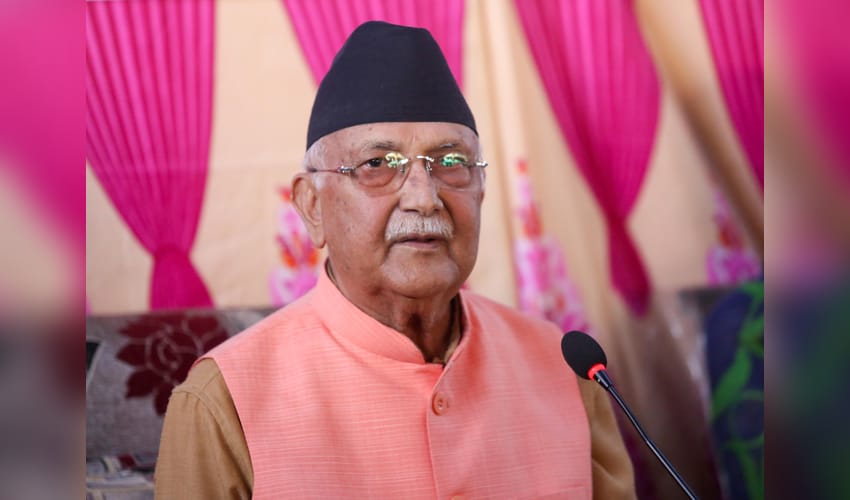

Kathmandu, March 6 (AHN) The rise and fall of Nepal’s former Prime Minister Khadga Prasad Sharma Oli can be traced between two uprisings set apart by over half a century.
The 74-year-old’s political identity was crafted long before he became prime minister. He first came to national attention as a young activist in the Jhapa uprising, a radical Leftist movement in the early 1970s that challenged local landlords and state authority in eastern Nepal, bordering India.
Over decades he moved from activist to party stalwart, building a reputation inside the then Communist Party of Nepal; his rise through party ranks culminating in multiple national leadership roles, later serving as Nepal’s prime minister four times.
His tenure included high‑profile policy moves that reinforced his nationalist credentials.
When unified with the Maoists, he blamed India for a blockade at the border in 2015. In another instance, relations with New Delhi soured with the publication of a political map incorporating Limpiyadhura and Lipulekh.
Things came to a head with his 2020 “Chinese virus was better than the Indian virus” comment in Parliament.
Of late, Oli's move to join China’s contentious Belt and Road Initiative invited criticism.
“To supporters, Oli is ‘Ba’ – a father figure. To critics, he weakened intra-party democracy and shut his eyes to corruption,” summarised a Kathmandu Post report before the Thursday election.
“Now Oli could be fighting his final battle against Balen,” it said, later adding, “Admirers see him as decisive and an ardent nationalist; critics view him as a power-hungry politician who is intolerant of dissent.”
Reports quote analysts and critics as saying that his leadership style prioritised loyalty and control, sometimes at the expense of intra‑party democracy and institutional checks.
Supporters counter that, claiming strong leadership was necessary to break political paralysis and deliver development.
However, controversies accumulated around governance and accountability. Accusations ranged from tolerating corruption within party ranks to using state instruments against dissent.
Such charges, whether proven or contested, fed a narrative among younger critics that the political system had grown unresponsive and self‑serving.
The downturn in Oli’s career came with the Gen Z movement of 2025, when a wave of youth‑led protests coalesced around grievances such as corruption, nepotism, unemployment, and restrictions on social media.
Mass demonstrations, which at times turned violent, culminated in a political crisis after a police firing killed at least 19 young people and injured several.
That forced Oli’s resignation and the installation of an interim government. Media coverage and later retrospectives linked the uprising directly to a loss of legitimacy for several senior leaders, with Oli singled out because of his government’s response to the protests.
Media commentaries noted that Oli’s attempt to reassert control within his party and to frame the uprising as the product of external manipulation or elite opportunism had mixed results.
Some party loyalists remained steadfast, while a broader public debate about generational renewal and accountability continued to erode the automatic advantages of incumbency.
The question facing Oli and his allies became whether organisational discipline and a nationalist message could translate into renewed electoral legitimacy.
The current Communist Party of Nepal (Unified Marxist–Leninist) Chairman’s political rise and fall is thus contained between a young radical in Jhapa who rose to the highest office, only to be challenged decades later by a new wave of popular, unarmed mobilisation.
For now, his rise and fall remain a vivid chapter in Nepal’s recent political history – one that connects the insurgent movement of the 1970s to the youth-led digital activism of the 2020s.



