



Asia In News
Taslima Nasrin's return to Kolkata echoes her novel Phera, but with a crucial difference
Published On Sat, 01 Aug 2026
Jayanta Bhattacharya
1 Views
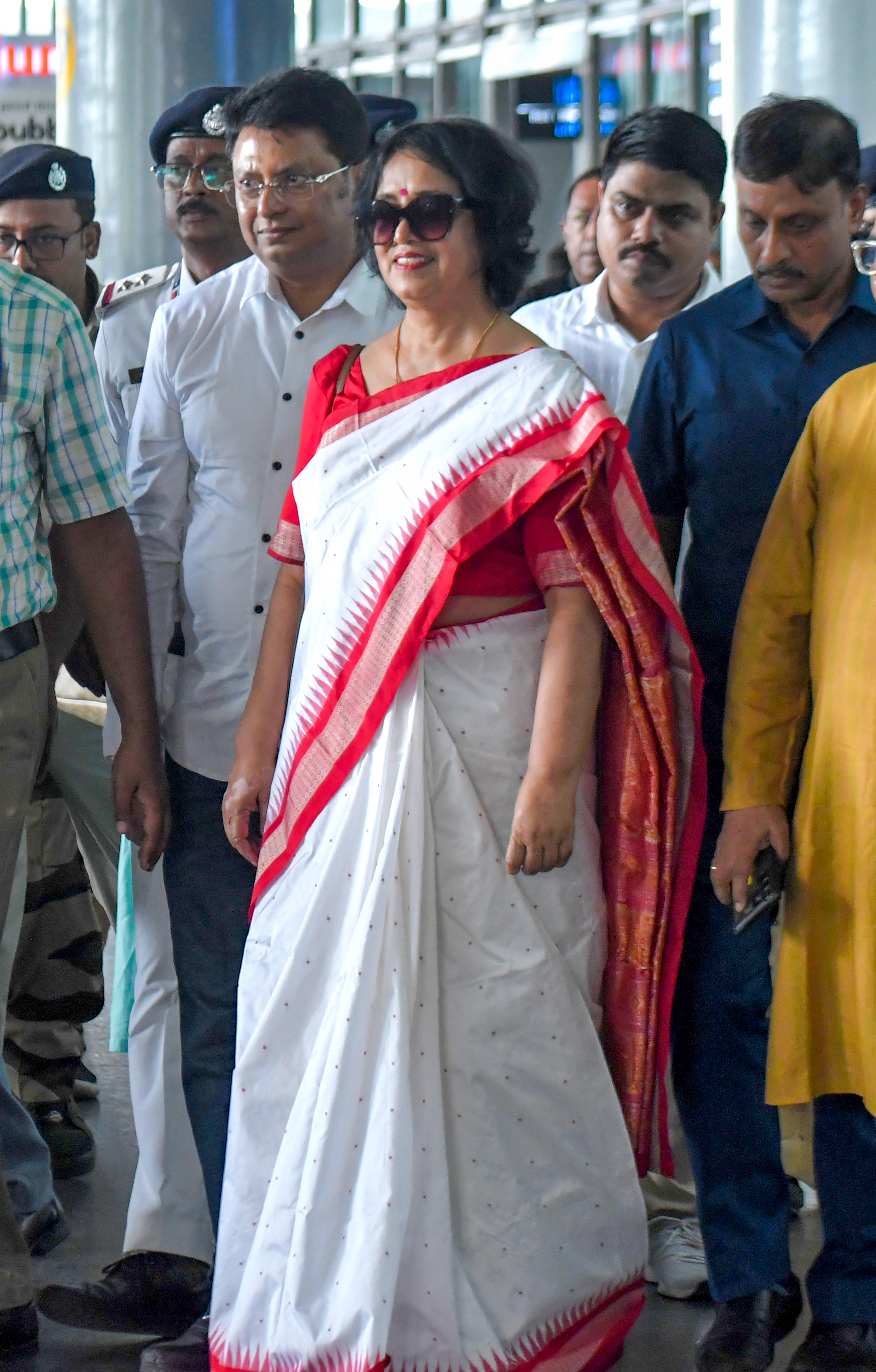

New Delhi, Aug 1 (AHN) Saturday marks author Taslima Nasreen’s first public appearance in Kolkata almost two decades after she was forced to leave the city she once called home. Her visit almost resembles "Phera (The Return)", the former Bangladeshi writer's novel about Kalyani, a Hindu woman who leaves what was then East Pakistan for India, and later revisits the country of her birth.
The comparison nevertheless highlights a common theme running through both journeys: the complex relationship between memory, belonging and displacement. Home, in both cases, is not merely a geographical location but a repository of experiences, relationships and identity.
Moreover, “Phera” is a social-historical and feminist novel that depicts the impact of past events, the tragedy of Partition, and the challenges faced by women. Still, the journeys bear certain similarities where home is not merely a place, but a relationship with the location, people, and memory.
It all began with a ray of hope for Nasrin in March last year when West Bengal Bharatiya Janata Party President and MP Samik Bhattacharya, speaking in Rajya Sabha, sought that she be allowed to return to Kolkata.
This followed an incident where the then state Trinamool Congress government was alleged to have prevented the staging of a theatrical adaptation of her book “Lajja (Shame)”. It was the same novel of 1993, depicting the persecution of a Hindu family in Bangladesh after the demolition of the Babri Masjid in India, that had provoked fierce opposition in her country of birth.
Her criticism of religious orthodoxy, advocacy of women's rights and rejection of discrimination in religion's name brought threats and state action. With a bounty announced on her head by fundamentalists, she left Bangladesh in 1994 and has lived in exile ever since.
Kolkata then offered a sense of belonging, and Nasrin settled there in 2004. But in 2007, fierce protests over her autobiographical work “Dwikhandito (Split)” led the author to leave West Bengal, with the then Left Front government citing security issues.
Though no formal ban prevented her return, the city's door remained effectively closed even under the Trinamool government. She eventually made New Delhi her base. Kolkata is not Nasrin's birthplace or her first home, yet remains her “City of Joy”, a place she identifies with language, literature, culture, and the everyday intimacy through which one can construct a second homeland.
Phera’s Kalyani, meanwhile, faced displacement as a member of East Pakistan's Hindu minority, where her migration was part of a much larger historical movement. Nasrin portrayed the displacement through the character as personal -- an abandonment, with relationships severed, and an inherited landscape turning inaccessible.
Years later, Kalyani did return -- to Bangladesh -- where the “home” in her memory did not correspond exactly. Time had changed people and surroundings; communal history had distorted the meaning of identity.
Like Kalyani's journey in Phera, Nasrin's return to Kolkata this week may not erase what happened. Times have changed. But it is a symbolic reversal of her expulsion and an overdue recognition of her right to enter a city she never willingly abandoned.
Nasrin has described the visit as an emotional or personal homecoming and expressed gratitude that Kolkata's door has reopened. The central irony is that both Kalyani and Nasrin are Bengali women whose belonging is repeatedly judged by political authorities and communal gatekeepers.
Borders and governments differ, but the mechanism is familiar; a group decides who may belong and on what terms. Kalyani's Hindu identity made her vulnerable in East Pakistan; Nasrin's atheism and criticism of Islam make her unsafe in Bangladesh and controversial in India.
Kalyani had returned to discover that memory's homeland cannot be fully reclaimed; Nasrin has returned to discover whether her second home can again be hospitable. The answer will depend not only on the warmth of one reception, but whether Kolkata's reopened door remains open after the applause fades.



