



Economy
Southeast Asian countries suffer as China’s thriving rare earth industry poisons Mekong river
Published On Sun, 12 Jul 2026
Asian Horizan Network
2 Views
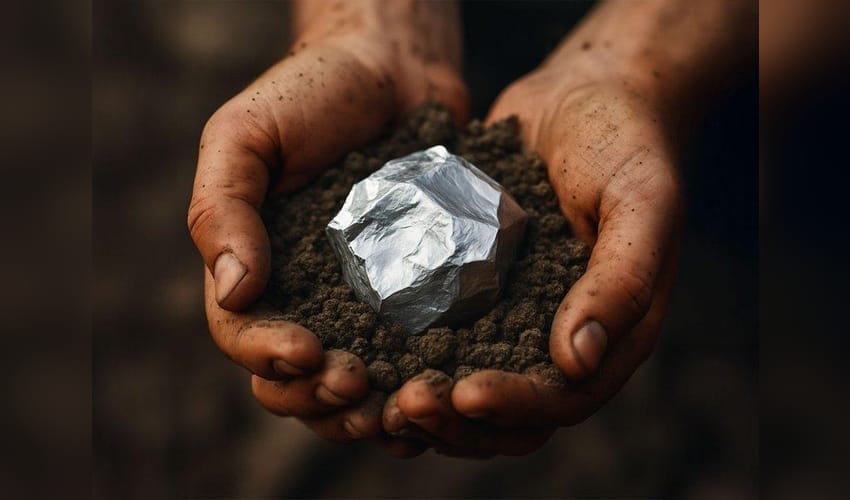

New Delhi, July 12 (AHN) China’s thriving rare earth industry is leading to massive pollution in the Mekong River, that flows downstream into South East Asian countries like Thailand, with heavy metals like arsenic being confirmed in the river’s mainstream sediment, according to a report in Myanmar’s Mizzima news portal.
The report highlighted that China tightened environmental enforcement on its own rare earth industry but shifted the mining operations across the border into Kachin and Shan States in Myanmar, where a 2021 military coup dislodged civilian rule and handed over resource-rich frontier territory to armed ethnic groups.
“In Kachin State alone, mining sites jumped from roughly 130 in 2020 to over 370 by the end of 2024. Myanmar’s rare earth exports to China, overwhelmingly the destructive heavy rare earths used in EV motors and wind turbines, more than doubled in the two years after the coup, and 85 per cent of the $4.2 billion in exports recorded between 2017 and 2024 came after the military took over. By 2023, Myanmar was supplying more than 60 per cent of China’s heavy rare earth imports by value output that, tellingly, exceeded China’s own domestic mining quota that year,” the article states.
Satellite imagery from the U.S.-based Stimson Centre has identified 833 unregulated mines across the Mekong River Basin, with 86 confirmed as rare earth operations using blue tarpaulin leaching ponds, more than half of which opened between 2024 and 2026.
Arsenic has now reached the Mekong mainstream itself, with Thai testing in Chiang Mai and Chiang Rai in early 2026 showing levels exceeding safety standards at all 23 monitored sites for the first time. The pollution has even spread to the tributaries of the river.
“Heavy metals like arsenic, lead, cadmium, and manganese that persist in sediment, move into fish, and accumulate in people’s bodies, contaminating rice, garlic, and edamame that enter the global supply chain at its source,” the article laments.
While China’s domestic environmental record improves on paper its factories keep receiving a steady, cut-rate supply of the toxic material just mined 50 miles across the border instead of at home. Chinese companies and buyers deal directly with armed groups like the United Wa State Army and the Kachin Independence Army, financing militias that fund civil war with mining revenue while skirting any accountability for the environmental devastation those mines leave behind, the article states.
The article also underlines how China’s global dominance over rare earth processing capacity has enabled Beijing to use it as a geopolitical weapon restricting exports to pressure Washington, Tokyo, and Brussels in trade disputes.
The article points out that China has no concern over the large-scale pollution it is causing in neighbouring countries. Regional bodies like the Mekong River Commission have no authority to compel change upstream, and China’s foreign ministry did not respond to press inquiries about the mineral imports fuelling the crisis, according to Mongabay reporting.



