



Asia In News
Religious freedom in South Asia: India's pluralist framework in troubled neighbourhood
Published On Tue, 17 Mar 2026
Narender Kumar
1 Views
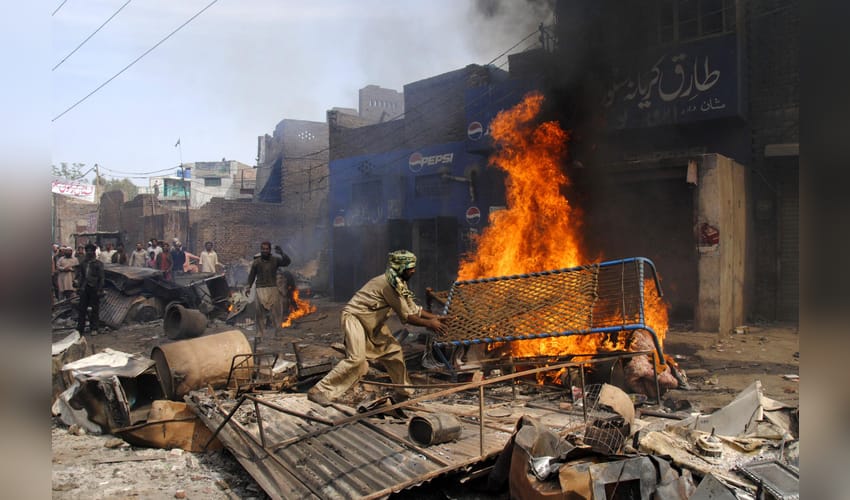

New Delhi: Freedom of religion and belief is among the most fundamental of human rights. It safeguards human dignity, allowing individuals to practice their faith without fear and enabling diverse communities to coexist peacefully. Nowhere is this principle more significant — and more contested — than in South Asia, a region that is home to some of the world’s oldest religions and an extraordinary mosaic of beliefs including Hinduism, Buddhism, Islam, Christianity, and Sikhism. While most South Asian nations constitutionally seem to guarantee religious freedom, the lived reality for many minorities reveals a more troubling picture shaped by politics, historical grievances, and social tensions.
In Pakistan, religious identity often determines access to safety and citizenship itself. The country’s demographic shifts reveal the scale of the challenge. At the time of independence in 1947, non-Muslims made up roughly 15–20 per cent of Pakistan’s population; by 1981 this had fallen to around three per cent, and today Hindus, Christians, and Sikhs together constitute less than four per cent. Multiple structural pressures contribute to this decline. Minority communities live under the constant threat of blasphemy accusations, which can trigger mob violence even before courts intervene. Hindu and Sikh communities have long struggled with the absence or delayed recognition of personal status laws governing marriage and inheritance, leaving many families in legal uncertainty.
Particularly alarming are reports of abductions and forced conversions of minor Hindu and Christian girls in Sindh and Punjab — cases that activists say have become disturbingly common. Courts have frequently accepted certificates of conversion as proof of consent, even when the individuals involved are minors. Meanwhile, the Ahmadiyya community faces unique legal restrictions that prohibit them from identifying their places of worship as mosques or using Islamic terminology. Political participation is also limited by constitutional provisions requiring that the President, Prime Minister, and provincial Chief Ministers be Muslim, effectively barring minorities from the highest executive offices.
Bangladesh, often celebrated for its economic progress, also presents a worrying pattern of shrinking minority populations. Hindus constituted about 13.5 per cent of the population in 1974; by 2024 that number had dropped to roughly eight per cent. Scholars and activists point to the long legacy of the Vested Property Act, which historically enabled the state to seize property belonging to individuals deemed “enemies,” a category that disproportionately affected Hindus. Research by economist Abul Barkat warns that if current demographic trends continue, the Hindu population could decline drastically in the coming decades.
Minorities in Bangladesh also face underrepresentation in key state institutions such as the bureaucracy and the military. Communal violence periodically underscores this vulnerability. Following political unrest in August 2024, rights groups documented a surge in attacks on religious minorities. The Bangladesh Hindu Buddhist Christian Unity Council reported more than 2,000 incidents of violence in just over two weeks, including attacks on dozens of temples and several deaths. These episodes highlight the fragility of minority security during periods of political instability.
Sri Lanka’s experience demonstrates another dimension of the region’s religious and ethnic tensions. Although the country has made strides since the end of its long civil war, minority communities — particularly Tamils, who are predominantly Hindu or Christian — continue to face marginalization. Buddhists constitute about 70 per cent of the population, and constitutional and political structures often reflect the primacy of Buddhism. In parts of the North and East, Tamil communities have alleged that land has been appropriated in the name of preserving Buddhist cultural heritage. Although post-war reconciliation efforts have been undertaken, representation of minorities in institutions such as the military and judiciary remains limited, leaving lingering grievances.
Nepal presents a different but equally significant challenge. The country’s 2015 Constitution declares Nepal a secular state, yet it simultaneously restricts religious conversion. Article 26(3) prohibits converting another person from one religion to another, a provision that has increasingly been enforced through criminal prosecutions. Over time, this has created a legal framework that limits religious outreach and missionary activity. Cases such as the arrest of Christian counsellors in Charikot in 2016 for distributing religious materials, and a 2024 Supreme Court ruling upholding the conviction of Pastor Keshab Raj Acharya, illustrate how anti-conversion laws can restrict religious expression.
Against this backdrop, India’s record on religious freedom stands out in many respects. The country’s Constitution guarantees freedom of religion and envisions a secular state that treats all faiths equally. India’s social fabric includes large Hindu, Muslim, Christian, Sikh, Buddhist, and other communities living side by side. Compared with countries where religion plays an explicit constitutional role in governance, India’s legal framework formally provides broader protections and institutional space for pluralism. in January 2024, in the long-running case of Bilkis Bano, the Supreme Court quashed the Gujarat government’s decision to grant remission to 11 convicted men and ordered them back to prison. The judgement demonstrated the judiciary's willingness to challenge executive decisions that undermine justice for victims of communal violence. The Court again demonstrated this protective role in April 2024 when it stayed a lower-court ruling that had invalidated the Uttar Pradesh Board of Madarsa Education Act, 2004. By intervening, the Supreme Court ensured that thousands of students enrolled in madrasas were not suddenly left without recognised educational pathways.
Institutional protection of minorities is not limited to the courts. Public policy initiatives have also sought to address demographic or social vulnerabilities within specific communities. A notable example is the Jiyo Parsi Scheme, a central government initiative aimed at reversing the population decline among India’s Zoroastrian community. Between 2020 and 2025, the programme disbursed more than Rs 17 crore to support fertility treatments, childcare and community awareness initiatives for Parsis. Though modest in scale, it represents a rare case of direct state intervention to preserve the continuity of a small religious minority.
Yet India, too, has faced rising religious tensions in recent years. Debates around identity, citizenship, and communal violence have sparked concern among observers both within and outside the country. Even so, India’s long experience of managing religious diversity — through constitutional safeguards, democratic institutions, and civil society activism — offers important lessons for the region.
Taken together, the experiences of South Asian countries reveal a troubling pattern: despite constitutional promises and decades of political independence, violence and discrimination against religious minorities persist. Too often, accountability remains elusive. Investigations are delayed, perpetrators escape punishment, and victims rarely receive justice or reparations. This culture of impunity perpetuates cycles of violence and erodes public trust in state institutions.
For South Asia to move toward lasting stability, protecting religious freedom must become more than a constitutional aspiration.
(The author has over three decades of experience in community development, public policy, human rights, and international development, from grassroots initiatives to the United Nations. He regularly participates in debates at the UN Human Rights Council on issues such as religious freedom, gender-based violence, and the right to development. Views expressed are personal)



