



Military
Rajnath Singh exhorts defence PSUs to onboard PM-SETU for Viksit Bharat
Published On Sun, 30 Aug 2026
Asian Horizan Network
6 Views
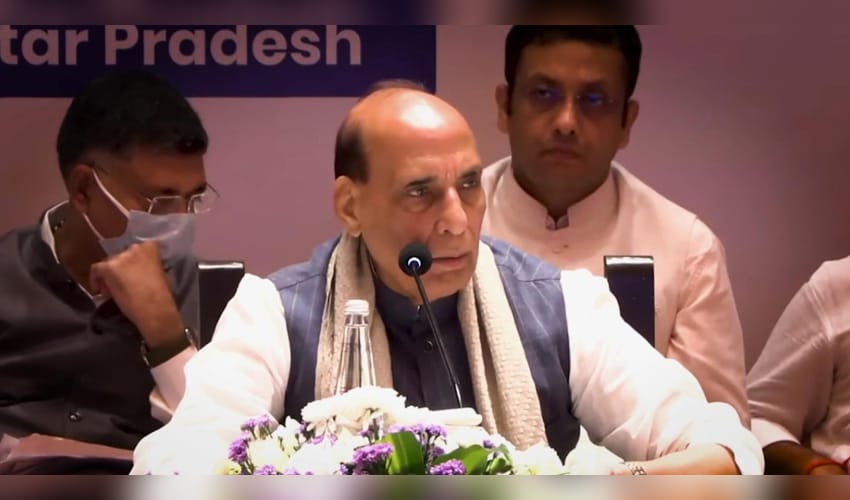

Lucknow, Aug 30 (AHN) Defence Minister Rajnath Singh on Sunday exhorted the public sector defence companies to partner with PM-SETU to create a strong, skilled workforce in the march for a Viksit Bharat.
Addressing the PM-SETU industry conclave here, organised by the Union Ministry of Skill Development and Entrepreneurship (MSDE) in collaboration with the Uttar Pradesh government, he stressed that the availability of a skilled workforce is fundamental to nation-building, as he reiterated Prime Minister Narendra Modi's vision of converting India's demographic dividend into a productive dividend.
Rajnath Singh underscored the need to align the skilling ecosystem with industry requirements, stating that skill certificates hold value only when they lead to meaningful employment. Calling upon industries to view PM-SETU as a collaborative mission rather than merely a government scheme, he urged them to actively participate in shaping the workforce that will ultimately serve their own growth and competitiveness.
The minister appealed to defence public sector undertakings and other defence-related organisations to actively partner in the PM-SETU initiative, while also stressing the need to transform ITIs and strengthen apprenticeship opportunities. He stated that the success of PM-SETU should be measured not by the number of machines installed, but by the employment opportunities it creates and the lives it positively impacts.
The event witnessed participation from senior leadership of leading defence and manufacturing organisations including Hindustan Aeronautics Limited (HAL), Bharat Electronics Limited (BEL), Bharat Dynamics Limited (BDL), BrahMos Aerospace, Ashok Leyland, NSDC, TCIL, PTC, along with representatives from the World Bank, industry associations and other strategic stakeholders.
The conclave was informed that approved Industry Partnership proposals under PM-SETU currently represent more than Rs 1,500 crore of committed industry-led investment across seven clusters in five states, with several additional proposals under consideration.
Rajnath Singh emphasised that India's journey towards becoming a global manufacturing and technology powerhouse would be driven by the availability of highly skilled manpower. He highlighted that sectors such as defence manufacturing, aerospace, electronics, drones, robotics, precision engineering and automation are witnessing rapid technological advancements and require a workforce equipped with future-ready skills. He underscored that a strong domestic defence industrial base and a strong skilling ecosystem must grow together to support India's aspirations for self-reliance and technological leadership.
The conclave brought together senior representatives from government, industry, multilateral institutions, defence public sector enterprises, sector skill councils and skilling stakeholders to deliberate on strengthening industry participation in vocational education and transforming Industrial Training Institutes (ITIs) into world-class centres of excellence.
The Defence Minister highlighted Uttar Pradesh's emergence as a major hub for manufacturing and defence production, driven by the rapid growth of its industrial ecosystem and the Defence Corridor. Emphasising the importance of stronger industry-academia linkages, he noted that collaboration between industry and training institutions is crucial to equip youth with future-ready skills and expressed confidence that such partnerships would steer the state in the right direction. He further remarked that under the leadership of Chief Minister Yogi Adityanath, Uttar Pradesh is witnessing transformative development across multiple sectors.
In his remarks on the occasion, Union Minister of State (Independent Charge) for Skill Development and Entrepreneurship Jayant Chaudhary said that PM-SETU represents a new partnership model between government, industry, and training institutions. He emphasised that the initiative is designed to bridge the gap between training and employment by enabling industries to play an active role in the development, governance and operation of ITI clusters. He highlighted that the programme aims to create a future-ready workforce through industry-aligned training, modern infrastructure, apprenticeship opportunities and pathways for entrepreneurship.
Underscoring the strategic importance of the defence sector in achieving global competitiveness, he highlighted that the industry's reliance on technology and innovation makes this scheme both timely and relevant. He called upon industries to go beyond CSR initiatives and take active ownership of ITIs to strengthen the skilling landscape.



