



World
Raj govt launches initiative for 'Oran' conservation in Jaisalmer, 3,666 hectares of land reserved to preserve groves
Published On Thu, 16 Apr 2026
Asian Horizan Network
4 Views
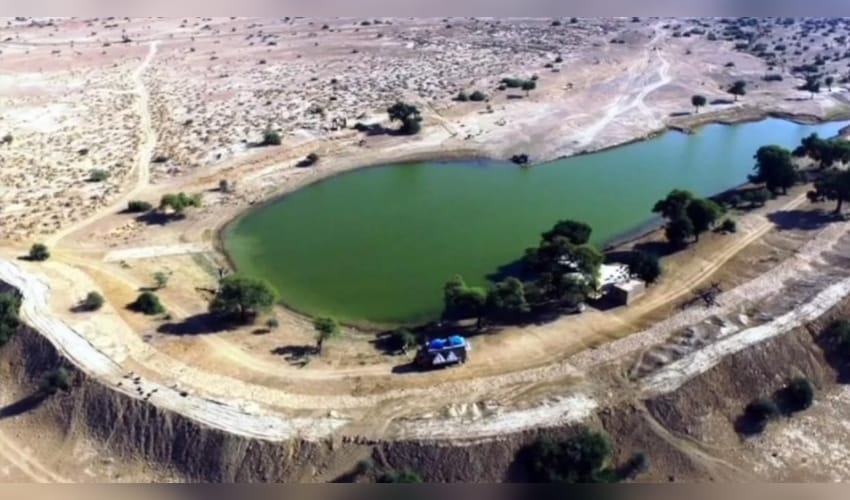

Jaipur, April 16 (AHN) In a significant step towards environmental conservation while respecting local traditions, the Rajasthan government on Thursday has undertaken a major initiative to reserve 'Oran' (sacred groves) land in Jaisalmer district to maintain ecological balance in the desert region.
'Oran' refers to a centuries-old system rooted in socio-religious beliefs, where local communities protect sacred groves by refraining from harming trees or natural resources within these areas.
Cutting trees or using axes in such zones is traditionally prohibited, allowing these ecosystems to remain naturally preserved over generations.
These sacred landscapes represent a unique confluence of faith and conservation.
Under this initiative, a total of 3,666.2139 hectares of land has been reserved across various villages in Jaisalmer district for 'Oran' purposes.
In Ramgarh tehsil, 124.9502 hectares have been reserved in Dilawar Ka Gaon, 1,084.8043 hectares in Kuchhdi, and 583.9876 hectares in Poonamnagar. In Fatehgarh tehsil, 952.2752 hectares in Bhimsar and 96.7716 hectares in Binjota have been designated as 'Oran' areas.
Additionally, in Jaisalmer tehsil, land has been reserved in Mokla village across three blocks measuring 187.364 hectares, 256.2511 hectares, and 253.4034 hectares, along with 126.4065 hectares in Birma Kanod.
The state government is also in the process of reserving additional land for 'Oran' conservation.
This includes 1,457.4991 hectares in Mokla village (Jaisalmer tehsil), 225.03 hectares in Askandra village and 229.5067 hectares in Didhu village (Nachna tehsil), and 333.9165 hectares in Mohanagarh Barani/Pannodharay village.
The term 'Oran' is derived from the Sanskrit word 'Aranya', meaning an untouched forest. These areas are not only a reflection of ancient cultural and religious traditions but also play a crucial role in preventing desertification and preserving biodiversity in arid regions.
The initiative is expected to strengthen conservation efforts in Jaisalmer while protecting traditional sites of faith and enhancing greenery and biodiversity across the desert landscape.



