



Asia In News
Politicisation of identity, migration, and language in Assam, West Bengal dominate; override addressal
Published On Thu, 09 Apr 2026
Asian Horizan Network
1 Views
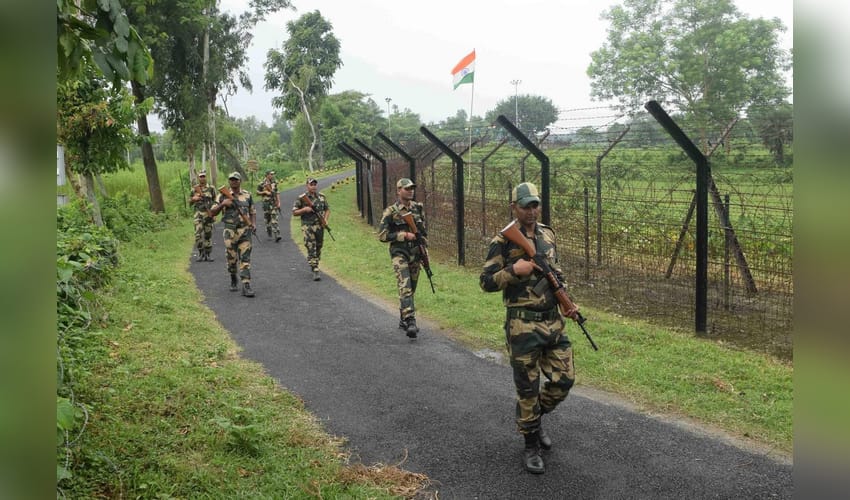

New Delhi, April 9 (AHN) As Assam voted on Thursday, and West Bengal will on April 23 and 29, one contentious issue that dominates all is that of infiltration – especially of Bengali-speaking Muslim migrants – from Bangladesh.
Issues of identity, migration, and language in West Bengal and Assam are not recent, but have been there for a long time, and have even led to clashes in the past.
Immigration has significantly dominated politics, particularly in the run‑up to elections. Subsequent governments have been accused of ignoring the "demographic threat" for electoral purposes, especially in West Bengal.
With the intense polarisation of electors on religious and regional lines lately, the issue has snowballed into a major political debate.
Reports like the 2018 Brahma Committee warned of risks to indigenous Assamese communities from Bangladeshi immigration, particularly in terms of land rights and encroachment.
Assam Chief Minister Himanta Biswa Sarma has warned that Assamese Hindus risk becoming a minority in their own land due to decades of unchecked immigration. This echoes the long history of agitation in Assam, beginning with the student‑led movement of 1979, which culminated in the Assam Accord of 1985.
That agreement laid the groundwork for the National Register of Citizens (NRC), a process that remains contentious.
Census data highlights shifting linguistic balances. Between 2001 and 2011, Assamese speakers grew by 16 per cent, but their share of the population fell slightly. Bengali speakers grew by 23 per cent, increasing their share by over one percentage point. These figures fuel anxieties about demographic change.
Yet, census records from as early as 1911 reveal the difficulty of categorising language and identity in Assam, where bilingualism and colonial administrative practices blurred distinctions. This complexity makes it hard to definitively identify "illegal immigrants".
Meanwhile, West Bengal’s ruling Trinamool Congress has consistently opposed the NRC, alleging it is designed to expel Bengali speakers.
Now, the Election Commission’s Special Intensive Revision (SIR) has also been in the spotlight on the same lines. Citing stories that Bengali speakers were reportedly being harassed, Trinamool chairperson and West Bengal Chief Minister Mamata Banerjee even urged her party cadres to continue protests against such incidents. She has framed this as a defence of Bengali pride, hoping to mobilise sentiment ahead of elections.
Her aide-turned-rival, Suvendu Adhikari of the BJP, counters that these protests are a diversion from corruption scandals and governance failures. He has accused the Trinamool of sheltering Rohingya migrants to expand its vote bank.
Thus, the debate over migrant rights doubles as a proxy battle over credibility and nationalism.
Banerjee seeks to rally Bengali pride in her state against perceived outsider hostility. In Assam, the BJP emphasises the protection of indigenous identity against demographic dilution. The clash reflects deeper tensions between regional pride and national integration, between cultural identity and political expediency. Migration into Assam and Bengal has deep roots. During colonial times, both regions were part of the Bengal Presidency, which facilitated the settlement of Bengali‑speaking Hindus and Muslims.
Later, the partition of India in 1947 and the creation of Bangladesh in 1971 triggered subsequent waves of refugees.
Even today, porous borders allow undocumented migrants to slip in, often allegedly aided by touts who help them acquire identity papers. However, there are linguistic differences between Bengali spoken in India and Bangladesh.
Though sharing a common root, vocabulary and pronunciation diverge, not only across the border, but even among regions in Bangladesh. The time is to address migration and identity issues without succumbing to pride, prejudice, or short‑term electoral gains. The question of “who is the real Bengali” is not merely linguistic or cultural – it is a political weapon wielded in battles over votes, legitimacy, and belonging.



