



Politics
PoK protests fuel comparisons with J&K, putting Pakistan on the defensive
Published On Thu, 18 Jun 2026
Vicky Nanjappa
6 Views
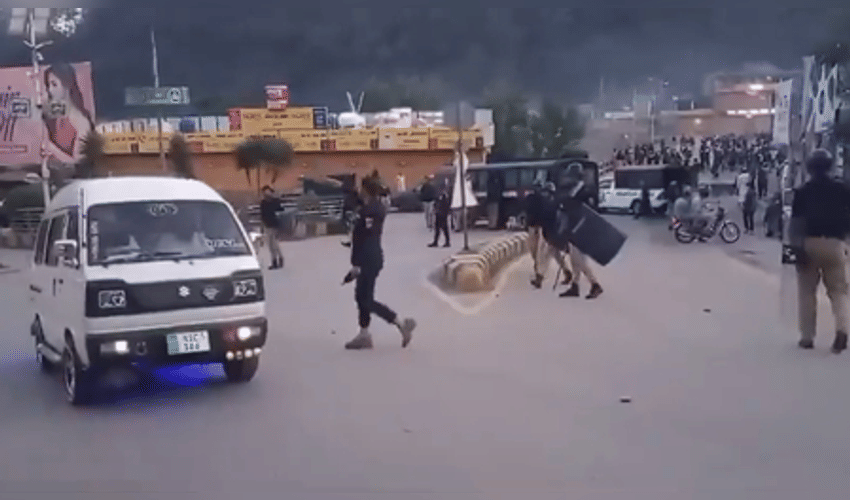

New Delhi, June 18 (AHN) The crisis in Pakistan-occupied Kashmir (PoK) continues to deepen, adding to the challenges facing the Pakistani establishment. The ongoing protests led by the Joint Awami Action Committee (JAAC) have drawn attention not only within the region but also internationally.
What has become particularly uncomfortable for Islamabad is that protesters are openly criticising the administration while drawing comparisons between conditions in Jammu and Kashmir and those in PoK.
Officials say the Pakistani establishment has begun to realise that the situation is becoming increasingly difficult to manage. In the past, Pakistan sought to shape international opinion by facilitating visits from foreign political figures who would amplify its narrative on Kashmir.
One such instance occurred in 2022, when US Congresswoman Ilhan Omar undertook a four-day visit to PoK amid growing unrest in the region. During the visit, she endorsed Pakistan's position on Kashmir.
“On the question of Kashmir, we held a hearing in the Foreign Affairs Committee of Congress to look at the reports of human rights violations,” she had said.
She also backed Islamabad's call for third-party intervention after holding talks with the Prime Minister and Minister of State for Foreign Affairs.
However, Pakistan's efforts came under scrutiny after annual financial disclosures filed before the US House of Representatives revealed that Omar's trip had been fully sponsored by the Pakistani government, including expenses related to travel, accommodation and hospitality.
Despite the controversy surrounding the visit, officials believe Islamabad may once again attempt similar measures to divert attention from developments in PoK. According to them, Pakistan would seek support from international figures willing to visit the region and raise the Kashmir issue while portraying Jammu and Kashmir in a negative light.
An official said that although attempts may be made to influence the narrative, doing so would be far more difficult this time. The JAAC movement has shown no signs of slowing down and continues to push the issue onto the international stage.
Another official noted that the protests are highlighting long-standing grievances in PoK. More importantly, they are drawing attention to comparisons on the quality of life and developmental progress in Jammu and Kashmir and conditions across the Line of Control.
"There is far greater awareness today than there was in 2022. Since the abrogation of Article 370 by the Narendra Modi government in 2019, Jammu and Kashmir has witnessed significant changes. Development and tourism have expanded, while terrorism-related incidents have reduced considerably," the official said.
Officials point to differences in infrastructure and public services between J&K and PoK. They claim that while PoK continues to struggle with basic amenities, Jammu and Kashmir has seen substantial investments in healthcare, education, transport and development projects.
PoK has only three medical colleges, as compared to ten in Jammu and Kashmir. Dissent is often suppressed in PoK, unlike in Jammu and Kashmir. Access to healthcare is also significantly better in J&K, which has 2,312 government hospitals providing free medical care, while PoK has just 23 such facilities.
In the education sector, J&K has 35 universities, whereas PoK has only six. J&K is served by four airports and has railway connectivity, while PoK has only two airports. The contrast is also evident in development spending, with J&K receiving an allocation of Rs 33,127 crore compared to just Rs 60 crore for PoK.
Another official said the disparity is becoming increasingly difficult for the Pakistani establishment to justify, especially as it is receiving wider international attention. PoK is home to several major hydropower projects that generate around 3,500 MW of electricity, while the region's own requirement is estimated at 400 MW. However, officials allege that most of the electricity generated in PoK is diverted to Pakistan's national grid.
This has contributed to recurring power shortages and prolonged blackouts in the region. Residents are often forced to purchase electricity at higher rates despite enduring outages that, according to local accounts, can last for several hours each day.
Observers monitoring developments in PoK describe the situation as one of the most serious challenges Pakistan has faced in the region in recent times. They argue that the issue is no longer confined to protests alone but has evolved into a broader debate about governance, development and living conditions.
Experts say Pakistan is unlikely to address the underlying concerns in the immediate future and may instead focus on altering the narrative. According to them, Islamabad could attempt to internationalise the Kashmir issue by encouraging foreign voices to highlight alleged concerns in J&K while deflecting attention from the unrest and governance challenges confronting PoK.
-- ANS
vn/snj/skp



