



World
Pakistan: Parliamentary debate on Balochistan shows absence of introspection
Published On Mon, 09 Feb 2026
Asian Horizan Network
1 Views
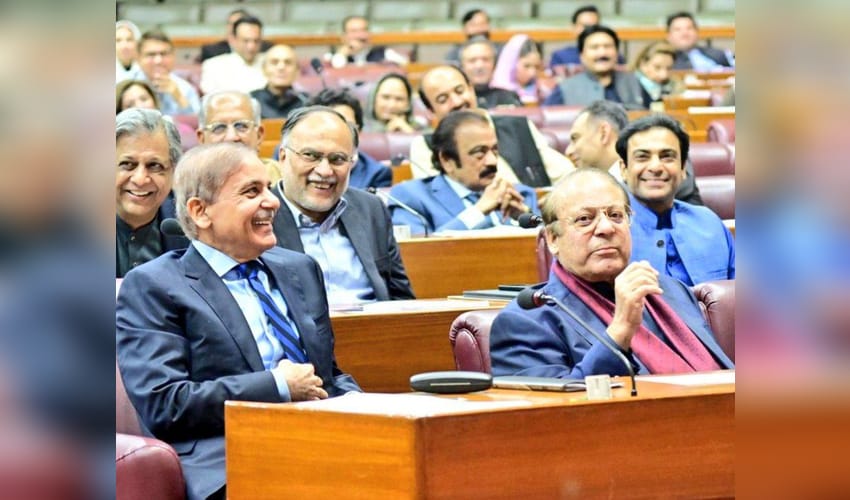

Islamabad, Feb 9 (AHN) Political parties in Pakistan seem to be losing the capacity to see critical national issues through a national prism which was reflected in the recent discussion on Balochistan in National Assembly and the Senate, a report has stated.
"In this context, the parliamentary debate on Balochistan revealed rare unanimity, but also the absence of introspection. Across party lines in both the National Assembly and the Senate, lawmakers converged on two broad premises: first, that the grievances of the Baloch must be addressed, without specifying what those grievances are, and second, that terrorism cannot be defeated through condemnations alone," security analyst Muhammad Amir Rana wrote in Pakistan's leading daily Dawn.
"However, from a security-centric outlook, this consensus was rhetorical. The debate ultimately stopped short of engaging with the deeper political and structural causes that have allowed violence to entrench itself in the province," he added.
Several parliamentarians highlighted the failure of the government in addressing grievances of residents, especially the denial of political rights, economic opportunity and meaningful involvement for Baloch youth.
They stressed that hostile external actors and violent networks have exploited governance vacuum. Lawmakers raised questions over the credibility of counter-smuggling measures, with parliamentarians questioning on how oil continues to flow from border regions to major urban centres despite the presence of security and what concrete measures were being taken to curb external involvement.
During the debate, the parliamentarians raised issues of Balochistan, which was also mentioned in the resolutions passed by both houses.
Dissenting views, especially calls for political engagement and reconciliation, were absent from the final consensus. However, few opposition leaders, including the National Assembly opposition leader Mehmood Achakzai and Senator Jan Buledi in the Senate, called for political engagement and reconciliation to address the problems of Balochistan, the Dawn report highlighted.
"These resolutions also reflected concurrence with the country’s power elites under the perceived paradigm of a hard state. While we are not entering into an academic debate on the concept of the hard state, one major flaw is evident in the approach: it becomes fixated on a narrow vision, viewing issues through a single prism and losing the ability to accommodate diverse perspectives, which is the essence of political processes," wrote Rana.
"This approach is manifesting itself at multiple levels, but Balochistan remains its prime victim, as the space for resolving the province’s complex issues through a political process has steadily diminished," he added.
Baloch and Pakhtun nationalist parties, especially Akhtar Mengal’s Balochistan National Party (BNP), Abdul Malik’s National Party (NP) and Achakzai’s Pakhtunkhwa Milli Awami Party (PkMAP), continue to support political reconciliation. Recently, Sardar Akhtar Mengal has taken a more hard-line approach to protect his political space. Mainstream political parties, especially the Pakistan Muslim League-Nawaz (PML-N) and Pakistan Peoples Party (PPP) have at times listened to their concerns, however, they have failed to resolve the issues of Balochistan, the report highlighted.



