



World
Pakistan: Latest exodus adds to tumultuous history of Khyber Pakhtunkhwa's Tirah Valley
Published On Mon, 02 Feb 2026
Asian Horizan Network
2 Views
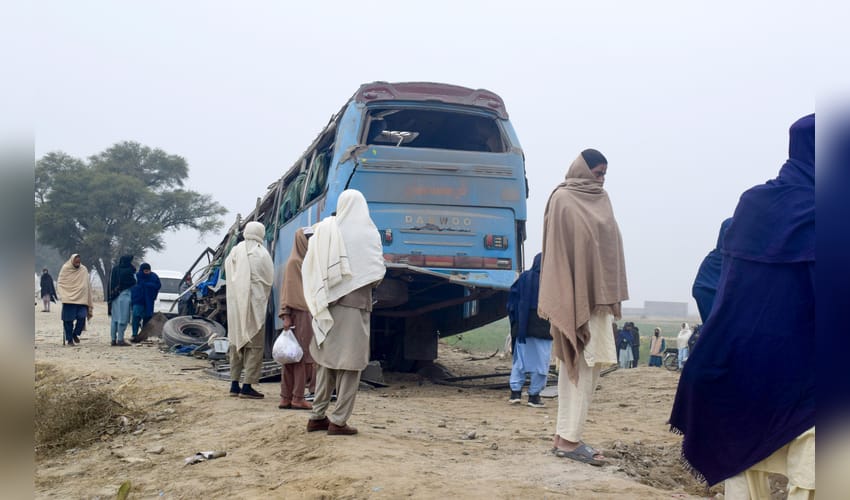

Islamabad, Feb 2 (AHN) Tirah Valley in Khyber tribal district of Pakistan's Khyber Pakhtunkhwa has witnessed another wave of displacement amid talks of a "limited offensive" against the outlawed Tehreek-e-Taliban Pakistan (TTP). This exodus marks yet another chapter in the tribal region's tumultuous history, with local residents caught in the cross fire and facing the consequences of the blame game between the federal and the Pakistan Tehreek-e-Insaf (PTI)-led provincial government.
"Over the past two decades, the tribal areas and Malakand division have endured at least 12 large-scale counterterrorism operations, each promising to eradicate the Taliban threat. Yet the Taliban have only grown more sophisticated and brazen as the region remains mired in violence. The people of Tirah Valley in particular, and the rest of the tribal districts in general, are left to wonder: will this cycle of violence ever end?," Islamabad-based journalist and analyst Ihsanullah Tipu Mehsud wrote in an opinion piece for Pakistan's leading newspaper 'The Express Tribune'.
The issue has become a point of political contention with both sides blaming each other over finding solutions. Locals are facing problems, with their homes destroyed, livelihoods ruined, and lives uprooted. Promised stability, reconstruction, rehabilitation, and institution-building have not materialised after each operation as post-operation phases are neglected. At this moment, local residents find little reason to believe the government considering the past unfulfilled promises. However, they have again vacated the region amid harsh winter, placing their trust once more in the state's word.
"These days, in both mainstream and social media, there is a growing trend of bashing Pashtuns from K-P in general, and the erstwhile Federally Administered Tribal Areas (FATA) in particular. Often out of context and accompanied by insinuations and stereotyping, this trend fosters alienation rather than integration, undermining the goals of the 2018 FATA merger. Authorities habitually shift blame for their own failures while using media as a key tool. Analysts and journalists unfamiliar with the basic ground realities of the tribal areas are deployed on media platforms to shape the national discourse, while key Pashtun stakeholders are kept entirely sidelined," Ihsanullah Tipu Mehsud wrote in an opinion piece in The Express Tribune magazine.
Some apolitical locals stressed that a media campaign was launched a few months back showcasing Tirah Valley as a centre of drug cultivation, trafficking, and terrorism financing instead of engaging them with mutual respect and an understanding of the complex local dynamics surrounding the present threat. According to them, the operation now seems to have launched for score-settling between the provincial and federal governments instead of ending terrorism in the region.
The Express Tribune piece stated, "The priorities of both the federal and provincial governments are evident: there is only one Pashtun minister in the federal cabinet, while the current K-P provincial cabinet includes no ministers from the southern districts — the region worst hit by militancy. On the counter-narrative front, the government has deployed people largely unfamiliar with the complex ideological factors driving violence carried out in the name of jihad."
A 24-member local jirga's decision to vacate houses in Tirah Valley for operation by January 10 is highly questionable as only the provincial government holds the authority to approve such decision after FATA's merger into Khyber Pakhtunkhwa and the abolition of the Frontier Crimes Regulation (FCR), which had earlier provided legal cover for jirga decisions.
Meanwhile, special assistant to the Khyber Pakhtunkhwa Chief Minister on information, Shafi Jan, during a TV talk show, claimed that coercive measures were used against the 24 jirga elders to sign the agreement, an allegation rejected by the authorities. The treatment of erstwhile FATA since its merger with Khyber Pakhtunkhwa indicates that it continues to face neglect that it had been experiencing during its autonomous status.



