



Politics
Nepal government, judiciary clash over Chief Justice nomination
Published On Sun, 10 May 2026
Asian Horizan Network
4 Views
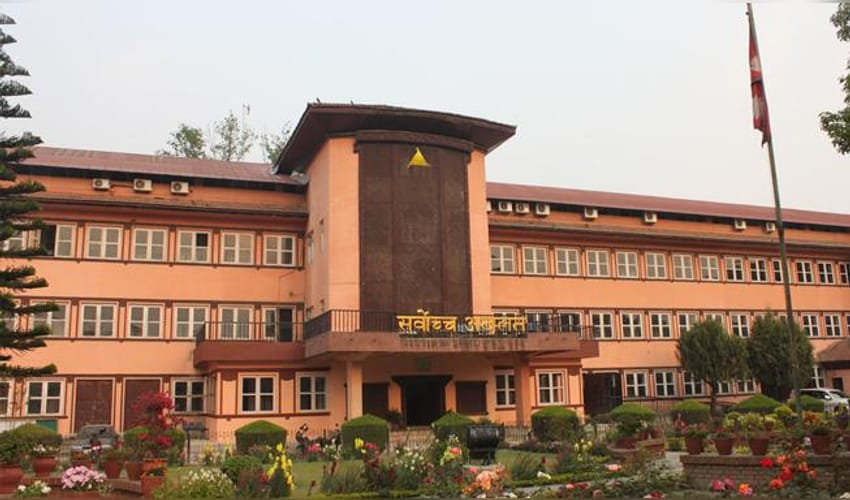

Kathmandu, May 10 (AHN) Nepal’s government and judiciary have come into open conflict following the Constitutional Council’s recommendation of a Supreme Court judge, who ranks fourth in seniority, for the post of Chief Justice.
On May 7, the council, headed by Prime Minister Balendra Shah, recommended Justice Manoj Sharma to President Ram Chandra Poudel for appointment to the post of Chief Justice, despite Sharma being fourth in seniority among Supreme Court justices, thereby breaking the decades-long tradition of appointing the senior-most justice to the position.
National Assembly Chairperson Narayan Dahal and Leader of the Opposition in the House of Representatives Bhisma Raj Angdembe wrote notes of dissent against the recommendation, stressing that the long-standing tradition should not be broken.
On Saturday, acting Chief Justice Sapana Pradhan Malla reacted strongly to the Constitutional Council’s decision, saying efforts were being made to bring the judiciary under the government’s control.
Following the conclusion of an event marking 74th National Law Day, Malla, the senior-most justice of the Supreme Court, said: "It is an attempt to turn the judiciary into an institution that surrenders and compromises with the executive body."
She said the long-held tradition of seniority had been broken. "It is not important who has been affected, but it is an attempt to control the judiciary through the discretionary power of the government," she told journalists.
With the government saying that Sharma, who was recommended for chief justice, had demonstrated greater capability than other senior judges, Malla remarked: "On what basis capability was tested, I do not know. Capability can be tested through competition and work. Whatever details about capability have been presented are not correct. The question of how you judge capability as a whole is important."
The government had, however, presented the statistics that Sharma issued more verdicts than the other three senior judges during the period of evaluation.
Earlier, at a special ceremony organised to mark the 74th Law Day, Malla said the essence of justice must not be undermined by pressure from a two-thirds majority government or threats of impeachment.
Addressing judges attending the event, she encouraged them to work with high morale and integrity. "Justice cannot prevail under fear or influence," Malla said. "Whether it is the fear of a powerful government or the threat of impeachment, judges must rise above such narrow constraints."
She called on members of the judiciary to uphold the sanctity of justice with courage and impartiality, stressing that fearless decision-making is essential to preserving the independence and dignity of the judiciary.
The harshest criticism of the council’s decision has come from former Prime Minister Sushila Karki, who was also Nepal’s first woman Chief Justice.
Speaking to news portal Onlinekhabar following the recommendation, she noted that a capable woman justice had been denied the opportunity to become the Chief Justice of the country.
"Nobody is as capable as Sapana Pradhan Malla. Her qualifications are even stronger than mine. It is a slap in the face of 15 million women (half of the country’s population)," she said.
Karki also expressed bitterness over the Constitutional Council’s decision on Saturday. Speaking to journalists following the conclusion of the Law Day event, she reacted angrily after a journalist addressed her as 'Mother', a term Prime Minister Shah had earlier used for her.
"Don’t call me mother. Your mother has now changed. It is the wife (Sabina Kafle) of Balendra Shah who is now the mother, the national mother," she said. In fact, Shah was instrumental in her appointment as interim Prime Minister following the Gen Z revolution in September last year.
Karki had earlier said the council’s decision would affect judicial independence.
"The way attempts have been made to control the court will not bring this government to a good standing. Interfering with the court is not a good thing," she said.
Constitutional lawyer Bipin Adhikari told AHN that although the Constitution does not bar the council from recommending a junior justice for the post of Chief Justice, there are concerns that breaking the tradition of appointing the senior-most justice could give the government room to maneuver and select its preferred candidate for the top post in the Supreme Court.
"This could affect the independence of the judiciary, which is responsible for checking and balancing the executive branch of the state," he said.
According to Adhikari, the government’s argument that Justice Sharma had a better track record based on the number of verdicts was misguided.
"The number alone cannot be a parameter for evaluating a judge’s performance. The quality of the verdicts and their impact on establishing judicial precedent are more important," he said.
He believes that the perception that Malla and other senior judges were appointed in the past based on political power-sharing may have been a major reason why the Constitutional Council, dominated by the ruling party, chose not to recommend senior-ranked judges for the post of chief justice, rather than evaluating them solely based on performance.
The constitution does not bar the Constitutional Council from selecting any one of the six justices recommended by the Judicial Council; it has long been the tradition to recommend the senior-most Supreme Court justice. However, some justices in the past have been rejected by the parliamentary hearing committee following complaints against them.
Under Article 129 of the Constitution of Nepal, a justice who has served at least three years as a Supreme Court judge is eligible to be appointed chief justice.



