



World
'Medical impoverishment': Experts flag financial hardships in Bangladesh due to measles outbreak
Published On Tue, 04 Aug 2026
Asian Horizan Network
2 Views
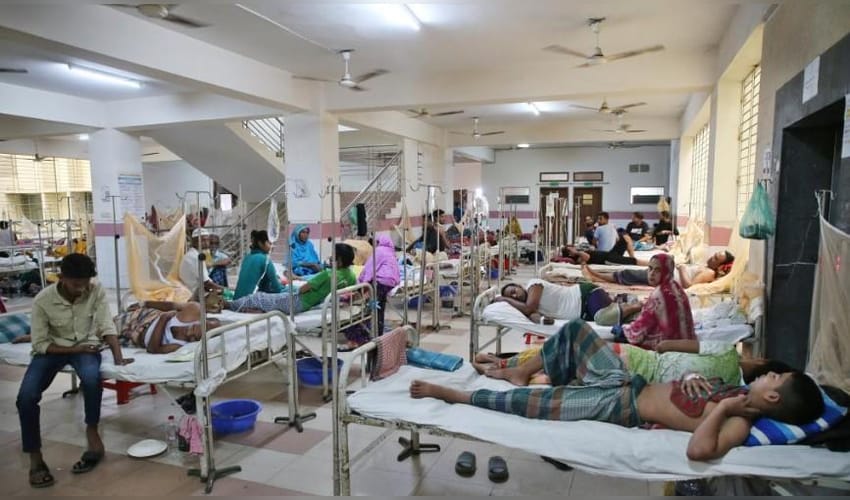

Dhaka, Aug 4 (AHN) As Bangladesh continues to grapple with a measles outbreak, at least nine out of every 10 families impacted by the disease have been forced to take out loans to cover treatment costs, while six in 10 have exhausted their savings, local media reported on Tuesday, citing a joint report by two humanitarian organisations.
In their latest joint assessment, the Bangladesh Red Crescent Society (BDRCS) and the International Federation of Red Cross and Red Crescent Societies (IFRC) examined data from 2,746 families with measles patients undergoing treatment at 12 government medical colleges and district hospitals nationwide.
The report found that each family spent an average of around Bangladeshi taka (Tk) 16,000 on measles treatment, the country's leading daily Prothom Alo reported.
Many parents said that they had to stay away from work to care for their sick children in hospital, leaving some without incomes and others unemployed after losing their jobs.
Public health expert Mushtuq Husain told Prothom Alo that the financial burden borne by low-income families across Bangladesh due to measles reflects what health economists describe as "medical impoverishment".
"It is an extremely painful experience for any family. The incumbent government pledged in its election manifesto to ensure free primary healthcare. Yet, during this measles crisis, we have seen no reflection of that commitment. It is precisely during times like these that such support is needed most," he stated.
Speaking to Prothom Alo, Syed Abdul Hamid, Professor at the Institute of Health Economics at Dhaka University, said that the majority of children infected with measles come from low-income households.
"The research also shows that these families earn between Tk 6,000 and Tk 20,000 a month. For households with such incomes, treatment-related expenses represent an enormous financial burden. If the government at least covered part of the cost of diagnostic tests at public hospitals, these families would receive some relief," he said.
Kabir M. Ashraf Alam, Secretary General of the Bangladesh Red Crescent Society, said the assessment revealed that the outbreak has left many families battling both a health emergency and severe financial strain.
"As part of our emergency response, we are providing cash assistance to the most vulnerable families while continuing community awareness programmes," he said.
Echoing similar concerns, Alberto Bocanegra, Head of the IFRC Delegation in Bangladesh, said, "The impact of this public health emergency does not end at the hospital door. Families caring for sick children or relatives face significant financial constraints. The findings demonstrate that both humanitarian assistance and robust social protection systems are essential during public health emergencies."



