



Asia In News
Kerala's verdict hinges on vote counting as UDF challenges LDF's bid for 'hat-trick'
Published On Sun, 03 May 2026
Shashikant Trivedi
6 Views
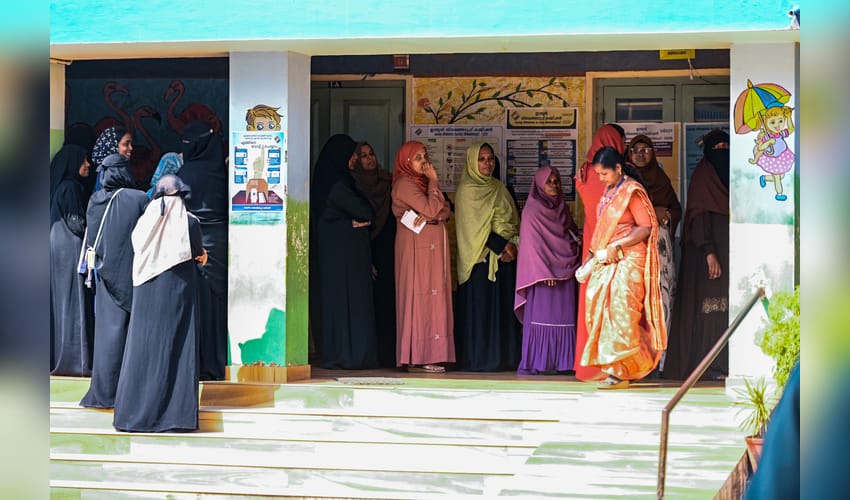

New Delhi/Thiruvanthapuram, May 3 (AHN) Kerala has once again demonstrated its reputation as one of India's most politically dynamic states, concluding the Assembly elections with a voter turnout of 79.7 per cent.
The participation of women voters, who outnumbered men at 80.86 per cent, reflects a deeply engaged electorate that has carefully weighed the performance of the incumbent Left Democratic Front (LDF) against the promises of the Congress-led United Democratic Front (UDF).
However, in the Assembly elections, the Bharatiya Janata Party (BJP)-led National Democratic Alliance (NDA) emerged as a prominent player during the election campaign.
With counting of votes scheduled for Monday, the state stands at a decisive juncture, as exit polls point to a razor-thin contest that could either cement a historic third consecutive term for the LDF or restore Kerala's traditional cycle of alternating power.
At the centre of this contest lies the governance model of Chief Minister Pinarayi Vijayan, which has been built on welfare expansion and ambitious infrastructure projects.
The LDF entered the polls seeking an unprecedented third term, relying on its cadre strength and grassroots delivery mechanisms.
Yet, the UDF appears to have tapped into undercurrents of anti-incumbency, particularly among younger voters and households grappling with rising living costs.
Several exit polls suggest the UDF may cross the majority mark of 71 seats, with projections ranging between 75 and 83 seats.
This potential shift underscores the electorate's growing emphasis on economic concerns and employment opportunities, especially as Kerala's youth increasingly migrate abroad in search of better prospects.
The NDA, though a distant third, remains a factor in the contest.
Projections suggest the BJP-led front could secure between three and 11 seats, with its vote share in districts such as Thiruvananthapuram and Palakkad potentially influencing the balance in a close race.
Kerala's deep economic ties to the Middle East also played a subtle role, as diaspora anxieties over regional instability shaped domestic sentiment during the poll campaign.
As counting of votes begins, the key question is whether the LDF's disciplined cadre network can withstand the momentum generated by the UDF.
A Congress-led victory would provide a significant psychological boost to the party's national narrative, reinforcing its relevance ahead of larger electoral battles.
Conversely, an LDF win would redefine Kerala's political DNA, proving that welfare-driven governance and ideological loyalty can override the state's historical tendency toward change.
The final outcome will not merely declare a winner but will give a blueprint of Kerala's political experiment, offering lessons on whether welfare politics or economic discontent ultimately drives voter behaviour in one of India's most closely watched states.



