



Politics
Jharkhand’s per capita income crosses Rs 1 lakh for the first time: Economic Survey
Published On Sat, 21 Feb 2026
Asian Horizan Network
1 Views
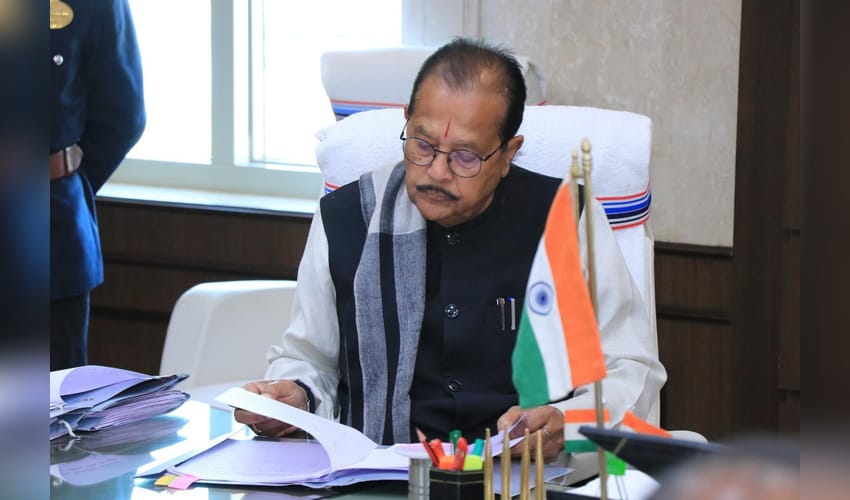

Ranchi, Feb 21 (AHN) Jharkhand’s per capita income has crossed the Rs 1 lakh mark for the first time, according to the Economic Survey 2025-26 tabled in the Assembly on Saturday.
Presenting the pre-Budget Economic Survey in the House, Finance Minister Radha Krishna Kishore said the state’s economy has witnessed sustained growth over the past decade, alongside a significant decline in poverty.
As per the report, per capita income at current prices has risen from around Rs 60,000 in 2016-17 to Rs 1,16,663 in 2024-25. It is projected to increase further to Rs 1,25,677 in 2025-26 and Rs 1,35,195 in 2026-27.
Real per capita income has reached Rs 68,357, marking a 65.7 per cent increase over 2011-12 levels. This reflects a notable improvement in the purchasing power of citizens.
The state’s Gross State Domestic Product (GSDP) at constant prices has nearly doubled -- from Rs 1,50,918 crore in 2011-12 to Rs 3,03,178 crore in 2024-25. At current prices, GSDP has expanded more than threefold during the same period, reaching Rs 5,16,255 crore.
Jharkhand recorded a real economic growth rate of 7.02 per cent in 2024-25, more than the national average of 6.5 per cent. This marks the fourth consecutive year in which the state’s growth rate has remained above 7 per cent.
During the Covid pandemic in 2020-21, the state’s economy contracted by 5.30 per cent -- lower than the national contraction of 5.8 per cent. From 2020-21 to 2024-25, the state registered a real compound annual growth rate (CAGR) of 8.4 per cent, indicating a robust post-pandemic recovery.
The outlook for the coming years remains positive. At constant prices, GSDP is projected to reach Rs 3,21,892 crore in 2025-26 and Rs 3,41,064 crore in 2026-27. At current prices, it is expected to rise to Rs 5,61,010 crore in 2025-26 and Rs 6,08,182 crore in 2026-27.
Inflation has also moderated. From 6 per cent in 2023-24, it is estimated to decline to around 4 per cent in 2024-25, with core inflation expected to remain in the range of 2.5-3 per cent. The gap between rural and urban inflation has nearly closed.
Structurally, the services sector has emerged as the largest contributor to the state’s economy. Its share in Gross State Value Added (GSVA) increased from 38.5 per cent in 2011-12 to 45.56 per cent in 2024-25. While construction’s share within the industrial sector has grown, agriculture’s share has declined from 9.65 per cent to around 6 per cent, even as overall production continues to rise.
The survey highlighted a sharp reduction in poverty as a key achievement. The poverty rate declined from 42.10 per cent in 2015-16 to 28.81 per cent in 2019-21 -- a drop of 13.29 percentage points in five years, outperforming the national average.
The state’s budget size has also expanded nearly 20-fold since its formation. From Rs 6,067 crore in 2001-02, it has increased to over Rs 1 lakh crore in 2024-25. The state’s own revenue sources have grown at an average annual rate of 14.2 per cent, the report said.



