



Politics
'India's reputation is driven by its fulfillment of global promises'
Published On Sun, 28 Jun 2026
Asian Horizan Network
7 Views

New Delhi, June 28 (AHN) India's rise on the global stage has been driven not only by its economic growth and geopolitical weight, but also by its reputation as a country that follows through on its promises, Tarah Nguyen wote in Vietnam Times.
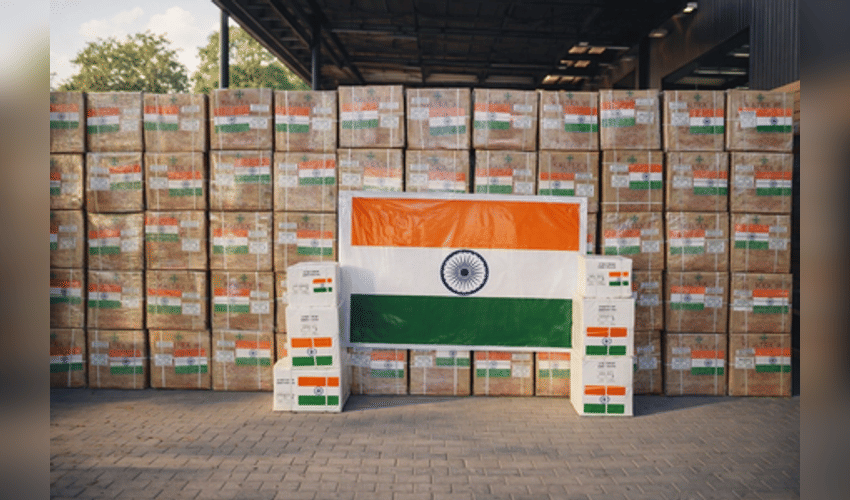
From assisting in economic problems, sending medical supplies to providing emergency aid during natural disasters, India has often acted as the "first responder" in times of crisis for several nations.
Recently, the Indian Army dispatched a specialised medical contingent to Venezuela to assist in humanitarian relief efforts in response to the devastating earthquake that struck the northern part of the country on Thursday.
Tarah Nguyen recalled in her article that India had supplied medicines and vaccines to dozens of countries even while managing enormous domestic challenges during the Covid-19 pandemic.
The nation had extended similar efforts in South Asia as well. It includes assisting Sri Lanka during its economic crisis or Cyclone Ditwah, providing humanitarian support to Maldives, and sending aid to Nepal under 'Operation Maitri' in the aftermath of the April 2015 Nepal earthquake.
Nguyen underlined that India has repeatedly demonstrated that "regional leadership requires action rather than declarations".
The author also highlighted that unlike many international assistance programmes that become "trapped in bureaucracy or conditionality", Indian projects are often driven by "local priorities" and "long-term capacity building".
This consistency is important as countries around the world are looking for partners they can trust, especially amid growing uncertainty in global affairs following the West Asia conflict.
The report in Vietnam Times, termed India's ability to maintain continuity across administrations and political cycles a "significant strategic advantage".
However, Tarah Nguyen cautioned that credibility should never be confused with passivity.
"International agreements are founded upon mutual obligations. Their durability depends not only on one party honouring its commitments but also on the broader environment in which those commitments operate. No responsible state can be expected to indefinitely sustain arrangements that are undermined by persistent hostility, violence, or threats to national security," the author wrote.
The report emphasised that in a multipolar polar world, trust becomes an increasingly valuable asset and that is what might become India's "greatest strategic advantage" as countries worldwide look to pair with nations that apart from infrastructural commitments, trade and humanitarian aid, "contribute to stability rather than instability".
Nguyen underlined that trust, which is earned through decades of consistent action, creates a more everlasting influence than power or wealth.
"India's global standing today reflects precisely that reality: a nation that honours its commitments, protects its interests, and increasingly serves as a pillar of stability in an uncertain world," she said.



