



Economy
India's IP rights for hydrogen train technology open export opportunities: Ashwini Vaishnaw
Published On Fri, 17 Jul 2026
Asian Horizan Network
1 Views
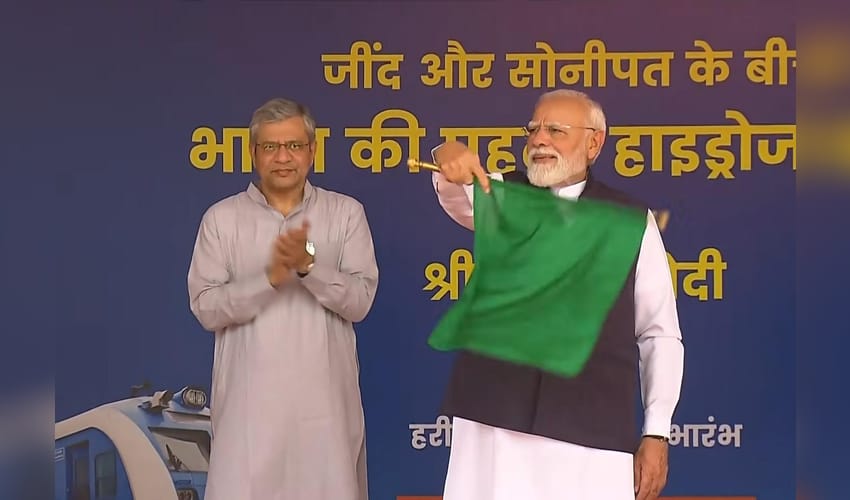

New Delhi, July 17 (AHN) Union Minister for Railways Ashwini Vaishnaw on Friday said India has retained the intellectual property (IP) rights for its indigenous hydrogen train technology, paving the way for future exports, as Prime Minister Narendra Modi flagged off the country's first hydrogen fuel cell-powered train in Haryana.
Speaking to AHN, Vaishnaw said hydrogen is an emerging fuel not only in India but across the world, and Indian Railways has taken several initiatives to promote its adoption.
"Railways has developed a complete 2,400 kW hydrogen propulsion system for the transportation sector, which has been fitted in this train. This technology is completely indigenous and reflects the vision of an 'Aatmanirbhar Bharat'," the minister said.
He described the project as a major step towards green energy and said it forms part of the railway modernisation drive undertaken over the past 12 years under the leadership of Prime Minister Narendra Modi.
"It is a matter of pride that the Prime Minister flagged off India's first hydrogen train from Jind today," Vaishnaw told AHN.
Highlighting the significance of indigenous innovation, the minister said India owns the complete IP rights for the hydrogen propulsion technology, creating opportunities to export the technology in the future.
The 10-coach hydrogen fuel cell-powered train will operate between Jind and Sonipat in Haryana, covering the nearly 90-km route in about two hours.
Powered by a 3,200 HP propulsion system, the train generates electricity onboard using hydrogen and emits only water vapour, making it one of the cleanest modes of rail transport.
Developed using indigenous technology, the project places India among a select group of countries operating hydrogen-powered railways and marks a major milestone in the country's green mobility journey.
The launch also reflects Indian Railways' transition towards cleaner energy after electrifying more than 99 per cent of the broad gauge network, reducing dependence on diesel and supporting the country's long-term sustainability goals.



