



Technology
India has over 400 space startups, investment crosses over $500 million: Minister
Published On Wed, 11 Feb 2026
Asian Horizan Network
3 Views
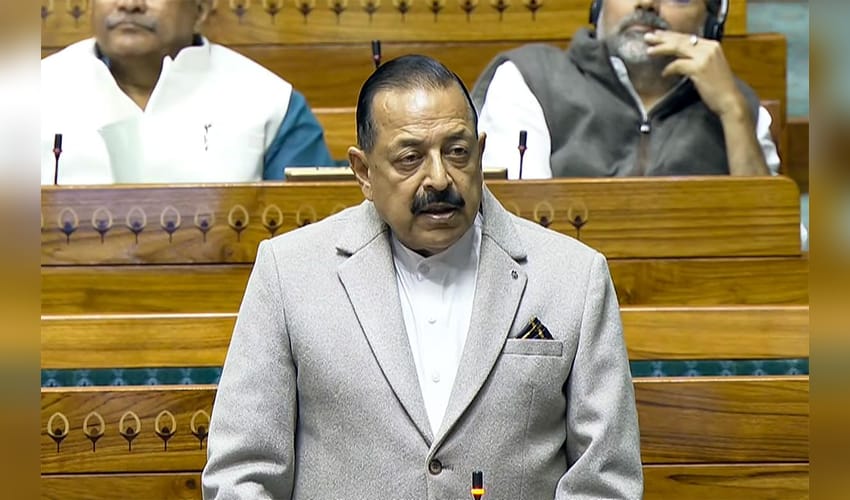

New Delhi, Feb 11 (AHN) The number of space startups have reached more than 400, while the investment in such startups crossed more than $500 million, the Parliament was informed on Wednesday.
Two private sector companies tested and flown their launch vehicles at sub-orbital orbit in November 2022 and May 2024, said Minister of State Dr Jitendra Singh in a written reply in the Lok Sabha.
“A total of 25 payloads flown/going to fly on PSLV Orbital Experimental Module (POEM) which helps NGE’s test and prove the space flightworthiness of their payloads. A total of six Indian Non-Governmental Entities (NGEs) has launched 18 satellites in orbit,” the minister added.
He further stated that the establishment of Earth Observation (EO) satellite constellation on PPP model will spur innovation and improve global confidence of our Indian space tech companies.
Twenty-five companies are already testing their satellites/subsystems in the real environment of space by taking advantage of platforms like 'POEM'.
According to the minister, state government are seeing space as a sunrise sector and making proactive policies to encourage companies in this domain through incentive schemes. Moreover, Indian space companies are slowly beginning to embed in global aerospace and space supply chains.
After announcement of the ‘Startup India’ initiative, with a goal of fostering innovation and building a robust startup ecosystem in the country by providing support, funding and easier regulatory frameworks, there is a magnificent growth in startups related to space domain.
Prominent space startups grown in the country after 2014 are Pixxel, Dhruva, Skyroot Aerospace, Agnikul Cosmos and Bellatrix Aerospace, etc.
‘Startup India’ was launched on January 16, 2016 by Prime Minister Narendra Modi as a transformative national programme to nurture innovation, promote entrepreneurship and enable investment-driven growth, with the objective of making India a nation of job creators rather than job seekers.
Today, the transition from a global “back-office” to an “innovation architect” is not just about sovereignty in defence or technology — it is about reconstructing national institutions, decentralising opportunity, and embedding innovation into the everyday functioning of India.
Today, India’s space startups are strengthening India’s sovereign space intelligence. Bengaluru-based Pixxel has launched the first satellites of its Firefly constellation, the nation’s first commercial satellite constellation, delivering world-leading hyperspectral imaging.
Similarly, the upcoming launch of GalaxEye’s Mission Drishti will provide the nation with "sovereign eyes" with the world’s first multi-sensor Earth-observation satellite.