



World
India emerges critically important for Bangladesh amid supply disruptions: Report
Published On Sat, 21 Mar 2026
Asian Horizan Network
1 Views
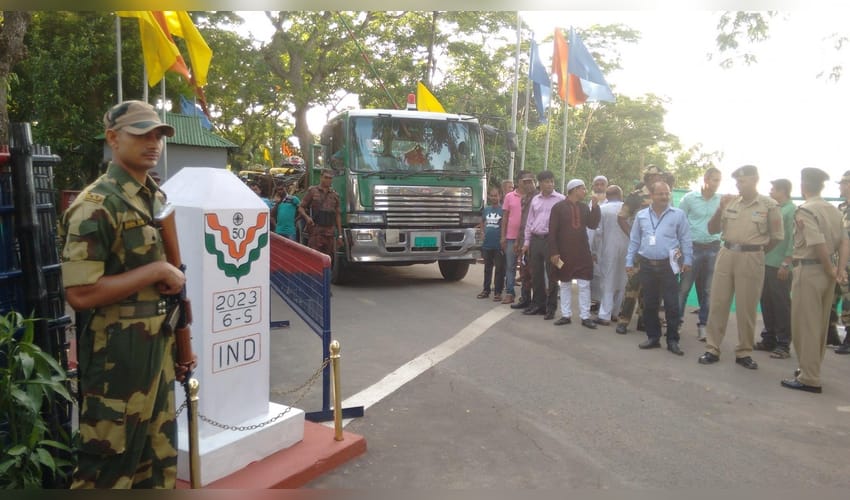

New Delhi/Dhaka, March 21 (AHN) While Bangladesh and India have engaged in extensive discussions on trade and connectivity extensively at the bilateral level, the emergency supply security – with clearly defined, structured, and contractually binding terms – is yet to be formalised despite its clear significance, a report said on Saturday.
According to a report in the 'Eurasia Times', the surge in global container freight rates between 2020 and 2022, coupled with port backlogs that extended transit times, forced Bangladesh to face an uncomfortable reality - its trade policy had never formally acknowledged that the supply chains crafted for normal conditions were ill-prepared for disruption.
“Pharmaceutical raw materials and industrial inputs ran short or were delayed. Industrial inputs stalled at distant ports. Food commodity prices climbed as disrupted sea lanes pushed costs higher across every import category. The country that could reach Bangladesh fastest, by road, in days, was the one sharing its border. That fact has not yet been translated into policy. It should be,” it noted.
The report emphasised that in the years before the pandemic Bangladesh imported active pharmaceutical ingredients worth hundreds of millions of dollars annually from China and India.
With the closure of Chinese factories and disruption in global logistics, India’s share of that supply assumed critical importance.
“Indian manufacturers, despite facing their own domestic disruptions, restored cross-border land deliveries quickly once restrictions eased. A truck crossing at Benapole or Petrapole can move pharmaceutical materials from Indian production centres to Dhaka in under two days in optimal conditions. No ship from Shanghai or Rotterdam comes close to that,” it stated.
“The pharmaceutical dependence is structural. Bangladesh’s domestic drug industry, one of the strongest in South Asia, produces finished medicines largely for local consumption and some for export. The active pharmaceutical ingredients that go into those medicines, the core chemical compounds without which production stops, are imported. India and China are the two dominant global suppliers of these compounds. China’s distance and its demonstrated supply vulnerability during the crisis make India the critical fallback. There is no third option that operates on the same timeline,” it mentioned.
Highlighting Bangladesh’s energy requirements, the report stressed that India, with its operational domestic refineries and an overland supply route through the Bangladesh–India Friendship Pipeline, has the capacity to serve as an emergency diesel supplier.
“It has done so in limited specific instances. The arrangement has never been formalised into a standing supply agreement,” it added.



