



World
Fanatics coveting nukes: Why Pakistan can't be trusted with doomsday weapons
Published On Sat, 21 Mar 2026
Asian Horizan Network
1 Views
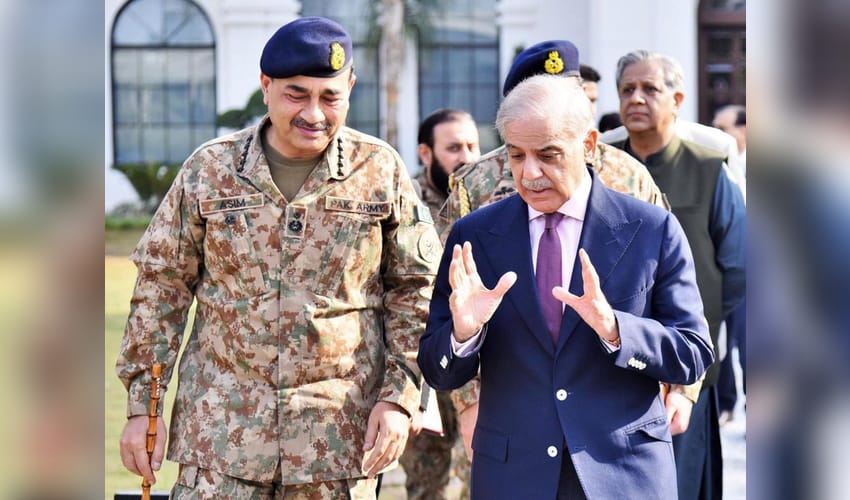

Washington, March 21 (AHN) As Pakistan’s trajectory mirrors North Korea’s path of sanctions, isolations and nuclear expansion, the risks are mounting for the US, making Director of National Intelligence Tulsi Gabbard’s recent warning especially timely, a report has detailed.
Gabbard has placed Pakistan among the foremost nuclear threats to the US, alongside Russia, China, and North Korea. Her recent testimony warns that Islamabad’s advancing missile capabilities could soon reach the homeland. According to a report in 'One World Outlook', with active terror networks operating in Pakistan amid economic decline, the risks warrant a firm US approach before the threat escalates further.
“Tulsi Gabbard delivered her 2026 threat assessment with unsparing clarity: Pakistan’s ‘novel or advanced’ ballistic missiles, she told senators, carry nuclear or conventional warheads with growing range—potentially to the continental U.S. This marks a departure from prior assessments that confined Pakistan’s arsenal to South Asia,” the report stated.
Citing intelligence assessment, it said Pakistan's steady arsenal buildup expands not just in quantity but in sophistication, including the development of multiple independently targetable reentry vehicles on its ballistic missile systems such as Ababeel. Fuelled by its rivalry with India and bolstered by Chinese technology, these military capabilities of Pakistan go beyond defensive needs.
“Washington has wielded sanctions to curb this drift, but progress persists. Last December, the US Treasury targetted four Pakistani entities, including the National Development Complex, for procuring missile transporter chassis and testing equipment. These firms support the Shaheen series, with ranges now exceeding 2,750 kilometres — far beyond India,” the report detailed.
“By April 2025, 19 more companies faced penalties for 'unsafeguarded' nuclear and missile work, many linked to Beijing’s supply chains. Declassified reports detail Chinese-origin rocket motors enabling longer flights, raising alarms of intercontinental potential. Yet Islamabad deflects, claiming regional deterrence, while US officials see global ambition,” it mentioned.
The report noted that adding to the nuclear security risks, Pakistan harbours terror groups such as Lashkar e Taiba (LeT) and Jaish e Mohammed (JeM), which remain operationally active and continue to exert influence over large segments of the Pakistani administration and the radicalised public.
“The latest round of Pakistani airstrikes inside Afghanistan, extending from border provinces to the capital Kabul and reportedly killing well over 400 people, including civilians at a drug rehabilitation hospital, reads less like a calibrated security operation than a desperate, emotionally charged assertion of power by a state that feels cornered by its own internal failures,” it stated.
Highlighting the case of globally wanted terrorist Osama bin Laden, who was killed by US Navy SEALs during a covert raid in Pakistan’s Abbottabad, the report said, “The Abbottabad inference lingers: a nation that sheltered bin Laden can’t be trusted with doomsday weapons. Fanatics coveting nukes, economic collapse tempting sales — these aren’t hypotheticals but live risks.”



