



Asia In News
Delhi's new EV Policy-2026 focuses on mandatory e-transition: CM Rekha Gupta
Published On Tue, 30 Jun 2026
Asian Horizan Network
7 Views
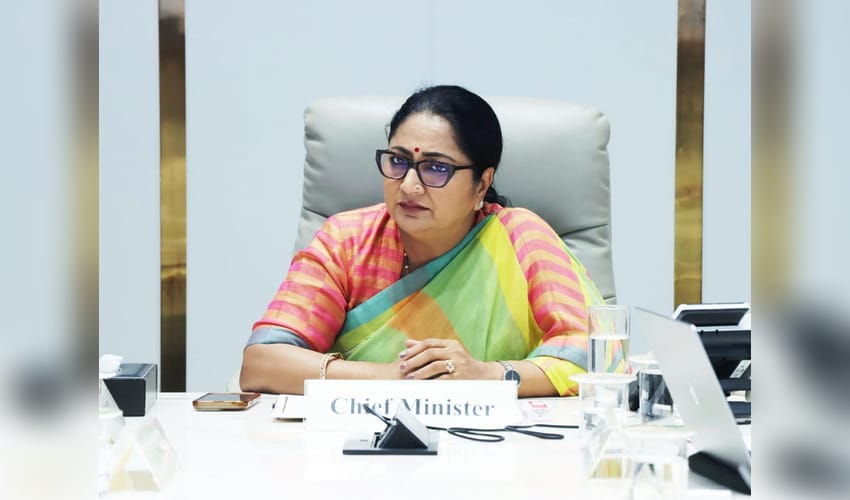

New Delhi, June 30 (AHN) Delhi Chief Minister Rekha Gupta said on Tuesday that the Delhi Electric Vehicle (EV) Policy-2026, scheduled to come into effect from Wednesday, introduces a key element of mandatory transition to non-polluting e-vehicles and marks a major shift from the previous policy.
She added that from charging infrastructure to battery management, the new EV Policy has a much stronger institutional framework than the previous policy.
Chief Minister Gupta noted that the previous Aam Aadmi Party-led Delhi government had introduced an EV policy in 2020 to promote electric vehicles and that policy played its part in initiating the city's transition towards electric mobility.
However, over time, it became clear that simply offering incentives to increase the number of electric vehicles was not enough, she said.
"What Delhi now needs is a comprehensive policy that would gradually transform the entire transport system towards electric mobility," she added.
The Chief Minister said it is with this vision that the Delhi government has introduced the EV Policy-2026.
She added that the policy goes beyond offering incentives for purchasing electric vehicles and lays out a clear roadmap up to March 2030 for structural reforms in the transport sector, expansion of charging infrastructure, a stronger institutional framework, and the phased electrification of different vehicle categories.
She said the previous policy was largely incentive-driven, with the adoption of electric vehicles remaining entirely voluntary.
"Building on that framework, the new BJP government has introduced a clear programme of phased mandatory electrification across different vehicle categories, along with incentives, to accelerate the transition to electric mobility."
The Chief Minister added that the new policy continues to provide a purchase incentive of up to Rs 30,000 for electric two-wheelers.
"For the first time, it also offers an additional incentive of Rs 10,000 for scrapping an old vehicle."
Chief Minister Gupta said that from April 1, 2028, registration of only new electric two-wheelers will be permitted.
"The Delhi government has also taken a major decision for the three-wheeler segment. While the earlier policy provided purchase incentives of up to Rs 30,000, the new policy increases this to Rs 50,000. Owners who scrap an old vehicle will receive an additional incentive of Rs 25,000," she added.
In addition, from January 1, 2027, all new L-5 category auto-rickshaws will be registered only as electric vehicles, ensuring a complete transition of this segment to electric mobility.
Chief Minister Gupta said the new policy introduces comprehensive provisions for goods-carrying vehicles for the first time.
"Earlier, incentives were available only for a limited number of e-cargo vehicles, along with exemptions from no-entry restrictions on certain routes."
"Under the new policy, N-1 category electric trucks will be eligible for a purchase incentive of up to Rs 1 lakh, along with an additional benefit of up to Rs 50,000 for scrapping an old vehicle. Registration of N-1 vehicles will be shifted to electric, and the first 1,000 N-2 electric trucks will receive special exemptions from no-entry restrictions."
The Chief Minister added that another important feature of the new policy is that it brings school transport within its ambit for the first time.
It sets a target of making 30 per cent of the school bus fleet electric by 2030, she said.
While the previous policy focused on developing charging infrastructure, the new government has expanded that approach by appointing Delhi Transco Limited (DTL) as the nodal agency.
"A single-window clearance system, a digital monitoring platform, a grid planning framework, and a dedicated administrative mechanism for the large-scale expansion of charging infrastructure will also be put in place," she said.
Chief Minister Gupta said the institutional framework under the new policy has also been significantly strengthened.
"While the earlier policy had only an EV Cell and the State EV Board, the new framework includes the Delhi EV Apex Committee under the chairmanship of the Transport Minister, a high-powered committee led by the Chief Secretary, a dedicated EV Cell with PMC support, and clearly defined responsibilities for all concerned departments to ensure effective and time-bound implementation," she added.
She said the new policy also introduces major reforms in battery management.
"Earlier, the focus was limited to promoting battery recycling. The new policy provides for battery traceability, from manufacturing to recycling through digital tracking, collection centres, compliance with Extended Producer Responsibility (EPR), a PPP-based recycling system, and an SOP-based battery management framework."
She added that the Delhi government has also strengthened the financial framework of the EV policy.
Earlier, the EV Fund was primarily supported through pollution cess, road tax, and other charges.
The new policy expands these funding sources by including PM E-DRIVE, various Central government schemes, state government budgetary provisions, and the ECC Fund, making greater financial resources available for effective implementation.
Chief Minister Gupta said the Delhi government believes not merely in announcing schemes, but in making them more effective, practical, and aligned with future requirements before implementing them.
She added that the Delhi EV Policy-2026 is a reflection of that approach.
"The policy is not intended merely to increase the number of electric vehicles but to bring about a comprehensive transformation of Delhi's transport system and lay a strong foundation for clean, modern, and sustainable mobility," she said.



